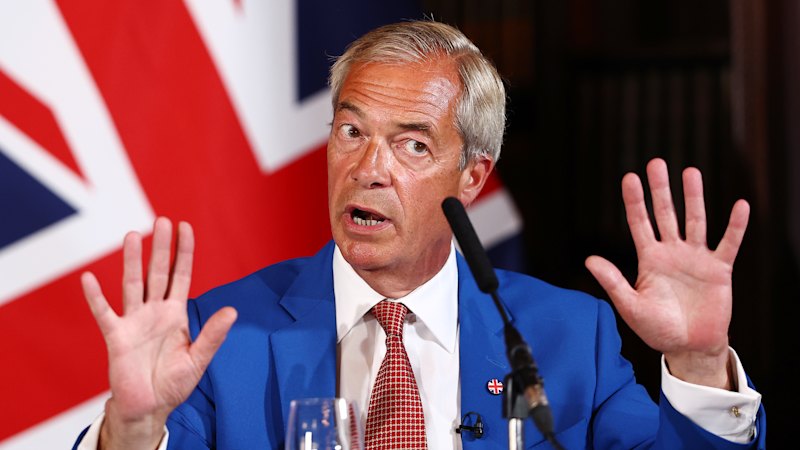
Political promises rarely survive first contact with reality. Yet politicians keep reaching for foreign blueprints when domestic frustration boils over. Nigel Farage just did it again.
The Reform UK leader unveiled what he calls Operation Fortress. It's a loud, uncompromising proposal to deploy the Royal Navy directly into the English Channel. The core inspiration? Australia's infamous maritime interception strategy.
Farage claims this hardline approach will halt small boat crossings within a fortnight. Critics call it a logistical fantasy. Let's break down what this plan actually entails, why it copies a playbook from the Southern Hemisphere, and whether it holds up under basic scrutiny.
The Australian Blueprint and British Ambitions
Australia spent years executing a zero-tolerance maritime policy known as Operation Sovereign Borders. Unauthorized boats carrying asylum seekers were intercepted at sea and turned back, or passengers were sent to offshore processing centers. Canberra made it clear that reaching the mainland by boat meant you would never settle there.
Farage wants to translate that logic to the narrow waters separating Dover and Calais. Under Reform UK's proposed framework, offshore patrol vessels would shadow incoming dinghies instead of letting the Border Force act as a civilian rescue fleet. Royal Marines would approach on inflatables, take passengers on board, provide food and water, and escort them back to France or Belgium.
It sounds decisive on paper. Voters angry about porous borders love the sound of military muscle. Translating political theater into maritime law enforcement is an entirely different battle.
Why Military Commanders Are Skeptical
You don't just point a warship at a rubber dinghy and solve a geopolitical crisis. Real naval veterans and legal experts point out massive hurdles that populist speeches tend to gloss over.
First, there is international maritime law. Article 98 of the United Nations Convention on the Law of the Sea dictates that any ship master has a legal obligation to render assistance to anyone in distress at sea. When Royal Marines pull people from a sinking or overloaded raft, those individuals are technically rescued.
Farage insists Operation Fortress relies on "rescue and return" rather than aggressive pushbacks. Here is the catch. If you rescue people, you usually have to take them to a safe port. Dumping them back onto a foreign beach without the host nation's consent turns a rescue mission into an international incident.
Former navy commanders have also noted that utilizing specialized offshore patrol vessels or frigates for routine migrant transport wastes vital defense assets. The UK currently fields a limited number of these ships, many already stretched thin monitoring foreign threats in northern waters.
The Diplomatic Wall in Paris
Any plan to return migrants to France requires France to say yes. Right now, Paris has zero incentive to accept planeloads or boatloads of rejected asylum seekers pushed back from British shores.
Farage claims attitudes in France are quietly shifting. He argues that northern French towns are just as sick of the smuggling networks as Britain is. Reform's home affairs spokesperson, Zia Yusuf, went a step further, suggesting that if Paris refuses cooperation, marine units should drop individuals off on the French coast anyway.
Executing unilateral drop-offs on a sovereign European neighbor's coastline invites immediate trade retaliation, legal blockades, and diplomatic frostbite. Downing a diplomatic relationship with your closest neighbor to test an unproven naval theory is a massive gamble.
What Happens Next
The appeal of a hardline border policy is obvious. Millions of voters feel the current system is broken, and mainstream parties have repeatedly failed to secure the Channel.
Borrowing Australia's playbook gives political insurgents a sharp soundbite. It projects strength. But the English Channel is not the Indian Ocean. It is one of the busiest shipping lanes on earth, tightly bound by European politics and unbending maritime laws.
Until a strategy accounts for what France will actually accept and how international law applies to active military escorts, Operation Fortress remains loud politics disguised as policy.