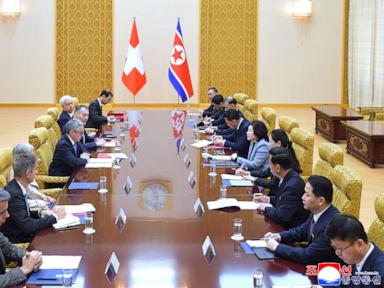
Pyongyang didn't just slam the door on Switzerland. It bolted it shut weeks after Swiss Foreign Minister Ignazio Cassis showed up to reopen the door.
If you're following the North Korean move to shut down its Swiss diplomatic office in late November 2026, don't treat this like a routine diplomatic hiccup. North Korea's Foreign Ministry summoned Sylvain Astier, who headed the office in Pyongyang, declared him persona non grata, ordered him out within 48 hours, and demanded the office close. The spark was Bern's decision to sanction the Songdowon International Children's Camp in Wonsan over allegations tied to transferring and re-educating Ukrainian children from Russian-occupied areas.
Wire recaps like to frame this as a sudden tit-for-tat over sanctions. Honestly, that misses the bigger picture. Pyongyang is telling Western governments—and any remaining go-betweens—that old diplomatic playbooks don't work anymore when North Korea feels backed by Moscow and Beijing.
Why This Swiss Diplomatic Office Closure Happened Now
Let's look at the timeline because the speed here is wild. Switzerland established diplomatic relations with North Korea back in 1974. From 1997 until March 2020, Bern ran a humanitarian-focused cooperation office in Pyongyang before North Korea locked its borders down for COVID-19.
When Bern reopened a diplomatic outpost in October 2026, Cassis met with North Korean officials, including Foreign Minister Choe Son Hui, framed around dialogue and cooperation. Bern treated the reopening as part of its universalist foreign policy, arguing that keeping channels open doesn't cancel out sanctions enforcement.
Pyongyang didn't buy that separation. After the United Kingdom in May and the European Union in September sanctioned the Songdowon camp, Switzerland moved in early November to add the facility to its own sanctions list tied to Russia's war in Ukraine. Kim Yo Jong lashed out, calling the move an "open hostile act" that violated North Korea's sovereignty. Days later, Pyongyang pulled the plug on the office.
A few details stand out if you want to understand why this blew up so quickly:
- Personal history didn't save Bern: Both Kim Jong Un and Kim Yo Jong spent teenage years attending school in Switzerland in the 1990s. Former Institute of National Unification president Koh Yu-hwan noted that those ties may have made Swiss sanctions feel like a personal betrayal to the leadership.
- Sympathy wasn't on the table: Pyongyang's statements didn't wrestle with Western accusations regarding Ukrainian children sent to Wonsan. Instead, North Korean officials defended ties with Russia as legitimate cooperation and treated the sanctions as an attack on sovereign rights.
- Warning shot to other Western capitals: North Korea already downgraded diplomatic ties with the U.K. to the chargé d'affaires level in August after London sanctioned the camp. Targeting Switzerland puts pressure on other Western nations that still keep a footprint or channels open, such as Sweden.
What It Signals About Pyongyang's Foreign Policy
When a regime expels a diplomat weeks after welcoming a visiting foreign minister, it's sending a message beyond Bern.
Ewha University professor Leif-Eric Easley pointed out that North Korea wants to show other states it will reengage only on its own terms and from a position of strength. Why does Pyongyang feel bold enough to risk burning goodwill in Europe? Because its leverage calculation has shifted.
North Korea has sent thousands of troops and weapons to support Russia's war in Ukraine, deepening a partnership that gives Pyongyang material, diplomatic, and military breathing room. At the same time, China remains North Korea's economic lifeline—accounting for roughly 98% of its external trade in 2025—while both Moscow and Beijing have blocked recent pushes to tighten U.N. sanctions over North Korea's nuclear and missile programs.
That creates a real trap for European diplomacy. Park Won Gon, another professor at Ewha University, noted that kicking out the Swiss office risks pushing Europe further to the margins while making North Korea even more dependent on China. If Pyongyang sees itself as a nuclear-armed state negotiating directly with Washington rather than through middlemen, quiet Swiss backchannels look far less essential to Kim Jong Un.
Still, there's a catch people overlook. Economic ties between North Korea and Europe are already tiny. So sanctioning a youth camp doesn't bankrupt Pyongyang overnight, and expelling a Swiss envoy doesn't erase every diplomatic line on earth.
Does This Mean Swiss Relations Are Over?
No—and saying "relations are severed" is a classic overreaction.
Switzerland's Federal Department of Foreign Affairs stated that the closure doesn't call diplomatic ties into question. Bern plans to handle communication through the Swiss Embassy in Beijing and North Korea's embassy in Bern, with Astier returning to Beijing.
In real-world crisis diplomacy, accredited embassies in third capitals—especially Beijing—do plenty of heavy lifting when on-the-ground access in Pyongyang gets restricted. Backchannels don't disappear just because a newly reopened office gets shuttered.
Yet let's be candid about what's lost. Having eyes and ears inside Pyongyang matters when tensions spike, humanitarian needs flare, or miscalculations threaten to spiral. Losing a dedicated office in the capital makes reading the room harder for European policymakers, even if formal channels survive on paper.
Practical Next Steps If You're Tracking This Story
If you're following this standoff for policy work, research, or just trying to make sense of the headlines, focus on what actually moves the needle next rather than every fiery KCNA dispatch:
- Watch other Western missions: Keep an eye on remaining European diplomatic touchpoints in Pyongyang and see whether North Korea escalates from expulsions to broader downgrades.
- Track sanctions enforcement beyond headlines: Look at how European and U.S. authorities enforce targeted sanctions tied to Russia cooperation and illicit revenue streams like IT workers, since financial isolation is where Western leverage actually sits.
- Separate on-site presence from diplomatic ties: Don't confuse closing an office in Pyongyang with ending formal recognition or cutting off the North Korean embassy in Bern.
North Korea threatens to shut Swiss diplomatic office in Pyongyang over children's camp sanctions
This video adds visual context on the diplomatic dispute sparked by Swiss sanctions over the Songdowon children's camp and Pyongyang's pushback.


