When state media in Pyongyang rolls out another shiny piece of military hardware, the automatic reaction in many Western capitals is to shrug it off as empty bluster. But ignoring North Korea's recent push toward solid-fuel hypersonic weapons is a massive mistake. The introduction of systems like the Hwasong-16B represents a real shift in technical capability, moving past older liquid-fueled rockets that take hours to prep into a much faster, more dangerous operational reality.
Let us look at what is actually happening on the ground.
The Solid Fuel Advantage Nobody Wants to Talk About
Old-school ballistic missiles relied heavily on liquid propellants. If you know anything about rocketry, you know that liquid-fuel systems are a logistical nightmare during a crisis. You have to truck in volatile propellants right before launch, which leaves your transporter-erector-launchers sitting exposed to spy satellites for hours.
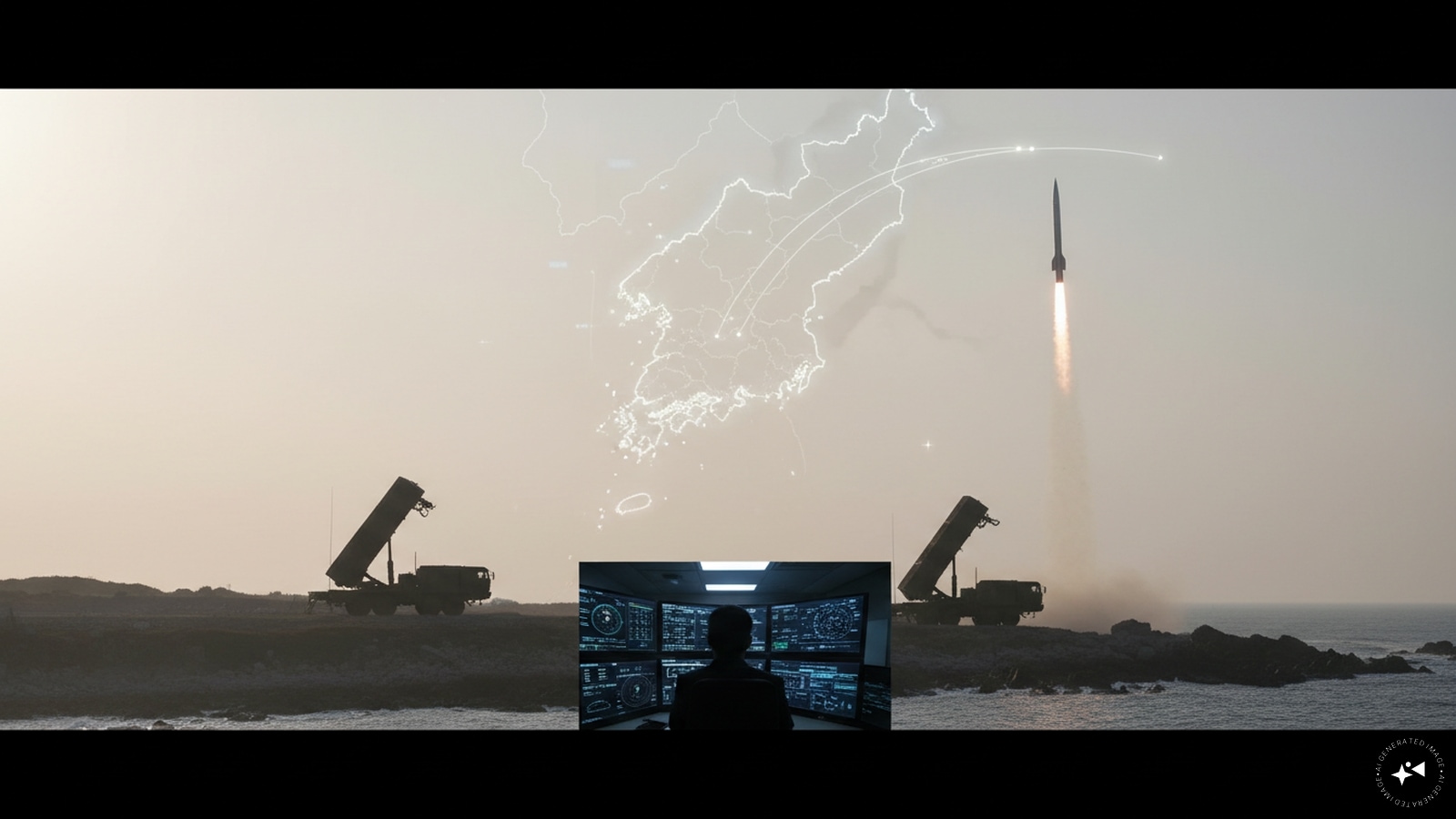
North Korea has systematically shifted away from that bottleneck. By pivoting to solid-fuel rocket boosters, Pyongyang can stash its missiles in underground silos or drive them out on heavy multi-axle trucks, fuel them beforehand, and fire them with almost no warning. That cuts down the decision-making window for regional defense systems in South Korea and Japan to mere minutes.
Breaking Down the Hypersonic Hype
Every major military power right now is obsessed with hypersonic speed, and for good reason. Weapons traveling above Mach 5 do not just fly fast; they change flight paths mid-journey.
State reports on tests like the Hwasong-16B claim the missile used a wedge-shaped boost-glide vehicle capable of performing gliding-skip maneuvers. Instead of following a predictable ballistic arc that radar can easily track and calculate, a maneuverable glide vehicle skips along the upper atmosphere.
If those claims hold up in real-world deployment, traditional missile defense systems like the Patriot or Aegis face an absolute nightmare scenario. Tracking a predictable parabola is hard enough. Tracking a warhead that shifts direction mid-flight is exponentially harder.
What Strategic Analysts Miss About Regional Targeting
Most casual observers think these weapons are designed purely as a localized threat against Seoul. They are not. Intermediate-range ballistic systems equipped with advanced glide vehicles are explicitly built to hold remote U.S. military assets at risk.
Think about the bigger picture in the Pacific. Guam and parts of Alaska sit well within the theoretical envelope of these new designs. By developing weapons that can bypass layered missile shields, Pyongyang wants to create a credible deterrent that forces Washington to think twice before intervening in a regional conflict.
Of course, building a scale model or pulling off a single controlled test in a controlled environment is entirely different from mass-producing a reliable, combat-ready weapon. Wedge-shaped glide vehicles experience brutal thermal stress and aerodynamic friction. Perfecting the materials required to keep them from burning up or losing control is an engineering feat that even advanced aerospace nations struggle with.
Still, writing off these advancements as mere propaganda ignores the steady, methodical progression of North Korea's defense sector over the last decade. The engineering is real, the tests are happening, and the strategic calculus in East Asia is changing whether anyone likes it or not.