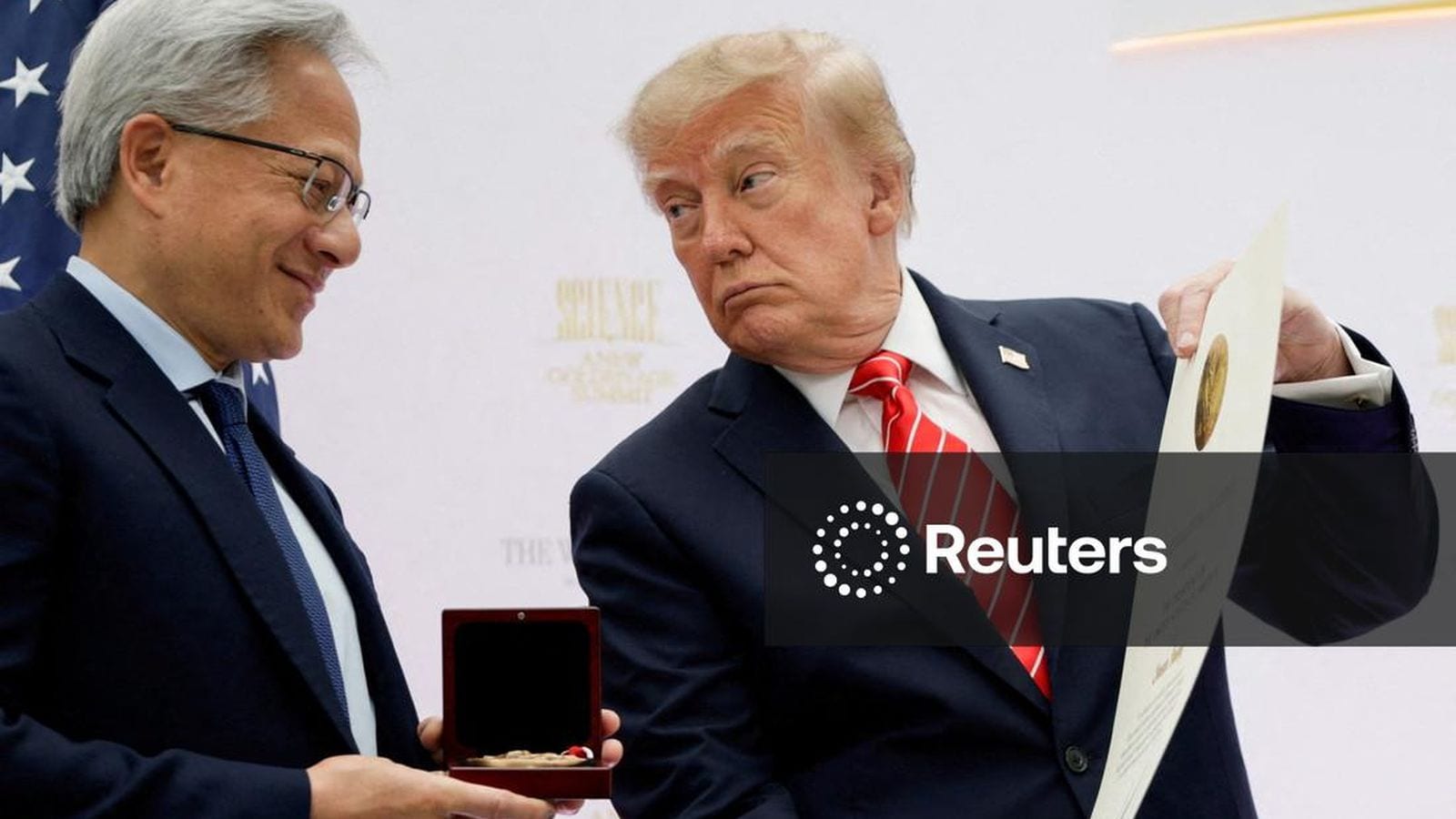
Everyone is arguing about boardroom reversals and stock bounces, yet the real story sits inside a web of federal and state investigations that haven't gone away. Even with Jensen Huang reinstated as Nvidia CEO, the company and its leader are facing multiple Nvidia and Jensen Huang probes across Washington and California.
A quick headline skim makes it look like a soap opera. You hear about a personal scandal, an intelligence review, a board U-turn, and a sharp market swing. Honestly, that framing misses the point. If you trade or track AI infrastructure, board drama is noise; regulatory exposure and enforcement actions are what actually move risk over months and years.
Right now, the scrutiny spans export controls, intelligence and counterintelligence questions, securities accounting, antitrust and deal reviews, and state-level criminal and civil enforcement. Let's break down what each track involves, why agencies care, and where the blind spots are.
Export Controls and the Megaspeed Investigation
Export control enforcement is the sharpest operational headache for Nvidia. Washington has been scrutinizing whether high-end AI chips reached restricted destinations, including China, through third parties or intermediaries.
The Department of Justice and Department of Commerce joint statement on Megaspeed highlights a multi-year effort dating back to 2024 into suspected export control violations and potential chip smuggling. Commerce investigators have pressed for records tied to chip shipments and partner relationships, while scrutiny has expanded to linked entities and foreign partners.
Why does this matter so much? Because export compliance isn't a one-time checkbox when hardware is in global demand. If chips get diverted or transshipped, regulators look at due diligence, red flags, internal controls, and whether a company knew—or should have known—where hardware ended up. Even when a vendor tightens restrictions or adds names to prohibited lists, past shipments and compliance gaps stay under a microscope.
I've watched plenty of hardware firms underestimate how quickly a supply-chain gray area turns into a federal enforcement case. Once Commerce and DOJ coordinate publicly, deadlines get tight, document requests pile up, and every prior statement about China exposure gets re-read with extreme skepticism.
Intelligence Scrutiny and Foreign Influence Questions
Another major thread centers on national security and foreign intelligence risk surrounding Huang. Reporting has tied the controversy to scrutiny involving Chinese businesswoman Alice Huang and questions about whether foreign intelligence efforts targeted Nvidia's chief executive.
Nvidia's board announced an independent board investigation into foreign intelligence targeting and moved on governance steps like oversight committees and compliance leadership. Meanwhile, public comments from top U.S. officials—including President Donald Trump weighing in on Huang's return and officials fielding questions about national security assurances—have added political heat to an already sensitive picture.
Here is a nuance a lot of casual observers miss. A political signal or a board vote does not automatically shut down an intelligence or law enforcement review. Intelligence agencies and federal investigators operate on their own timelines and statutory mandates. Plus, any time national security overlaps with a company selling strategic compute hardware, the standard of scrutiny is much higher than in an ordinary corporate dispute.
SEC Accounting Scrutiny and Deal Antitrust Reviews
Wall Street cares deeply about numbers and market power, which is why financial and competition probes carry massive weight.
Securities and Exchange Commission Accounting Questions
Reports have indicated that SEC enforcement staff have looked into potential accounting issues at Nvidia amid leadership turmoil and steep share volatility. In high-growth tech, accounting probes rarely start from nothing. Regulators typically look at revenue recognition, customer concentration, inventory or commitments, reserve assumptions, and whether public disclosures matched internal reality.
Keep in mind that an SEC inquiry doesn't automatically mean accounting fraud occurred. Sometimes regulators ask tough questions about complex commercial arrangements that turn out to be compliant. Still, an active SEC enforcement look creates real disclosure risk and forces management to spend huge bandwidth defending every footnote.
Antitrust and the Hugging Face Deal
On the competition side, Justice Department scrutiny has touched Nvidia's business conduct and its proposed $12.9 billion acquisition of open-source AI platform Hugging Face. Regulators examining AI deals focus on vertical leverage, ecosystem lock-in, access to developer tooling, and whether a dominant hardware supplier could tilt competition across model hosting and AI software.
When a company already sits at the center of AI infrastructure, big acquisitions face steep uphill math. Even if a deal isn't blocked outright, lengthy antitrust reviews slow execution, introduce uncertainty for partners and developers, and invite pushback from rivals and lawmakers.
California's State Probe and Criminal Exposure
Federal agencies aren't the only ones digging in. California Attorney General Rob Bonta has drawn sharp attention because the state probe has been described as covering potential criminal violations of state law, including questions around truthfulness in statements made by Nvidia or Huang.
That state angle changes the conversation in two big ways:
- Jurisdictional reach: Nvidia is deeply rooted in California, and state prosecutors have their own enforcement tools that don't depend on Washington's shifting political mood.
- Individual exposure: Inquiries that look at specific statements or conduct by executives raise the stakes beyond corporate fines, making governance decisions trickier for the board.
Also, be careful with rumor mills around arrests or instant outcomes. Online betting chatter or social media speculation isn't evidence. State investigations can take months to review documents, interview witnesses, and decide whether charges, civil penalties, or a closure are warranted.
Common Misconceptions and What to Watch Next
A few myths keep popping up around Nvidia and Jensen Huang probes, so let's clear them up directly:
- "Huang being back as CEO means the investigations are over." Wrong. Reinstatement changes corporate leadership, not federal or state investigative authority.
- "All probes are really just one investigation with different labels." Not quite. Export controls, SEC accounting, DOJ antitrust/deal reviews, intelligence reviews, and California's state inquiry each have distinct legal standards and evidentiary targets.
- "Early reports equal proven guilt." Not necessarily. Many regulatory inquiries are fact-finding exercises that may end without formal charges, while others escalate.
If you want to track this smartly rather than reacting to every headline, focus on concrete milestones: formal subpoenas or enforcement notices, responses to federal export-compliance requests, SEC filing updates or risk-factor revisions, regulatory moves on the Hugging Face transaction, and official statements from California's Attorney General. Check primary government releases and official corporate filings first, treat anonymous leaks as provisional until corroborated, and size any market exposure around how much legal and regulatory uncertainty you can actually stomach.