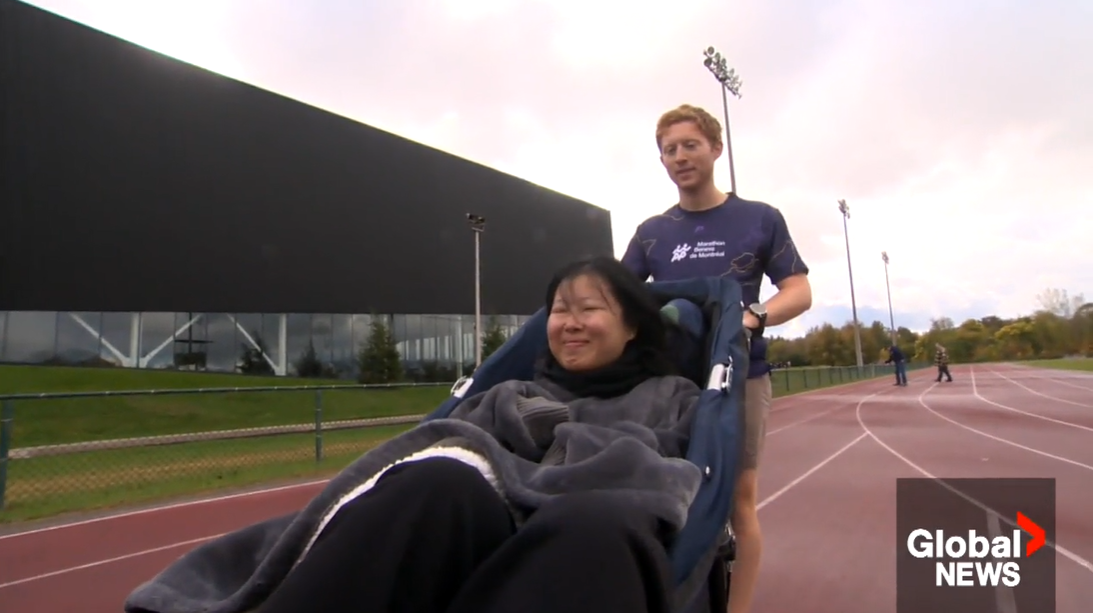
Life changes in a heartbeat. For Amanda Tam and Spencer Levine, that shift happened when Amanda received a devastating ALS diagnosis at just 20 years old. Fast forward nearly five years, and this Montreal couple isn't sitting back. They are gearing up to tackle the 42.2-kilometre Montreal Marathon together, proving that severe illness doesn't mean life stops.
Spencer will run the full distance while pushing Amanda in a specialized racing wheelchair. It is a grueling physical test, but for them, it is much more than that. It’s about reclaiming time, refusing to surrender to a cruel neurodegenerative disease, and pushing back against the daily barriers that people with disabilities face in our cities.
The Spark That Started 623 Kilometres of Training
Everything changed last spring. Amanda went out to cheer for Spencer during an Ironman competition. While watching, they spotted another disabled athlete participating with assistance, anchored to a bike for one leg and a kayak for another. Spencer turned to Amanda and asked a simple question: why not them?
By June, they bought a specialized running wheelchair. They didn't just test it out once or twice. They committed. From June straight through to race weekend, they logged over 623 kilometres of training across the summer months.
Marathon training is brutal for anyone. Pushing an adapted chair adds massive physical resistance and mechanical complexity. But Spencer sees the hours spent pounding the pavement differently. He trains 10 to 15 hours a week, and sharing those miles with Amanda has added extra hours of meaningful connection. It has brought them closer together than ever.
Living With ALS On Your Own Terms
Diagnosed at 20 after graduating from McGill University, Amanda has watched ALS steal chunks of her autonomy. Spencer serves as her primary caregiver, bridging the gap as her body grows weaker. Yet, her spirit remains entirely unbroken.
Dr. Angela Genge, the clinical research program director at the McGill Neurological Institute, points out that Amanda handles her reality with astonishing resilience. Claudine Cook, executive director of the Quebec ALS Society, calls them incredible ambassadors for the community.
They are using this marathon platform to raise vital funds for ALS Quebec, but the mission goes deeper. Amanda wants people to understand a basic truth. Being dealt a devastating health hand doesn't mean you stop existing. You keep living. You keep moving.
The Reality of Urban Accessibility
While the couple focuses on crossing the finish line, their journey highlights a glaring flaw in modern city infrastructure. Getting to the starting line at Parc Jean-Drapeau brings unnecessary obstacles. Public transit hubs, like the Berri-UQAM Metro station, lack full accessibility.
When thousands of runners and spectators converge for a major event, navigating a wheelchair through transit systems becomes an uphill battle. Amanda uses her social media presence not just to share their training updates, but to call out these systemic failures. Big marathons love to showcase inclusion categories, but cities need to ensure that athletes and fans can actually reach the venues without facing blocked paths and broken elevators.
What Comes After the Finish Line
Crossing 42.2 kilometres will mark a massive milestone for Spencer and Amanda. But their real victory is happening every single day. They are carving out shared moments in the face of an unforgiving timeline. They are showing caregivers and patients alike that love, grit, and endurance can outrun despair.
If you want to support their mission, look into the Quebec ALS Society, donate to local research initiatives, or simply pay attention to the accessibility barriers in your own neighbourhood.