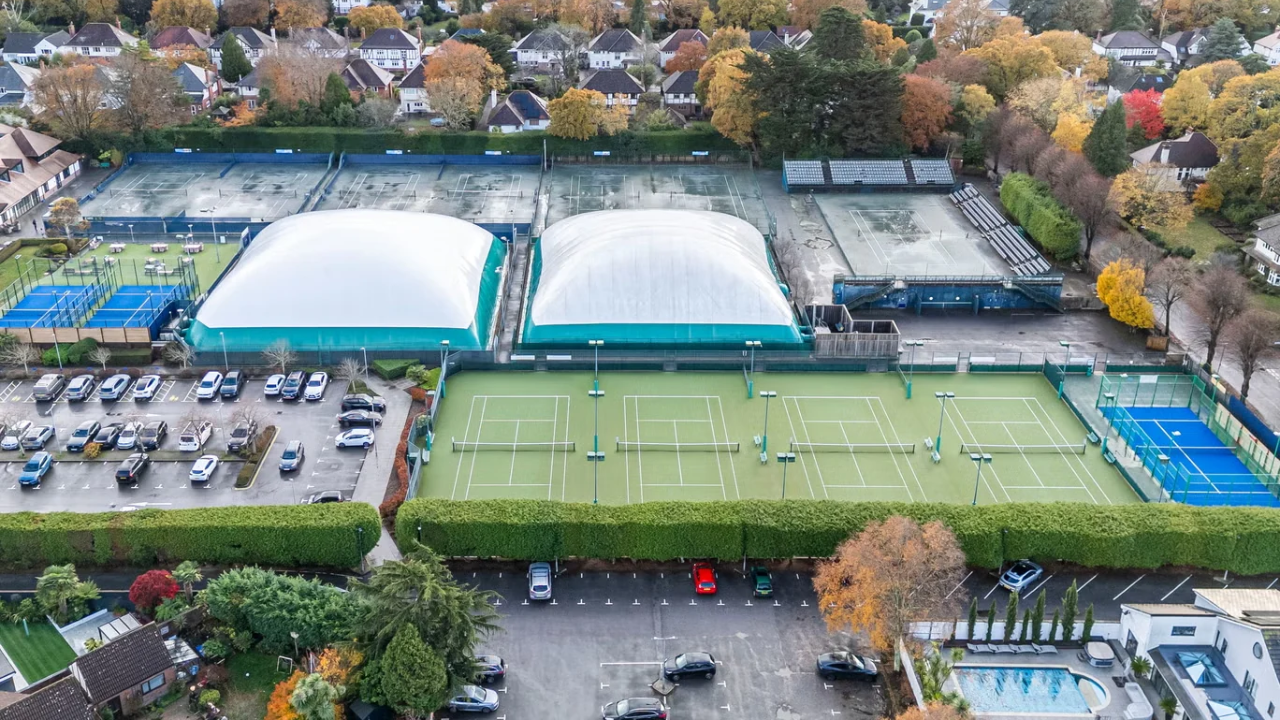
Padel is loud. Anyone who has stood near an outdoor court knows that sharp, percussive pock isn't polite lawn tennis.
In Bournemouth, that clash between a booming sport and quiet residential streets has boiled over around the West Hants Club in Talbots Woods. Neighbours living near £1 million homes already complain about constant thudding, shouting, and foul language drifting from four existing outdoor padel courts. Now the club wants planning permission from BCP Council for two more floodlit courts close to private gardens, and residents are pushing back hard.
The competitor coverage treats this mostly as a quirky clash between posh homeowners and loud padel players. That misses the bigger picture. Across the UK, padel courts have run straight into a planning wall because the sport's acoustics behave differently from tennis, local councils lack a single padel-specific noise standard, and late floodlit play tests patience next to family backyards.
Why Padel Courts Hit Harder Than Lawn Tennis
Neighbours near West Hants have compared the sound of gameplay to a mechanical hammer or gunfire. Sounds dramatic. Actually, there's real physics behind why padel carries so much further than a traditional tennis match.
A padel bat is solid, perforated composite or carbon fibre rather than loose strings. When it strikes a pressurised ball, the impact produces a crisp, impulsive peak rather than a soft thud. Then the ball rebounds off tempered glass walls and wire mesh fencing, creating secondary bangs and metallic pings that bounce around an enclosed space.
Research by acoustic consultant Martin Higgins of MW Acoustics, carried out under Institute of Acoustics supervision, helps explain why nearby homes notice the difference. His measurements showed roughly 88 impact sounds every five minutes of club padel compared with about 50 for tennis, with higher peak impulse levels and sharp differences depending on whether a listener sits beside the open mesh side or the enclosed glass end. Acoustic consultancies such as Padelcreations and ACA Acoustics also point out that environmental health officers weigh short, repetitive spikes heavily, even when an averaged decibel reading looks modest on paper.
Add social energy to the mix. Doubles play moves fast, points end in quick bursts, and players call out constantly. When frustration spills over into swearing near gardens—as residents along streets like Rothesay Road have complained to BCP Council—the issue stops being just a decibel count and turns into a daily quality-of-life friction.
The Bournemouth Stand-Off Between Club and Neighbours
From a resident's point of view, the timing feels personal. People who bought homes around Talbots Woods—many valued above £1 million—say existing court noise already forces them to keep windows shut on warm days and makes back gardens feel stressful rather than restful. Putting two more floodlit courts a few metres from garden boundaries threatens to bring both sharper impacts and evening glare right up to their fences.
Honestly, I get why neighbours are sceptical of "trust us" assurances. When you live with repetitive thuds every afternoon, abstract averages in a consultant's report don't sound like your backyard. Residents have also argued that on-site monitoring hasn't stopped colourful language from carrying across property lines.
On the flip side, clubs aren't villains for wanting more courts. Padel has exploded across Britain because it's social, easy to pick up, and draws crowds of all ages. In its planning submission to BCP Council, the West Hants Club pointed to rising member demand, health and community benefits, limited operating hours, staff oversight, a separate management plan, and acoustic features aimed at curbing noise if approval is granted. Independent noise surveys submitted by the club indicated levels within local authority limits, though locals dispute whether those snapshots match everyday reality.
What UK Planning Rules Miss About Noise Disputes
If you've ever watched a local planning committee debate a sports facility, you know how messy noise arguments get. There isn't a neat, universally applied UK acoustic standard written solely for padel courts. Standard industrial noise guidance like BS 4142 isn't built for sport and leisure noise, so councils and consultants rely on broader frameworks—such as ProPG guidance for sport and leisure noise alongside local plan policies—while Lawn Tennis Association advice often flags acoustic assessments when homes sit within roughly 30 to 50 metres of planned courts.
That gap creates two recurring mistakes in court proposals.
- Treating noise like a steady hum: Traffic or a distant air conditioning unit drones on. Padel pops and thuds in punchy bursts. Two courts running side by side can create hot spots where overlapping impacts feel much louder than a single court suggests.
- Ignoring court orientation until the end: Turning an open side toward neighbouring gardens instead of a solid or glazed end is a classic layout blunder. Orientation and distance do heavy lifting long before fancy panels ever get priced in.
Even when consultants model noise carefully, real life still varies. Wind direction, seasonal foliage, court occupancy, and how fired up a match gets all change what reaches a neighbour's patio.
What Actually Works When Courts Meet Homes
Not every padel expansion has to end in a bitter neighbourhood feud. Plenty of sites get approved—or run peacefully—when clubs design around friction early instead of bolting on fixes after objections pile up.
Distance helps more than people expect because sound drops as you move away from the source. Where space allows, setting courts further back or shielding them with existing club buildings can cut exposure noticeably. Solid or absorptive acoustic barriers—built without gaps and tall enough to break direct line of sight—also help, provided they're matched to the site rather than slapped up as an afterthought.
Hours and behaviour matter just as much as hardware. Tightening evening cut-offs, especially under floodlights, gives families quiet nights even on busy weeks. Clear court etiquette rules and visible management make a difference too; a quick word from club staff about shouting or swearing can cool tempers before complaints reach the council.
Practical Next Steps for Residents and Clubs
Whether you live next door to a sports club or you're trying to get a court plan past local planners, waiting until the final public comment window closes usually makes things harder.
- Check the exact planning file and conditions: If you're a Bournemouth resident following the BCP Council application, read the submitted acoustic report, proposed hours, and floodlight details closely so your objection targets concrete planning issues like residential amenity, lighting hours, and boundary proximity.
- Keep a factual log of disturbances: If you're already dealing with noise or swearing from existing courts, note dates, times, weather conditions, and specific impacts rather than relying on general frustration. Specific patterns carry far more weight with council officers.
- Push for enforceable mitigation, not vague promises: If a proposal moves forward, look for clear conditions on operating hours, floodlight switch-off times, barrier specifications, and a real point of contact when issues flare up.
- Test layout and hours early if you're building: Clubs planning new courts should get acoustic advice before locking in court positions, orienting courts thoughtfully, setting realistic hours near homes, and talking openly with nearby residents early on.