We missed the mark. The international community spent years patting itself on the back over the Paris Agreement, and now reality is biting back hard. During the 81st session of the United Nations General Assembly, world leaders faced a brutal truth. The global temperature overshoot is no longer a distant theoretical threat. It is happening right now, compounded by a monstrous Super El Nino forming in the Pacific Ocean.
If you look at the numbers coming out of the World Meteorological Organization, the picture is terrifying. Scientists project that global temperatures will break past the 1.5-degree Celsius threshold within the next decade. Meanwhile, 2026 is tracking to smash previous heat records. We aren't just talking about uncomfortable summer days. We are looking at systemic agricultural failures, billions of dollars in infrastructure damage across vulnerable nations, and displaced populations on a scale the modern world hasn't witnessed.
The Reality of the Climate Overshoot
Most people think of climate targets as absolute walls. Hit 1.5 degrees, and the alarm bells ring. But scientists have shifted their language to "overshoot." That means we are going to blow past the limit before trying to drag temperatures back down through massive carbon removal and heavy emissions cuts.
That strategy sounds neat on paper. In practice, it means decades of severe climate instability. When you talk to leaders from vulnerable regions like Bangladesh or Fiji, the danger is existential. Bangladesh faces the real prospect of losing up to 18 percent of its coastal land to rising seas. In the South Pacific, Fiji's available fish stocks are expected to drop by nearly 25 percent by 2050, threatening basic food security.
You can't just offset these losses with financial promises made in air-conditioned conference rooms in New York. The human and economic toll is immediate. Mayor Yvonne Aki-Sawyerr of Freetown pointed out that damages in Africa alone could easily surpass 20 billion dollars. When crops wither and vector-borne diseases spread faster due to rising heat, local healthcare systems collapse under the strain.
Enter the Super El Nino
As if the baseline warming trend isn't enough, the Pacific Ocean is cooking up a Super El Nino. According to data from the National Oceanic and Atmospheric Administration, there is a 90 percent chance this weather phenomenon will dominate the 2026-2027 winter season. Experts note it could rank as the strongest in at least a millennium.
An event of this magnitude changes weather patterns globally. It supercharges droughts in some regions while triggering catastrophic floods in others. It acts as a massive amplifier on top of our existing greenhouse gas burden.
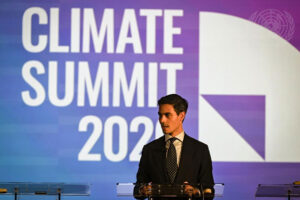
UN Secretary-General António Guterres didn't mince words at UNGA 81. He called out fossil fuel companies for banking record profits while everyday households foot the bill for climate disasters. Emissions are still rising when they need to plummet. Doubling down on oil and gas locks in decades of vulnerability, yet major economies continue to approve new extraction projects under the guise of energy security.
Why Current Pledges Fall Short
Countries representing roughly 90 percent of global emissions have submitted updated Nationally Determined Contributions under the Paris framework. That sounds impressive until you look at the math. Those updated pledges still leave a massive emissions gap. They are not deep enough or fast enough to prevent the dreaded overshoot.
Michael Bloomberg, serving as the UN Secretary-General's Special Envoy on Climate Ambition, noted that financial flows to developing nations have more than doubled since the Paris Agreement took effect. But he admitted it's still a fraction of what is actually required. When adaptation funding lags behind actual damages, the gap translates directly into lost lives and devastated economies.
Clean energy is cheaper than coal, oil, or gas in most parts of the world. The economics already favour renewables. Yet, regulatory bottlenecks, grid outdatedness, and political inertia keep fossil fuels propped up on life support.
What Needs to Happen Now
You can't negotiate with physics. The window to avoid catastrophic tipping points is closing fast. Governments must accelerate renewable energy deployment, upgrade power grids to handle clean energy surges, and enforce strict accountability on major emitters.
We are the first generation with the technology to fix this, and likely the last with the time to do it. Stop treating climate adaptation as a charitable donation or a political talking point. Treat it like the emergency it is.