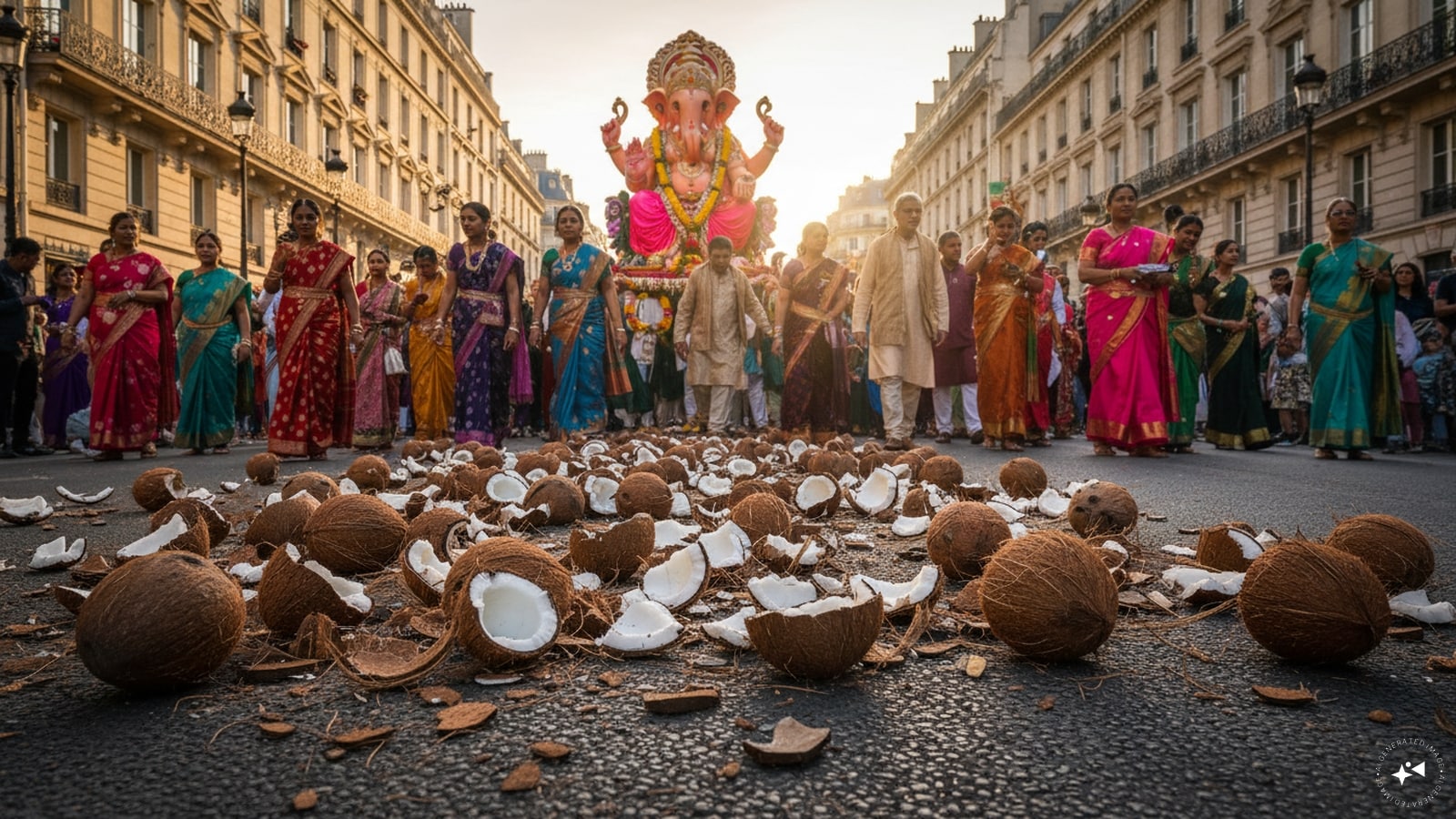
Walk down the streets of the 18th arrondissement in Paris during the annual Ganesh Chaturthi celebrations, and you'll encounter a sensory explosion. Traditional nageshvaram flutes pierce the air, dancers balance burning camphor pots on their heads, and a towering five-meter chariot carrying Lord Ganesha rolls through La Chapelle. But a specific street-level tradition—smashing hundreds of coconuts directly onto the asphalt—recently exploded across social media screens worldwide, turning a decades-old diaspora celebration into a flashpoint for intense online arguments about public spaces, cultural expression, and modern immigration politics.
If you only glance at the viral clips, you'll miss the deep symbolism driving the practice. Organized by the Sri Manicka Vinayakar Alayam temple—France's largest Hindu temple—the annual festival brings together thousands of devotees from the South Asian community and curious European onlookers. During the procession, the breaking of coconuts isn't random littering. It carries profound metaphysical meaning. The hard outer shell represents the illusion of the material world and human ego. The white inner flesh symbolizes individual karma. The pure water trapped inside mirrors our divine soul. When devotees smash the fruit onto the pavement as the deity passes, they are symbolically shattering their egos and offering their hearts to Lord Ganesha for protection and prosperity.
Yet, online commentators looking at the footage through a smartphone lens reacted with starkly different perspectives. Some social media users immediately raised concerns over street cleanliness and how visible cultural displays might influence public opinion or policy debates around immigration in Europe. Critics questioned whether smashing hundreds of hard-shelled fruits on public roads crossed a line into civic disruption.
On the flip side, long-term residents and regular participants rushed to defend the tradition, pointing out a crucial detail missing from short video clips: logistics and cleanup. The annual Paris Ganesh procession doesn't happen in a vacuum. It is coordinated months in advance with the Paris city council, local law enforcement, emergency medical services, and specialized municipal cleaning crews. Local participants note that the collaboration ensures the streets are thoroughly washed and cleared immediately after the parade concludes, leaving the neighborhood as spotless as it was before the celebrations began.
This clash of viewpoints highlights a broader modern tension. When centuries-old cultural rituals migrate into dense Western urban centers, they inevitably collide with contemporary expectations of public space management. For the thriving Indian diaspora in Paris, the festival represents a vital thread of continuity, community identity, and spiritual expression. For online observers thousands of miles away, the same event becomes an abstract canvas onto which they project their own anxieties about cultural integration and urban order.
Ultimately, traditions look different when viewed from the outside versus lived from within. The centuries-old ritual of breaking coconuts for Lord Ganesha will likely continue to draw crowds on the streets of Paris, reminding onlookers that vibrant multicultural cities are built on negotiation, mutual respect, and the messy, colorful reality of human faith.