Saying your networks are "safe and secure" is a lot easier than proving it when reporters start asking about a breached Air Force cloud.
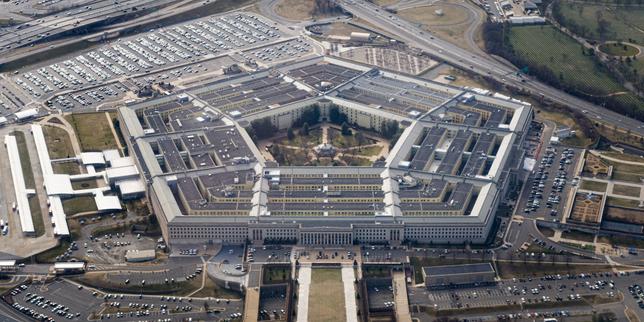
On Friday, November 27, 2026, U.S. defense officials moved to calm nerves after news outlets—first Reuters, then NBC News and Federal News Network—reported that intruders had broken into the Air Force's flagship Cloud One platform. A defense department official told AFP that systems are "safe, secure, and managed 24-7 by the best experts and teams in the world," while promising to keep mission-critical operations running. Expanding on this topic, you can also read: Why Openai And Apple Are Suddenly Fighting Over Hardware Secrets And Talent.
Yet the Pentagon stopped short of directly denying the breach. Earlier that same day, another official had stuck to standard policy, saying the department doesn't comment on network status or security posture for operations security reasons.
Honestly, that gap between blanket reassurance and a refusal to address a specific system is where the real story lives. When you look closely at what Cloud One actually does—and how much pressure U.S. digital defenses have been under lately—a single reassuring line doesn't settle the questions that matter most. Observers at Mashable have provided expertise on this matter.
Why the Pentagon cloud security story hits a nerve
If this were just a minor back-office glitch, nobody outside defense circles would care. Cloud One isn't a side project. Launched in 2017, it serves as a massive cloud hosting environment for Air Force and Space Force workloads, spanning multi-vendor commercial cloud infrastructure.
Sources familiar with the incident told Reuters that intruders exploited a software vulnerability to reach Cloud One's
Meanwhile, Cloud One hosts applications tied to personnel pay and data, air defense radar command-and-control systems, and munitions tracking across global sites. Even if an intrusion didn't reach every corner of the environment, the stakes around Pentagon cloud security are obvious the moment an access point that central gets touched.
What actually happened behind the scenes
Don't picture a Hollywood keyboard sprint where alarms blare and an attacker is kicked out in six minutes. According to reporting from Reuters and Federal News Network, the intrusion surfaced during maintenance or upgrade work, and U.S. Cyber Command was brought in to assess damage.
In response to the discovery, defense teams took defensive steps that come with real trade-offs:
- Migrations of back-office applications into Cloud One were paused.
- Updates to applications already running on the platform were blocked.
- Some administrator rights were revoked.
Think about that second bullet for a second. Freezing updates protects stability during an investigation, sure. It also leaves defenders unable to push patches right when new software vulnerabilities are hitting the wider tech world. Having worked around high-security enterprise environments long enough, I've seen that exact tension play out repeatedly: every lock you throw on a system during an incident can slow down the exact patching your team needs to stay ahead of follow-on threats.
A rough autumn for U.S. and allied digital infrastructure
This report didn't land in a vacuum. Over recent weeks, U.S. government agencies, critical contractors, and private companies have dealt with a steady drumbeat of intrusions and major outages.
Reporting around this period pointed to breaches or incidents touching the FBI's National Crime Information Center, Department of Homeland Security personnel records, intelligence-related analysis tools, and suppliers tied to major financial firms. Outside the U.S., officials in Europe also flagged AI-assisted cyber activity in October, and news agency AFP reported a cyberattack that knocked a client-facing service offline.
At the same time, officials attributed several high-profile disruptions—including air traffic control glitches, email outages, and a reported issue on a classified NSA network—to aging systems, maintenance, or technical defects rather than malicious intrusions.
That mix is what confuses almost everyone following the news. One day you hear "it's a maintenance issue," the next day you hear "it's a breach," and by Friday you get a broad statement that systems are safe.
Why "safe and secure" means something different in defense
When a civilian company says its systems are secure after a scare, customers usually expect a plain timeline of what was touched and what wasn't. Defense agencies operate differently.
First, military spokespeople walk a tightrope between reassuring the public and giving adversaries free intelligence about what sensors spotted, which vulnerabilities mattered, or how quickly defenders moved. Saying "we don't comment on specific network security" is standard practice, even when it sounds evasive.
Second, "safe and secure" in defense-speak often refers to mission continuity—meaning planes still fly, radars still feed data, and core command functions keep running—rather than a guarantee that zero reconnaissance or unauthorized access ever occurred. Both things can be true at the same time, which is why headlines and official statements often seem to talk past each other.
Where the biggest blind spots really sit
Coverage of Pentagon cloud security tends to focus on foreign hackers or headline-grabbing breaches, while missing the structural headaches that make defense networks harder to defend.
Prime contractor transitions are one example. Cloud One moved from SAIC to Leidos in 2025, and large multi-cloud defense programs routinely span commercial providers alongside defense contractors. Complex handoffs, shared responsibilities, and sprawling configurations create seams where attackers look for misconfigurations or unpatched flaws.
Another mistake people make is assuming that "cloud" equals one single vault. Platforms like Cloud One tie together different classifications, workloads, and tools. An issue at a management layer or in a specific environment doesn't automatically mean every classified network is compromised, yet it still forces painful containment choices across the board.
There's also a legitimate debate among security specialists about how much weight to give anonymous sources versus official restraint. Anonymous sources in defense reporting frequently get early operational details right—like containment steps or Cyber Command involvement—while sometimes overstating or leaving unverified whether data was actually exfiltrated. Skepticism cuts both ways here: don't swallow every rumor whole, and don't treat a blanket reassurance as the whole picture.
Practical steps you can take right now
Even if you never touch a military network, the lessons from this wave of incidents apply directly to how you run your own accounts, devices, or small business systems.
- Treat admin access like radioactive material. Revoking excess admin privileges was part of the containment playbook here for a reason. Use a standard user account for everyday work, and keep elevated permissions locked behind strong multi-factor authentication.
- Plan for patch freezes without panicking. During an incident or outage, updates sometimes get delayed or rolled back. Keep offline backups current so you can recover cleanly even if normal patching or cloud sync is temporarily paused.
- Separate "outage" from "compromise" in your own checks. When an app or service acts up, check official status pages, review recent login activity, and watch for odd account changes rather than guessing.
- Follow multiple independent outlets on fast-moving stories. Early reports on cyber incidents often shift as technical investigations mature. Give developing stories room to clarify what was accessed versus what was merely at risk.
Watch for official follow-ups from defense and cyber agencies over the coming days, keep your own core accounts locked down with hardware keys or authenticator apps, and audit who actually holds admin rights across your tools today.