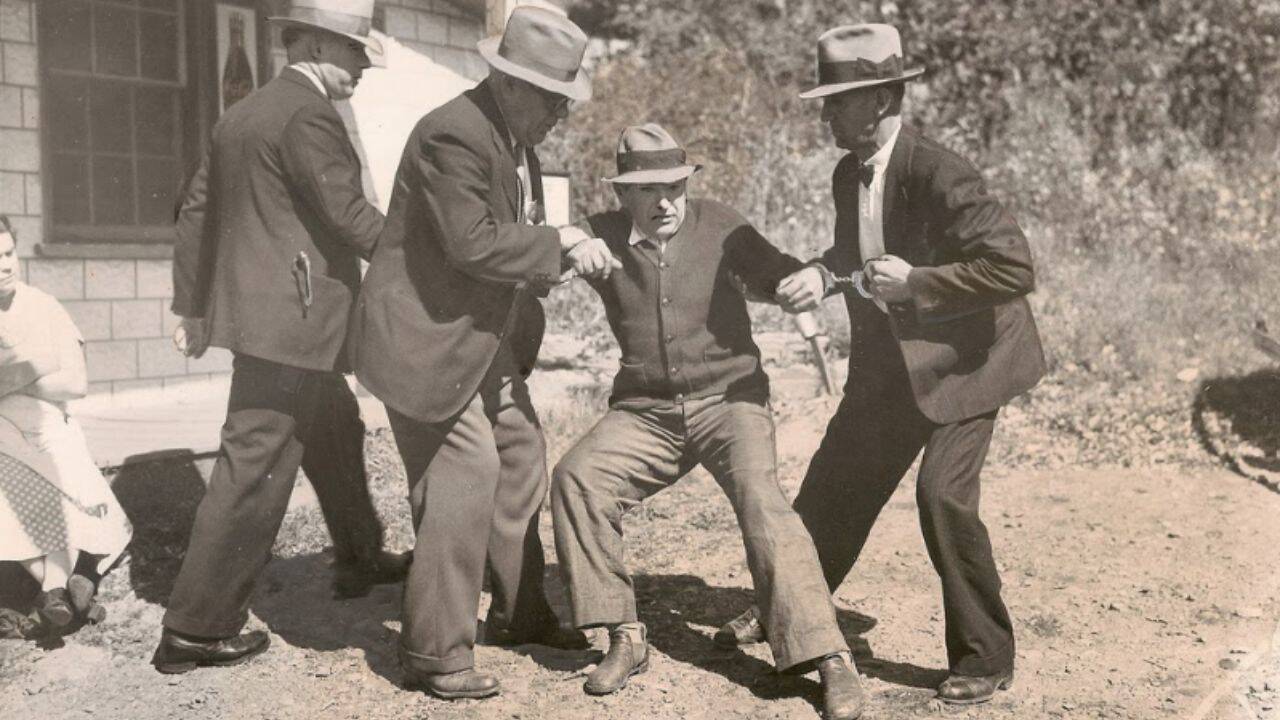
History loves a clean narrative. We like our national parks wrapped in pristine conservation ideals, born from noble visions of protecting nature for future generations. But scratch the surface of places like Shenandoah National Park, and you find a much messier, harsher reality. Take the case of Melanchthon Cliser. In October 1935, local law enforcement officers pulled up to his 46-acre property along US Route 211 in Virginia, slapped handcuffs on him, emptied his home onto the roadside, and sealed his doors.
His crime? Refusing to quietly step aside for federal land acquisition. Offered $4,855 for his thriving home, gas station, and store, Cliser did something radical: he refused to touch the money. He figured that if he never cashed the check, the sale was never complete. He was wrong about the law, but his stubborn protest remains one of the most vivid symbols of how the American wilderness system came at a brutal human cost.
The Real Price of Conservation in the Blue Ridge
When people think about eminent domain today, they usually picture corporate expansion or highway construction. We rarely associate it with the creation of national parks. Yet, during the late 1920s and 1930s, establishing Shenandoah meant clearing out thousands of residents from the Blue Ridge Mountains.
The state of Virginia and private sponsors had to assemble roughly 176,000 acres of land. While public relations campaigns painted the mountain inhabitants as isolated primitives who would benefit from modern relocation, many were established landowners, small business operators, and self-sufficient farmers.
Cliser was far from a destitute squatter. He owned a comfortable seven-room house, a car shed, outbuildings, a grocery store, and a filling station where travelers along the Lee Highway could grab a bite. To him, the government's valuation of his land felt entirely arbitrary. The state paid an average of about $12.50 per acre, though individual payouts varied wildly based on agricultural potential rather than commercial value or generational ties.
Fighting Back With Letters and Lawsuits
Cliser didn't go down quietly. Years before the deputies arrived with eviction notices, he tried to organize local resistance. He wrote letters to newspaper editors, penned direct appeals to the Secretary of the Interior, reached out to state governors, and even called the White House.
He argued a strict constitutional defense. In a 1933 letter to Governor John Garland Pollard, a relative of Cliser noted, "I am relying wholly on the Constitution in this matter; therefore have nothing to arbitrate."
The federal government, however, held all the cards. National Park Service officials made it clear that the federal government would not accept the title from Virginia until every single resident had vacated the park boundaries. The mountain population was viewed by planners as an obstacle to be cleared. Legal challenges wound their way through the courts all the way to the United States Supreme Court, which ultimately dismissed the final suits, paving the way for total clearance.
The Morning of October 3, 1935
On a crisp October morning, the confrontation reached its breaking point. Plainclothes officers drove up to Cliser's gas pumps. Expecting ordinary customers, Cliser stepped out to greet them. Instead of buying gas, the sheriff and his deputies slapped handcuffs on him and drove him to Luray to face the circuit court judge who had signed the removal order.
While Cliser was detained, work crews systematically emptied his home. Furniture, clothing, and personal belongings were hauled out and stacked near the edge of the highway. The doors were locked and officially sealed.
Though he was given a check for $4,855 as compensation for his livelihood, Cliser held his ground in the only way he felt he could. He kept the check uncashed. In his mind, leaving the paper untouched meant he hadn't consented to the theft of his life's work. He never got over the displacement, carrying a deep resentment toward a system that he believed had fundamentally betrayed American property rights.
Why This Story Matters Today
We look at parks like Shenandoah today for recreation, hiking, and scenic leaf-peeping. Millions drive down Skyline Drive every year without realizing the ghost towns and erased communities hidden just beneath the tree line.
Cliser's uncashed check is a stark reminder that public infrastructure and conservation triumphs often demand heavy sacrifices from ordinary citizens who lack political leverage. It forces us to balance our appreciation for protected wilderness against the ethical weight of how that land was acquired.
Check local historical archives or visit the visitor center exhibits at Big Meadows if you want to understand the true human architecture behind America's national parks. Next time you explore a preserved natural landmark, remember the people who were unceremoniously written out of its history.