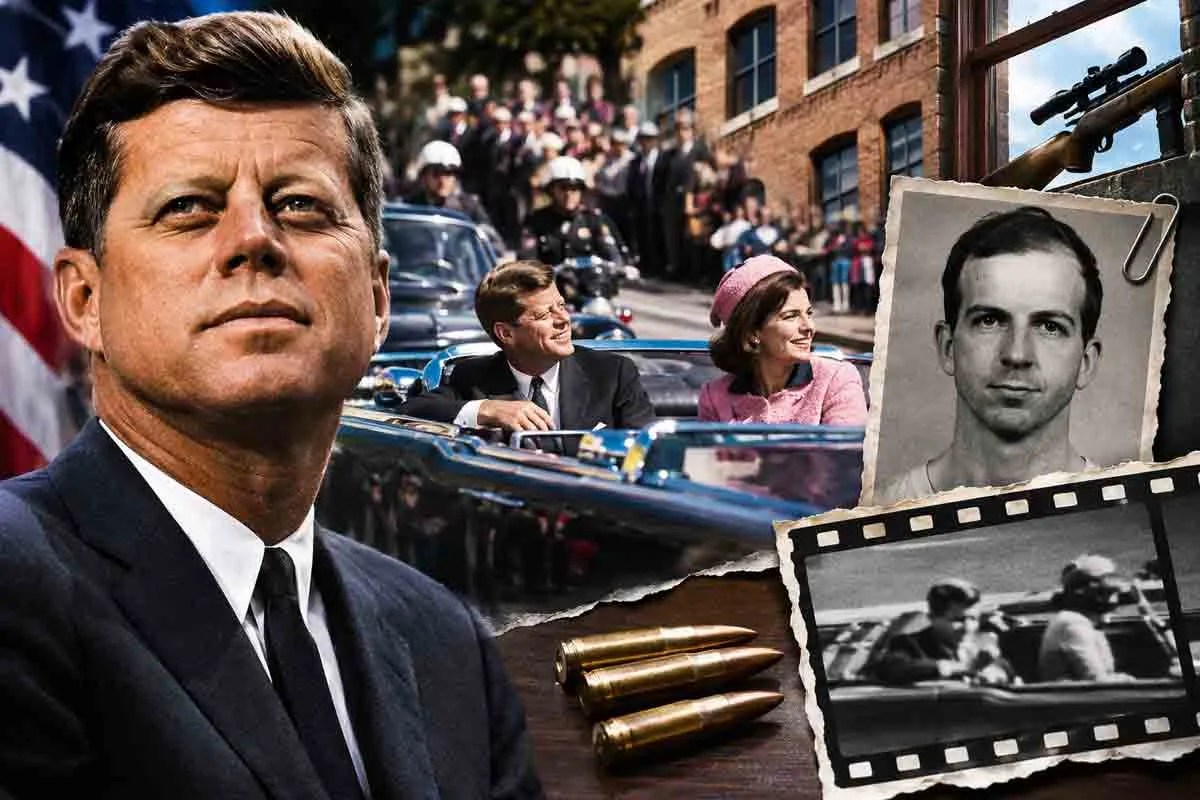
Three shots echoed across Dealey Plaza on November 22, 1963, and certainty died right along with President John F. Kennedy. Most folks think the whole saga boils down to a neat choice between "Lee Harvey Oswald acted alone" and "a shadowy cabal did it." Honestly, that binary misses the real friction inside the evidence. Even after decades of inquiries and massive archival dumps, the JFK assassination mystery stays stubbornly alive because two official U.S. government bodies reached clashing conclusions while thousands of pages of Cold War intelligence stayed buried for years.
If you want the straightest answer up front, here it is. The 1964 Warren Commission concluded that Oswald fired three shots from the sixth floor of the Texas School Book Depository and acted alone, with no credible evidence of a domestic or foreign conspiracy. Fifteen years later, the House Select Committee on Assassinations (HSCA) agreed Oswald fired the shots that hit Kennedy, yet concluded there was a high probability that a second gunman fired from the grassy knoll and that Kennedy was probably assassinated as a result of a conspiracy—without identifying any other shooter or proving institutional involvement by the CIA, FBI, Secret Service, Cuba, or the Soviet Union. And the massive document releases in 2025 and early 2026 under the National Archives JFK Assassination Records Collection added rich context on Cold War intelligence operations without flipping the core murder verdict upside down.
Why the JFK Assassination Mystery Still Trips People Up
People love a clean ending. A lone gunman in a book warehouse fits a tidy crime story, and a grand Cold War plot fits a thriller. Real history is messier, and a lot of popular takes mash together rumors, contested forensics, and real gaps in how the case was handled.
Take the timeline right after the shooting. Kennedy, riding in an open limousine in Dallas with First Lady Jacqueline Kennedy alongside Texas Governor John Connally and his wife Nellie, was struck just after 12:30 p.m. local time and pronounced dead shortly afterward at Parkland Memorial Hospital at age 46. Police soon arrested Lee Harvey Oswald, a former Marine and warehouse employee, and recovered a rifle and spent cartridge casings on the sixth floor. Two days later, on November 24, 1963, nightclub operator Jack Ruby shot Oswald inside the Dallas Police Department basement during a transfer.
That single gunshot in the basement is one of the biggest reasons doubts never faded. Oswald never faced a jury, never testified in a formal trial, and took whatever he knew to the grave. Ruby claimed he acted to spare Jacqueline Kennedy the ordeal of a trial, yet investigators and historians have argued for decades over how Ruby slipped into police custody during heightened security and whether he had deeper ties or motives.
The Single Bullet Debate and Witness Friction
When you dig into the forensic arguments, you quickly see why smart people still argue past each other. Critics of the Warren Commission labeled its explanation of how one bullet wounded both Kennedy and Connally the "single bullet theory," arguing the trajectory and condition of the recovered projectile strained credibility. Connally himself maintained he had been hit by a separate shot rather than the same bullet that struck Kennedy.
Witness accounts also pulled in different directions. Surveys of witnesses compiled around official investigations recorded dozens of people who thought shots came from behind near the book depository, while others reported hearing shots from the grassy knoll area ahead and to the right of the motorcade. Add in Abraham Zapruder's famous home movie—which captured the split-second horror of the motorcade and prompted fierce debate over how Kennedy's head moved after the fatal impact—and you get a crime scene where every frame gets scrutinized like a courtroom exhibit.
What Official Investigations Actually Said Versus Popular Myths
One mistake I see constantly when people talk about this case is treating the 1979 HSCA report as proof of a named mastermind. It wasn't. Even in the House Select Committee on Assassinations findings, the committee's conspiracy finding leaned heavily on scientific acoustic analysis of a Dallas police recording that later faced heavy scientific pushback and skepticism from other experts.
Meanwhile, the HSCA explicitly found that available evidence did not establish involvement by the Soviet government, the Cuban government, or institutional participation by the CIA, FBI, or Secret Service. What the committee did criticize—fairly, in my view—was that federal agencies performed with uneven competence, Kennedy did not receive adequate protection, and earlier inquiries had left conspiracy questions under-investigated.
It's also worth clearing up what "unredacted" or "declassified" actually means in real archival work. People hear there are over six million pages in the collection and picture a single smoking-gun memo sitting in a vault with "Case Closed" stamped across it. In reality, huge archival collections are sprawling mosaics of cables, surveillance notes, travel logs, witness interviews, and administrative files. Most pages are routine or tangential; a few reveal real Cold War tradecraft, agency blind spots, or people whose names orbit the story.
What the 2025 and 2026 Document Releases Changed
If you've been following recent news on this beat, you've probably seen headlines about major releases in March 2025 and January 2026. Following Executive Order 14176 in January 2025, the National Archives published tens of thousands of pages in 2025 and another 11,022 pages on January 30, 2026, as documented on the National Archives 2025 JFK release page and The Sixth Floor Museum at Dealey Plaza timeline.
So what did all those pages actually deliver? They gave researchers a sharper look at CIA and FBI counterintelligence operations, Cold War surveillance around Cuba and Mexico, and how agencies tracked figures connected to Oswald's orbit. What they haven't delivered—at least according to initial reporting by major news organizations and historians digging through the files—is a neat rewrite that proves a second shooter or overturns Oswald's central role.
Honestly, that gap between dramatic headlines and sober archival reality is the whole story of modern JFK research. New documents keep sharpening our picture of 1960s intelligence culture and Cold War paranoia, while the core murder questions—whether anyone else was involved, why security failed so badly in Dallas, and what Oswald really knew—remain contested territory.
How to Research the Case Without Falling for Hype
If you want to explore this piece of history yourself, don't start with sensationalist YouTube clips or recycled social media threads. Start with primary records and established historical institutions.
- Check original records first. Search digitized files directly through the National Archives JFK Assassination Records portal so you can see dates, authors, and context rather than secondhand summaries.
- Compare primary reports side by side. Read the core conclusions of both the Warren Commission and the HSCA rather than relying on one side's summary of the other.
- Visit or explore Dealey Plaza history. Use resources from The Sixth Floor Museum at Dealey Plaza to understand the actual street layout, sightlines, and chronology in Dallas.
- Separate speculation from evidence. Whenever a claim sounds airtight, ask who made it, what primary source backs it up, and whether independent experts dispute the method.
Sixty-three years after November 22, 1963, the mystery endures not because nothing was investigated, but because every layer of scrutiny exposes how fragile certainty can be when history turns on a few seconds in broad daylight.