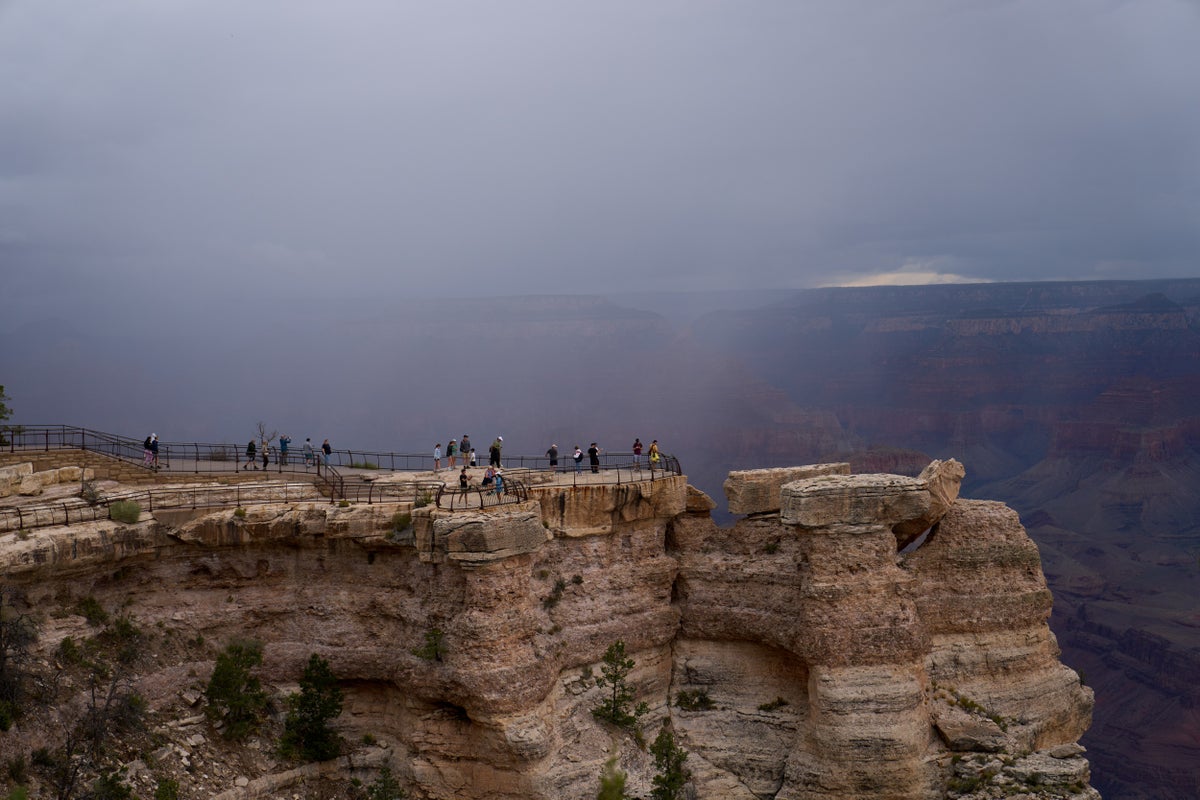
You think you know how fast a storm can move until you are standing inside a mile-deep gorge and the sky turns black in sixty seconds. Most visitors heading down into the Grand Canyon worry about heat exhaustion, dehydration, or failing knee joints on the switchbacks. They pack extra electrolytes, map out every single water source, and obsess over pack weight. Almost nobody plans for the moment a dry creek bed transforms into a violent, roaring wall of muddy water that sweeps away footbridges and forces hikers to scramble bare-handed through sharp cacti just to stay alive.
Flash flooding in the desert Southwest operates on entirely different rules than standard rainstorms. When an unexpected deluge hits the North Rim, the canyon acts like a giant funnel. Rain hits sheer rock faces, gathers zero absorption from dry soil, and rushes downward with terrifying force. Hikers caught in places like Bright Angel Creek or Cottonwood Campground recently discovered how fast a peaceful wilderness escape turns into an emergency extraction zone. Two people lost their lives, scores needed emergency airlifts, and miles of vital infrastructure vanished into the mud.
If you plan on trekking into the backcountry, you need to understand how these events actually unfold on the ground.
The Illusion of Safety in the Desert
People look at clear blue morning skies and assume the weather forecast is a guarantee. That is a dangerous mistake. Monsoon season brings afternoon thunderstorms with clockwork regularity, but the severity varies wildly.
When experienced outdoor adventurers and emergency physicians get caught off guard, you know the environment is unforgiving. Teams descending toward Phantom Ranch have reported going from relative calm to forty-mile-per-hour wind gusts and blinding hail in the span of a single minute. You cannot outrun a wall of water once it starts moving down a narrow slot canyon or confined drainage corridor.
Here is what actually happens when a flash flood hits:
- The sound arrives first, described by survivors as a low, continuous freight train rumble that echoes off the canyon walls.
- Water levels rise vertically by several feet in mere minutes, carrying boulders, uprooted cottonwood trees, and heavy debris.
- Established trails disappear instantly, replaced by churning rivers that make crossing impossible.
Communication is another massive blind spot. Cell service at the bottom of the canyon is practically nonexistent. You cannot check radar apps or refresh weather alerts while standing by the creek. Once you descend below the rim, you are entirely reliant on local conditions, ranger warnings, and your own situational awareness.
Why Traditional Backcountry Advice Fails Here
Standard backpacking wisdom tells you to hunker down in your tent or seek shelter under a rock overhang when bad weather rolls in. In a deep canyon system, that advice can get you killed.
When Mike Sumaruk, an experienced climber visiting from Oklahoma, tried to hold down his tent against punishing winds at Cottonwood Campground, he quickly realized staying put was a losing battle. A wall of water was barreling straight toward his campsite. He had to ditch his gear entirely and run for higher ground.
Similarly, hikers caught along narrow pathways faced an impossible choice: get crushed by falling boulders tumbling down the cliffs or scramble up steep, unstable embankments through dense patches of cactus. When your trail turns into a raging river, minor injuries like cactus spines in your hands become completely irrelevant. You climb wherever the earth offers purchase.
Park rangers and emergency personnel emphasize a few hard truths about desert survival that brochures rarely emphasize:
- Elevation is your only real defense. If water starts rising, drop your heavy pack and scale the nearest safe embankment immediately. Do not try to save your gear.
- Canyon walls shed debris. Heavy rain dislodges rocks the size of beach balls from the cliffs above. Sheltering under an overhang protects you from rain, but exposes you to falling projectile rocks.
- Bridges go first. Infrastructure fails early in major flood events. Once footbridges are swept away, escape routes on one side of the creek are instantly cut off.
How to Prepare for the Unpredictable
You cannot eliminate risk in the backcountry, but you can stop ignoring warning signs. Before you step foot on any trail in the Southwest, check multiple forecast zones—both the rim weather and the canyon floor predictions. Talk directly to park rangers before heading down. They know the current hydrological conditions better than any smartphone app.
If you hear thunder echoing in the distance or notice darkening clouds building above the rim, treat it as an immediate red flag. Do not assume the storm will miss your specific drainage. Turn around or stay put on high ground before you get trapped in a narrow gorge.
The Grand Canyon demands absolute respect. When the weather turns, your gear doesn't matter, your schedule doesn't matter, and your ego definitely doesn't matter. Only your immediate reaction speed keeps you alive.
Stay alert, watch the skies, and never trust a dry creek bed.

.png?width=1200&auto=webp&trim=0%2C0%2C0%2C0)