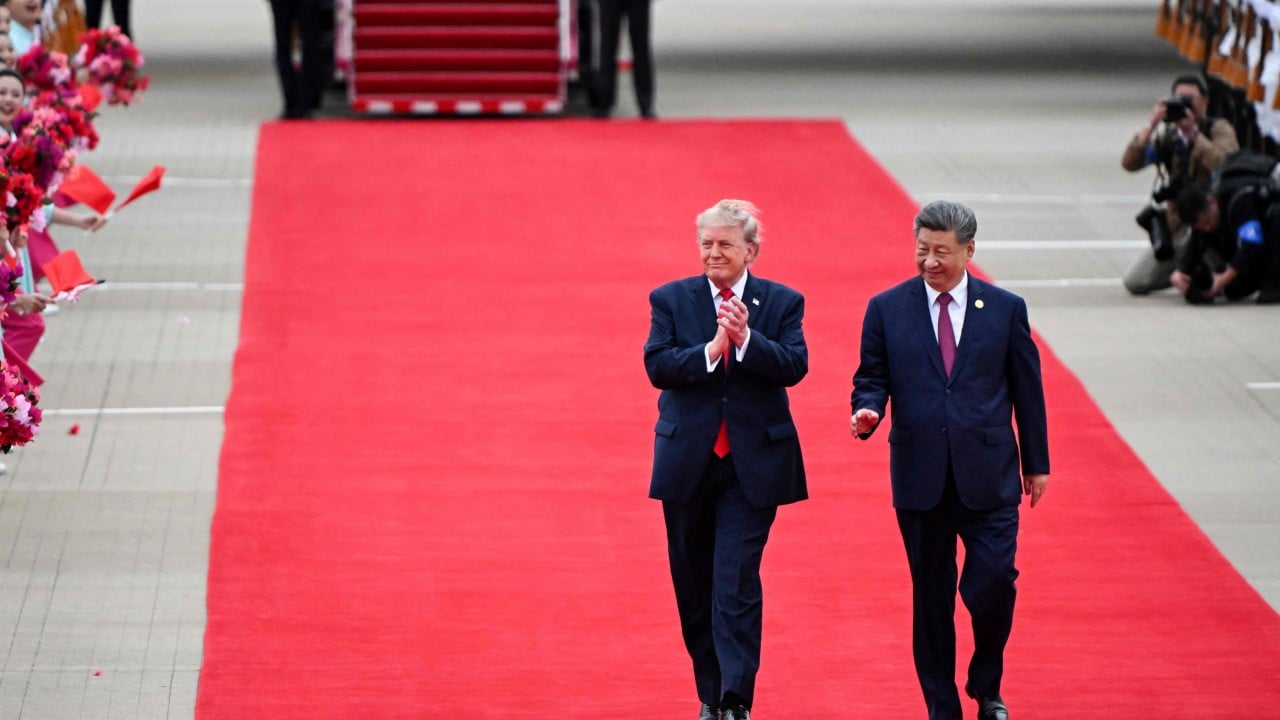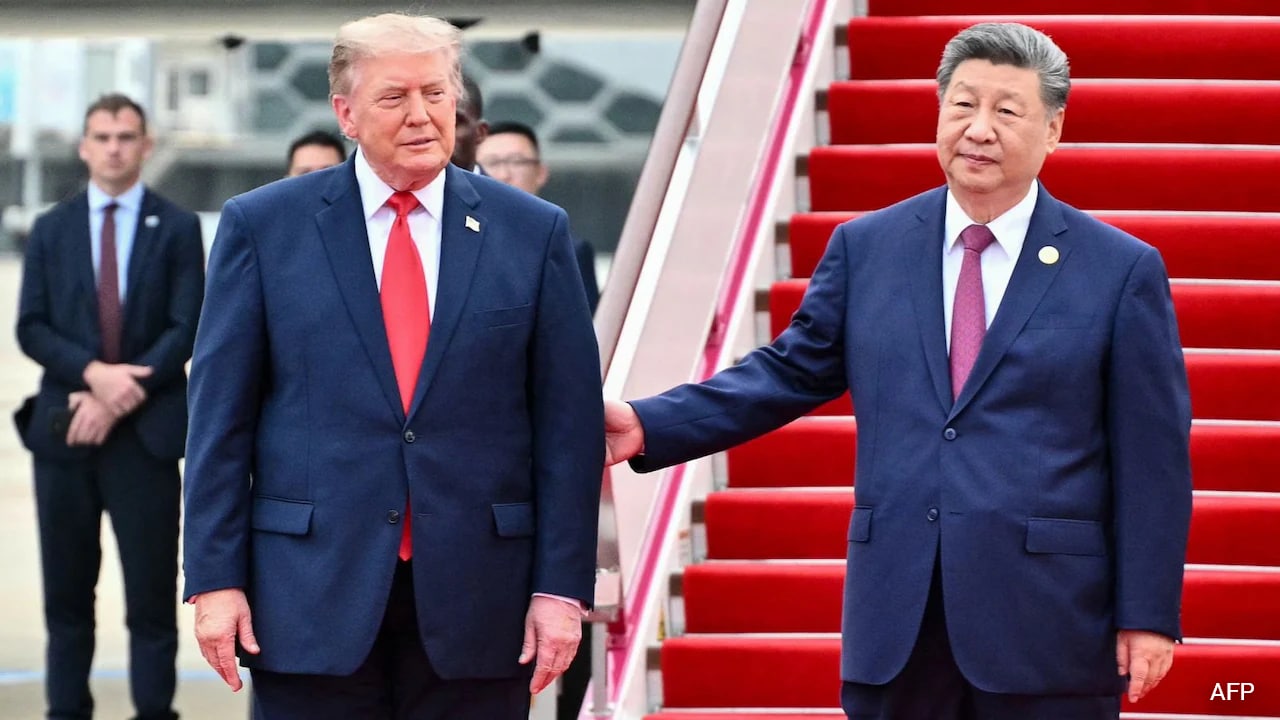
Red carpets don't erase tariffs.
When Donald Trump steps onto Chinese tarmac and Xi Jinping rolls out the kind of high-pageantry reception usually reserved for historic allies, cable news anchors inevitably spend hours dissecting the body language. They look at the firmness of the handshake. They analyze the smiles on the runway. They ask if a new era of cooperation just began.
Honestly, they're missing the entire point.
In Beijing, diplomatic warmth isn't an accident, and it rarely signals a sudden change of heart. It's a calculated tool. When Xi Jinping offers a warm welcome to a US president—especially one known for aggressive trade policies and unpredictable rhetoric—Beijing is playing a very specific game of political theater designed to flatter, disarm, and set the terms of negotiation before anyone even sits down at a conference table.
If you want to understand what's actually happening behind those airport tarmac photos, you have to look past the optics and examine the cold, hard math driving both Washington and Beijing.
Why Beijing Loves High-Pageantry Diplomacy
To understand Xi Jinping's approach to hosting Donald Trump, you first have to understand how the Chinese Communist Party uses protocol. In Washington, state visits are often treated as routine items on a packed presidential calendar. In Beijing, every camera angle, honor guard step, and banquet menu is choreographed weeks in advance.
Trump responds to grandiosity. Everyone in the diplomatic corps knows this, and Beijing's foreign ministry understands it better than most.
Back during Trump's first state visit to Beijing in November 2017, China didn't just give him a standard greeting at the Great Hall of the People. Xi Jinping shut down the Forbidden City for a private tour and dinner—an honor no modern US leader had received since the founding of the People's Republic in 1949. Trump loved it. He repeatedly praised Xi in public afterward, calling him a "very special man" and complimenting the hospitality.
Did that stop the trade war? Not even close. Within months, the US slapped sweeping tariffs on hundreds of billions of dollars' worth of Chinese goods, kicking off a multi-year economic standoff.
Beijing learned a critical lesson from that cycle. Flattery buys time and softens the immediate rhetoric, even if it doesn't permanently alter US policy. When Trump lands in China, rolling out the red carpet costs Xi Jinping virtually nothing domestically, yet it immediately creates a visual narrative of two equal superpowers managing their differences peacefully.
The Real Issues Sitting Behind the Smiles
So if the warm welcome is mostly theater, what are the two leaders actually trying to get out of the room? Strip away the motorcades and the state dinners, and the agenda comes down to a few stubborn, high-stakes friction points.
Trade Deficits and Tariff Threats
Tariffs remain Trump's favorite blunt instrument. Whether he's threatening baseline duties on all foreign imports or targeting specific Chinese sectors like electric vehicles, batteries, and solar panels, Beijing knows its export-driven economy is directly in the crosshairs.
China's domestic economy has faced serious headwinds—from a prolonged real estate slump to sluggish consumer spending and high youth unemployment. Because domestic demand hasn't bounced back the way planners hoped, China has leaned heavily on manufacturing exports to hit its growth targets. Losing further access to the American market—or watching the US pressure European and Asian allies to erect similar trade barriers—is a massive threat to Beijing's economic stability.
Xi's warm welcome is an opening bid to keep the tariff escalation from spiraling out of control. Beijing wants predictable trade rules, fewer export controls on high-end semiconductors, and a pause on new punitive duties. In exchange, Chinese negotiators typically offer large-scale purchases of American agricultural products like soybeans, LNG, and Boeing aircraft—deals that let Trump claim an immediate, tangible win for American farmers and factory workers.
Tech Supremacy and Semiconductor Controls
If trade is the loudest issue, technology is the deepest one. Over the past several years, Washington has built what former National Security Advisor Jake Sullivan famously called a "small yard, high fence" strategy—restricting China's access to advanced microchips, AI computing hardware, and the lithography machines needed to make them.
Beijing hates these restrictions. Xi Jinping has staked his legacy on turning China into a self-reliant technological powerhouse, pouring state subsidies into domestic chipmakers and artificial intelligence labs. Every time the US tightens export rules, it slows down China's timeline.
When Trump arrives in Beijing, Chinese officials will push hard on tech restrictions, arguing that decoupling harms American companies like Nvidia, Qualcomm, and Apple just as much as it hurts Chinese firms. Trump, who often views foreign policy through the lens of business balance sheets rather than traditional ideological alliances, is seen by Beijing as someone who might be willing to strike a transactional deal—if the price is right.
Taiwan and South China Sea Tensions
You can't have a US-China summit without Taiwan hanging over the room like a thundercloud. Beijing views Taiwan as a breakaway province that must eventually be unified with the mainland, by force if necessary. Meanwhile, the US remains bound by the Taiwan Relations Act to provide the island with defensive weapons, even while maintaining its long-standing "One China" policy.
Here's where the warmth on the tarmac serves a vital purpose for Xi. By projecting cordiality and personal respect toward Trump, Beijing tries to drive a wedge between Trump and the more hawkish national security officials in Washington. Xi wants Trump to view Taiwan as a dangerous distraction that could ruin a great bilateral trade deal, rather than a core strategic interest worth defending at all costs.
What Standard News Coverage Misses About the Optics
Most breaking news reports treat a leader's arrival in Beijing as a binary event—either the trip is a "warm breakthrough" or a "frosty standoff." That framing completely misunderstands how modern superpower diplomacy works.
First, look at the domestic audience inside China. State media outlets like Xinhua and CCTV don't broadcast footage of Trump's arrival just for Americans to watch. They broadcast it to 1.4 billion Chinese citizens to send a clear message—the leader of the world's most powerful nation traveled across the Pacific to meet Xi Jinping on his home turf. In Chinese political culture, hosting foreign leaders in Beijing reinforces the image of China returning to the center of global affairs.
Second, pay attention to who isn't smiling. While Xi and Trump might share warm words in front of the cameras, the mid-level diplomats and trade representatives standing ten feet behind them know how narrow the room for compromise really is. Both Congress in Washington and the Politburo in Beijing have grown fundamentally skeptical of the other side over the last decade.
In Washington, being tough on China is practically the only issue where Democrats and Republicans consistently agree. Even if Trump wants to cut a grand bargain during a warm visit to Beijing, he faces intense pressure from lawmakers, defense officials, and domestic manufacturers not to give away leverage on national security or intellectual property.
How to Read Diplomatic Summits Like an Analyst
When headlines start flashing about historic handshakes, unexpected warmth, or sudden breakthroughs between Washington and Beijing, don't take the press releases at face value. If you want to know whether a US-China summit actually changed anything, watch these three indicators over the next thirty days instead of the airport footage.
- Look for signed enforcement mechanisms, not memorandums of understanding. Memorandums of understanding (MOUs) are basically diplomatic IOUs—they sound great in a press conference and rarely compel anyone to change behavior. Real progress involves concrete timelines, verifiable purchase quotas, or formal tariff reductions published in the Federal Register.
- Watch the tone of state media 48 hours after Air Force One takes off. While a US president is on the ground, Chinese outlets keep the commentary polite and forward-looking. Once the plane leaves Chinese airspace, editorials in outlets like the Global Times quickly reveal what Beijing actually thought of the meetings. If the sharp criticism returns within two days, the warm welcome didn't bridge the gap.
- Track corporate supply chain announcements. Multinational companies spend millions on political risk intelligence. If major US tech and retail firms keep shifting manufacturing capacity out of China toward Vietnam, India, and Mexico after the summit ends, it means the people betting real money don't believe the diplomatic warmth will last.
A warm welcome on a Beijing runway makes for great television, and it keeps the world's two largest economies talking instead of escalating toward a crisis. Just don't mistake good manners for a peace treaty.