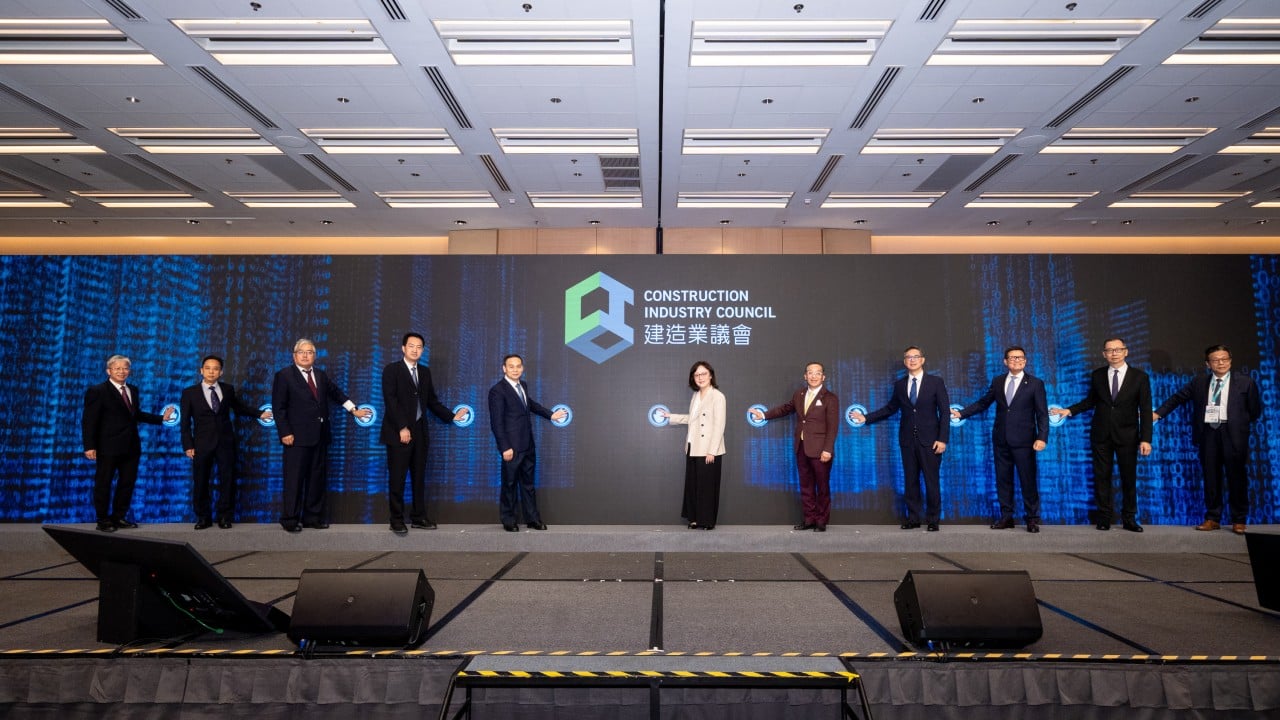
Walk past the booths at CIExpo 2026 in Hong Kong and you'll see plenty of shiny robots, digital twins, and slick sales pitches. Cool stuff, honestly. Yet the real story isn't that robots can walk around a job site or inspect a room. The real question is whether Hong Kong can turn demo-day excitement into repeatable factory and site habits across a HK$360 billion pipeline by 2030/31.
Held from November 23 to 25, 2026 at the Hong Kong Convention and Exhibition Centre as the closing piece of InfraEX Week 2026, the triennial Construction Innovation Expo drew over 190 exhibitors, roughly 33,000 visits, and five international forums. Co-organised by the Construction Industry Council, Hong Kong's Development Bureau, and the Centre of Science and Technology Industrial Development under China's Ministry of Housing and Urban-Rural Development, the event put Hong Kong's role as a construction innovation hub right under the microscope.
Here's my take after looking closely at what was actually on display and what the SCMP advertorial glossed over: Hong Kong has real strengths in modular building and cross-border coordination, but flashy hardware alone won't fix old site bottlenecks.
Why CIExpo 2026 Matters Beyond Booth Demos
Sponsor pieces love big round numbers and upbeat quotes. Fair enough, that's part of trade show marketing. Still, if you work anywhere near capital projects, you know the gap between a trade show floor and a rainy Tuesday on a congested site is huge.
What made CIExpo 2026 interesting wasn't just the headcount or the four core pillars—AI and Smart Construction, Productivity and Robotics, Safety, and Sustainability. It was the timing. Hong Kong has massive housing and infrastructure plans ahead, including the Northern Metropolis, while facing tight labour supply, high urban density, and strict safety pressure.
When Secretary for Development Bernadette Linn and CIC Chairman Ir Prof. Thomas Ho talked about scaling up from pilots to commercial adoption, they were pointing to the hardest part of construction tech. Anyone can wire up a sensor or run a flashy demo for ten minutes. Getting subcontractors, site engineers, and inspectors to use it every single day without slowing down the crane schedule is another thing entirely.
What Was Actually Showcased on the Floor
If you skipped the expo, you missed a mix of practical site tools and experimental hardware from Hong Kong, Mainland China, and overseas exhibitors. Some items looked ready for commercial rollout right away. Others felt like early steps on a longer road.
Modular Systems and Off-Site Workflows
Modular Integrated Construction, or MiC, alongside Multi-trade Integrated Mechanical, Electrical and Plumbing, has been pushing building work out of cramped urban sites and into controlled factories. Think about how much weather delay, material waste, and noise you avoid when big chunks of a building arrive pre-finished instead of being hammered together piece by piece in tight quarters.
On the flip side, off-site fabrication isn't magic. Transporting oversized modules, lining up tolerances, and locking in design freeze dates early can trip up teams that treat modular work like traditional stick-built construction. I've seen projects stall because someone wanted late design tweaks after factory moulds were already set. Speed only happens when everyone commits early.
AI Tools, Sensing, and Robotics
AI at CIExpo 2026 wasn't just chatbots answering policy questions. There was push toward practical tools like the CIC AI assistant for construction safety—built to help workers spot site hazards from a photo—plus digital twins, quality inspection bots, crane sensing units, and quadruped or humanoid robots from firms like Unitree and DEEP Robotics, alongside autonomous heavy gear like Sany's autonomous road roller and research showcases from the University of Hong Kong.
Let's be honest, though. A robot dog or a slick 3D model looks great in a video clip. On a real site, dust, changing lighting, wireless dead zones, and grumpy field crews test every single assumption. If a tool adds extra steps for a foreman who already has ten fires to put out, it'll sit in a container within a month.
The Super-Connector Angle and Its Limits
One big theme around Hong Kong's construction innovation push is its role as a "super-connector"—linking Mainland manufacturing scale and engineering R&D with international standards, financing, and projects across the Greater Bay Area, the Northern Metropolis, and Belt and Road markets.
That positioning makes sense on paper. Mainland factories can manufacture modules and robotics at a scale few places match, while Hong Kong brings international codes, project management depth, and cross-border links. Some projects in Mainland China have already adopted Hong Kong MiC approaches, and memoranda of understanding signed around the expo aim to keep that two-way flow moving.
Yet being a connector brings friction, too. Different safety rules, testing regimes, procurement habits, and contract models don't blend automatically just because two sides sign an MOU. You need shared standards, clear liability rules, and trained people on both sides of the border who speak both engineering and commercial languages.
People and Process Still Decide Who Wins
Here's the mistake I see plenty of firms make: they buy software or hardware first and think about training and workflows last. You can drop smart safety cameras or digital twin dashboards onto a job site, and nothing meaningful changes if site teams don't trust the data or don't know how to act on alerts.
That's why training through institutions like the Hong Kong Institute of Construction matters so much. Project managers, engineers, crane operators, and tradespeople need practical skills for modular coordination, data checks, and digital site management. Without that human layer, tech stays a side project.
There's also a real tension around costs and incentives. Innovation costs money upfront—software licenses, factory setup, sensor gear, training time. Small and mid-sized subcontractors often operate on thin margins and tight schedules. If a new system doesn't protect their cash flow or cut rework fast enough, adoption will stay patchy.
Practical Next Steps for Industry Teams
If you're running projects, supplying tech, or planning cross-border work after CIExpo 2026, skip the hype and take concrete steps:
- Pick one high-friction bottleneck first. Don't roll out five new tools at once. Target a specific headache like quality inspections, MEP clash coordination, or hazard checks on one active site, and measure whether it actually saves hours or prevents rework.
- Freeze design details earlier for modular work. If you're using MiC or MiMEP, get structural, MEP, and logistics leads in the same room before fabrication locks in. Late changes kill modular speed.
- Budget for training and field support, not just licenses. Set aside time and money to coach site supervisors and trade leads on how the tool fits daily routines, and ask vendors for real site trial data rather than showroom demos.
- Verify cross-border standards early. Before signing supply or tech partnerships across Hong Kong, Mainland China, or overseas markets, map out local approvals, testing requirements, and contract responsibilities upfront.