Spain's railway network is one of the largest and most advanced in Europe, but its modern high-speed ambition has a dark history. When tracks fail or human error creeps into tight schedules, the human toll is catastrophic. People look at sleek AVE trains and assume perfection. They forget that behind every derailment and head-on collision lies a system pushed to its absolute limits.
If you want to understand why these tragedies happen, you have to look past the official press releases and examine the grim timeline of Spain's worst railway disasters. Don't forget to check out our earlier coverage on this related article.
Torre del Bierzo and the Shadow of 1944
The deadliest official rail disaster in Spanish history happened on January 3, 1944, at Torre del Bierzo in León. An express train, a shunting locomotive, and a freight train collided inside a dark tunnel. The official death toll stalled at 78 people, but historians and survivors have long known the real number was much higher.
Back then, under the Franco regime, information control was standard practice. Casualties were routinely minimized to protect state image. What started as a brake failure snowballed into a multi-train inferno inside a confined space where escape was nearly impossible. It set a terrifying precedent for how mechanical failure combined with bottlenecked infrastructure could wipe out dozens of lives in seconds. If you want more about the background here, USA.gov offers an excellent summary.
El Cuervo and Human Error in 1972
Decades later, safety protocols still lagged behind expanding routes. On July 21, 1972, a head-on collision near El Cuervo in Seville killed 86 people and injured 112 others. A railbus operating on the Cádiz-Seville route collided violently with an express train coming from Madrid.
This wasn't just bad luck. It was a failure of signaling and scheduling. When single-track corridors carry high-volume opposing traffic, there is zero room for miscommunication. El Cuervo proved that outdated operational systems could turn ordinary commutes into mass casualty events.
The Tragedy at Santiago de Compostela in 2013
For modern travelers, the 2013 Santiago de Compostela derailment remains the defining trauma of Spain's high-speed rail era. On July 24, a train carrying 218 passengers entered a dangerous curve at Angrois doing more than twice the posted speed limit. It was flying at roughly 180 to 190 kilometers per hour in an 80 km/h zone.
Seventy-nine people died. Hundreds more suffered lifelong physical and psychological trauma.
The data recorder confirmed what investigators suspected immediately: the driver was distracted by a phone call regarding logistical transition duties just moments before the curve. But blaming the driver alone ignores systemic failures. Critics pointed out that advanced automatic braking systems designed to prevent overspeeding had been omitted on that specific stretch of track to save time and money.
The Deadly Shocks of 2026
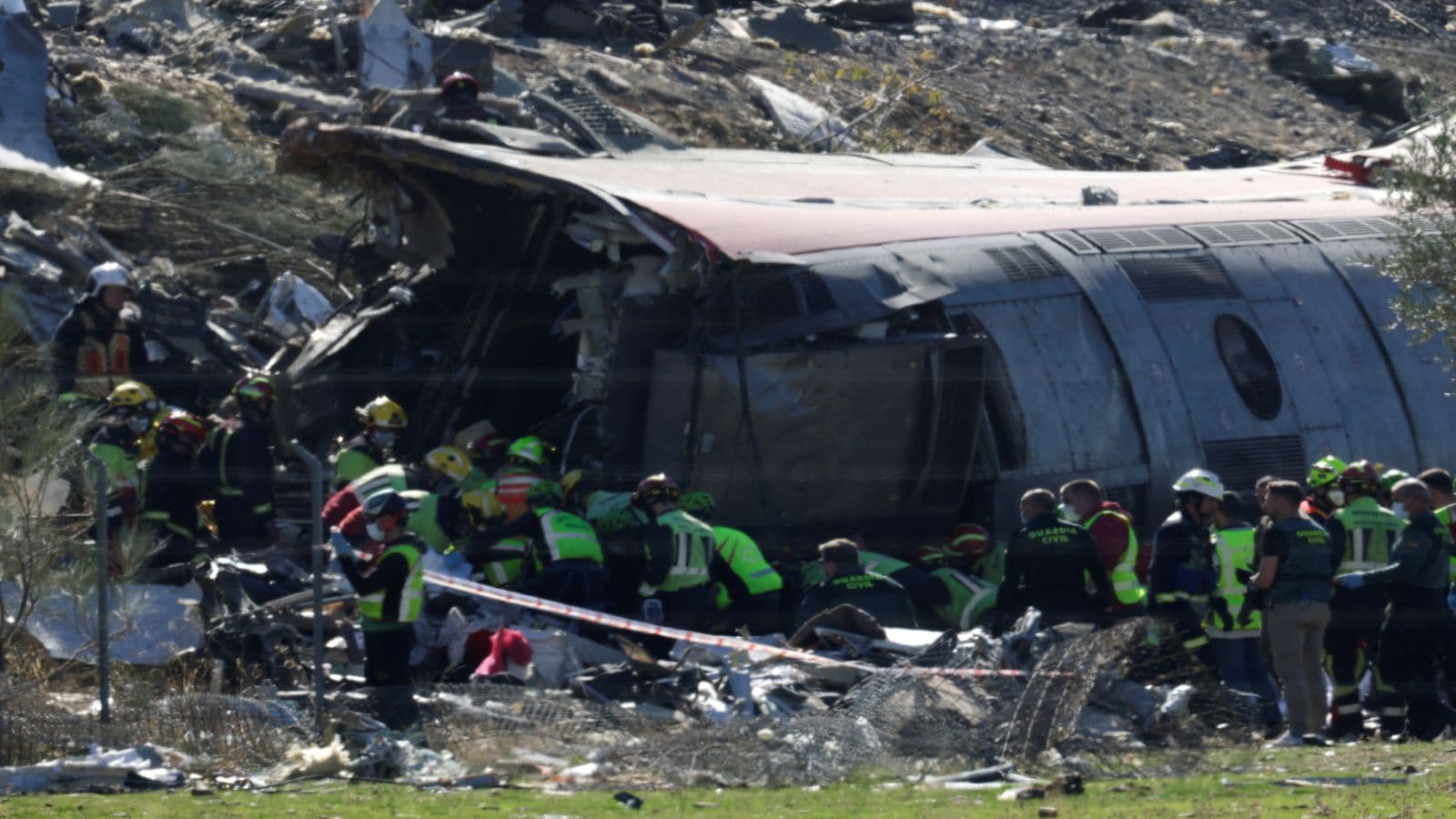
Spain's rail network faced renewed scrutiny following back-to-back disasters. In January, an horrific collision in Adamuz, Córdoba, killed 46 people and injured nearly 300 others. The shockwaves had barely settled when another catastrophic high-speed train collision struck Toledo province, killing at least 68 people and injuring dozens more.
These recent crashes prompted fierce pushback from labor unions. Spain's largest train drivers' union called immediate nationwide strikes, demanding urgent safety overhauls, more thorough track inspections, and the restoration of strict safety buffers. Drivers argued they were being asked to maintain impossible schedules on aging or strained infrastructure. When companies prioritize punctuality and rapid expansion over preventative maintenance, catastrophes stop being flukes and start becoming inevitable.
What Spain Must Fix Now
Building high-speed rail is easy. Maintaining a culture of safety across thousands of kilometers of track requires relentless vigilance.
You can't out-engineer human fatigue or cut corners on automatic braking tech without paying a blood price. If Spain wants to keep its crown as a global leader in high-speed rail, it has to stop treating safety as an adjustable cost and start treating it as the only metric that actually matters.