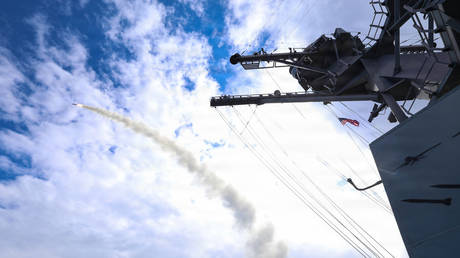
When a high-ranking military official compares multi-million-dollar precision weapons to stale grocery store bread, people listen. During a tense Senate confirmation hearing regarding Operation Epic Fury, acting Navy Secretary Hung Cao dropped a startling revelation. The US military had deployed expired munitions during the conflict with Iran, quietly recoding them before launch to keep arsenals from bottoming out.
If you're wondering how a weapon systems stockpile reaches a point where old hardware gets a second life on the battlefield, the answer lies in severe inventory strain and manufacturing bottlenecks. Let's look at what actually happened, why code classifications matter, and what this says about modern warfare readiness.
The Stale Bread Analogy That Stunned Washington
Cao faced a barrage of tough questions from lawmakers about the state of military stockpiles and munitions availability. To explain how the Department of Defense handled aging equipment, he drew from his personal background.
He noted that a lot of the munitions used in Operation Epic Fury were Code Echo and Code Foxtrot. In military logistics tracking via the Defense Logistics Agency, these codes designate items that are unserviceable or expired. But rather than immediately writing them off as scrap, engineers recoded them.
"I came from a poor family, right? Things like bread don't expire," Cao told the Senate panel. "You just rub some water on... and it's good to go."
While the analogy drew immediate attention and viral reactions across defense circles, the reality of military shelf life is far more complex than a quick microwave fix.
Why Munitions Age and What Code Echo Means
Missiles don't have a simple expiration date printed on the side like milk cartons. However, they do undergo rigorous testing cycles. According to international guidelines on ammunition management, stored propellants and explosives degrade over time. Solid-fuel motors can develop micro-cracks in the propellant grain, altering burn rates and throwing off flight trajectories. Fuzes, batteries, and internal guidance electronics also experience seal degradation, component corrosion, and circuit failure.
When munitions hit Code Echo or Code Foxtrot status, it means they have exceeded their certified shelf life under baseline conditions. That doesn't automatically mean they will fail or detonate prematurely in storage. It simply means the manufacturer's original safety and reliability guarantees no longer apply automatically.
To safely fire these weapons, defense technicians must conduct extensive technical assessments, inspections, and recoding procedures. If components pass re-evaluation, they can be cleared for operational use. That is essentially what the Navy did to stretch its inventory during intense combat operations.
The Real Issue Behind the Headlines: Stockpile Drains
The decision to lean on expired inventory didn't happen in a vacuum. It points directly to the staggering consumption rate of precision weapons.
During the initial weeks of the conflict with Iran, the US military fired more than 1,000 Tomahawk cruise missiles and other high-end precision guided munitions. Modern Tomahawks cost upwards of three million dollars each and take roughly two years to build from scratch. When a conflict burns through weapons faster than factories can assemble them, defense planners face an impossible choice. They either pull back operations or dig into deep reserves, including older stock that requires recoding.
Industrial base bottlenecks have kept production lines from instantly scaling up to wartime demands. While the Navy has managed to ramp up manufacturing output over recent years, current production rates simply cannot match the daily consumption of a major regional conflict.
What This Means for Future Conflicts
Using recoded, expired missiles highlights a fragile reality in modern defense logistics. Wars are won with supply chains, not just battlefield tactics. When superpowers start digging into Code Echo stockpiles, it signals that stockpiles of primary frontline inventory are feeling the squeeze.
Weapons can indeed be recoded and successfully fired if technical teams verify their stability. But relying on resurrected hardware is a stopgap measure, not a sustainable strategy.
Military leaders will have to address the widening gap between high-burn-rate conflicts and slow-turnaround manufacturing pipelines before the next major crisis hits. Until then, expect defense agencies to keep looking for creative ways to stretch every missile in the inventory.