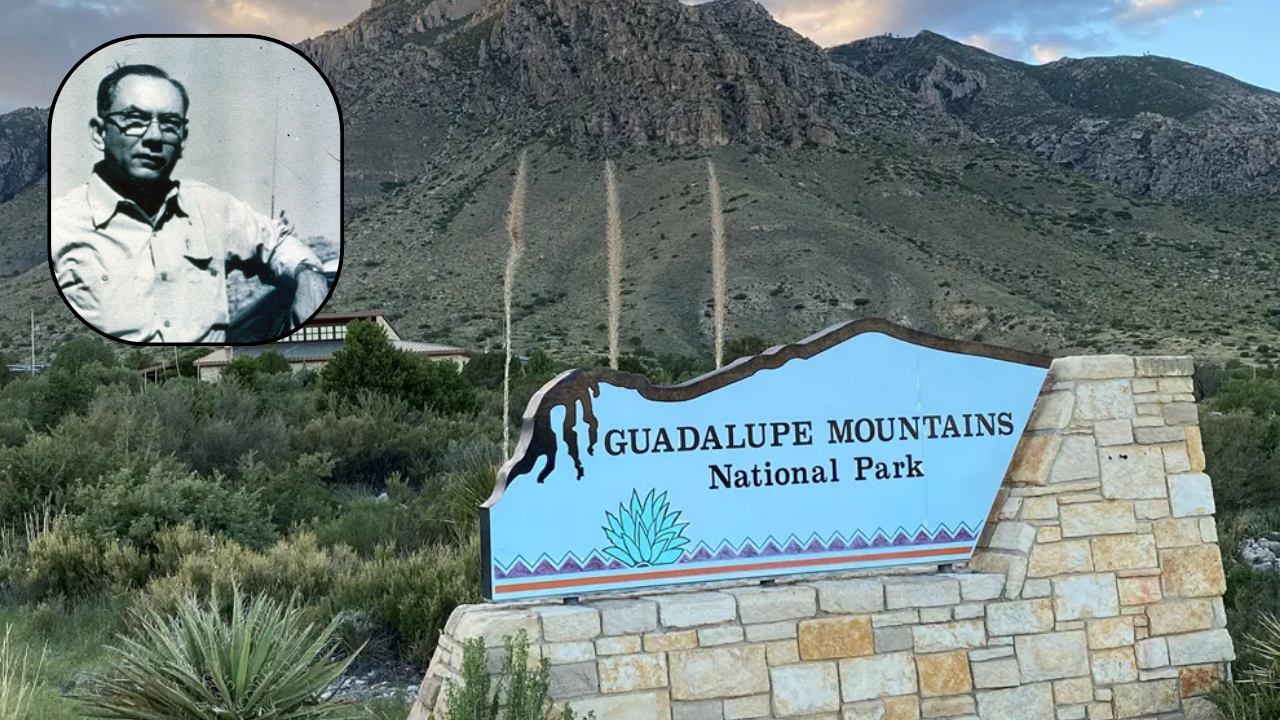
Back in 1934, a Texas rancher named J.C. Hunter tried to sell 43,200 acres of rugged mountain country to the federal government for $237,600. He wanted the land protected. Washington said no. Fast forward thirty-five years, and his family sold an even larger chunk of that same remote terrain—72,071 acres—for $1.5 million. That massive sale formed the backbone of Guadalupe Mountains National Park.
If the government had bitten in the thirties, taxpayers would have scored a massive bargain. Instead, bureaucratic hesitation and a lack of infrastructure pushed the creation of a national treasure down the road for decades.
The Rancher Who Loved McKittrick Canyon
J.C. Hunter wasn't just running sheep and goats to turn a quick profit. Based out of Van Horn, Texas, he fell hard for the unique ecology of the Guadalupe Mountains. McKittrick Canyon captivated him. While other ranchers saw scrub, steep limestone cliffs, and isolated canyons as harsh territory for livestock, Hunter recognized something rare.
During the 1920s and 1930s, he stitched together several smaller spreads to form the expansive Guadalupe Mountain Ranch. He built water systems high up in the mountains to support his livestock, but he also kept conservation in mind. He wanted these peaks preserved.
That motivation led to his 1934 proposal. Through the Grisham-Hunter Corporation, he offered 43,200 acres to federal authorities at a price that matched what the corporation had originally paid: $237,600.
Why Washington Walked Away
You might wonder why the federal government turned down cheap acreage containing some of the most dramatic scenery in Texas. The timing was terrible.
The country was clawing its way out of the Great Depression. Federal budgets were tight, and spending hundreds of thousands of dollars on remote, undeveloped land in West Texas didn't rank high on national priorities. Furthermore, Roger W. Toll, then superintendent of Yellowstone National Park, visited the region and liked what he saw, but the logistics were daunting. There were no paved roads, no tourist facilities, and no political momentum behind a park in that corner of the state.
So the offer died on a desk, and Hunter kept running his ranch.
Passing the Torch to J.C. Hunter Jr.
When the elder Hunter died in 1945, the property transferred to his son, J.C. Hunter Jr.
The younger Hunter didn't slow down. He expanded the ranch footprint until it covered an astonishing 72,071 acres. Like his father, he balanced commercial ranching with a deep appreciation for the natural beauty of the mountains. He hosted friends, hunted, and managed the sprawling acreage.
Yet owning over seventy thousand acres of rugged wilderness isn't cheap. Property taxes and management expenses mounted. By the mid-1960s, the financial reality of holding such a massive estate caught up with the family. At the same time, the national park conversation reignited with serious momentum.
The $1.5 Million Deal That Changed Texas Geography
By 1966, the political landscape had shifted entirely. Congress authorized Guadalupe Mountains National Park, paving the way for federal land acquisition on a scale that hadn't been possible thirty years prior.
In December 1969, the deal closed. The federal government purchased 72,071 acres from Hunter Jr. for $1.5 million.
The numbers tell an interesting story of inflation, rising land values, and government delay. In 1934, the price per acre requested by the father was roughly $5.50. By 1969, the federal government paid an average of about $20.80 per acre to the son. Yet that $1.5 million investment secured over ninety percent of the land mass that defines the park today.
Wallace Pratt and the Final Pieces
The park wasn't built by the Hunter family alone. Petroleum geologist Wallace Pratt fell in love with McKittrick Canyon around the same era. Pratt built a stone cabin in the canyon and eventually donated nearly 6,000 acres of his own land to the government, adding another crucial puzzle piece to the preservation effort.
Congress officially dedicated the park in September 1972, opening the rugged peaks, brilliant autumn foliage of McKittrick Canyon, and vast Chihuahuan Desert grasslands to the public.
What You See Today
If you hike up Guadalupe Peak or wander past the historic Frijole Ranch house today, you are walking across land shaped by decades of private stewardship. The old ranch buildings still stand as a reminder that before this area became a sanctuary for backpackers and geologists, it was a working cattle and sheep operation managed by men who saw its value long before Washington did.
The missed opportunity of 1934 cost taxpayers more money in the long run, but it ultimately preserved a pristine wilderness that might have otherwise been carved up or lost to private development.