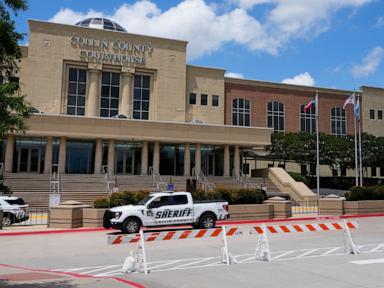
You don't expect to see a kid die at a high school track meet. It's supposed to be about personal records, soggy concession stand nachos, and crowded bleachers. But last year at a rainy multi-school meet in Frisco, Texas, a petty dispute over a team tent turned into a bloodbath. Now, closing arguments are wrapping up in the McKinney courthouse, and a jury has to decide if 19-year-old Karmelo Anthony is a cold-blooded murderer or a terrified kid who protected himself.
Honestly, the defense faces a massive uphill battle. Anthony didn't take the stand in his own defense. Instead, his legal team spent the week trying to convince a Collin County jury that a single push justified pulling out a pocket knife and driving it into the chest of 17-year-old Austin Metcalf.
It's a case that has gripped the Dallas suburbs, especially after toxic social media echo chambers tried to turn it into a racial firestorm. Anthony is Black; Metcalf was white. But as the actual trial evidence showed, this wasn't some grand political or racial statement. It was a tragic, hyper-escalated ego trip that left one teenager dead and another facing life in prison.
The Lethal Unwritten Rules of Track Meet Tent Culture
If you've never been to a massive high school track event, you probably think a tent is just a piece of nylon keeping off the rain. It isn't. According to testimony from Memorial High School track coach Robert Starr, those pop-up tents function exactly like a team bench in basketball or football.
"You just don't go into someone else's tent uninvited," Starr told the jury.
On that rainy afternoon, Centennial High School—the school Anthony attended—was the only program without a tent. Anthony wandered over to the Frisco Memorial High School tent. He was entirely alone. He didn't know the kids inside.
According to multiple teenage eyewitnesses who testified under strict anonymity orders from Judge John Roach Jr., Anthony was asked to leave the area more than 10 times. The vibe wasn't welcoming, but witnesses insist nobody swarmed or bullied him at first. They just told him he didn't belong there.
Instead of walking away, Anthony dug his heels in.
When a Verbal Disagreement Turns Deadly
The prosecution built a devastating timeline of how a minor boundary dispute escalated because of pride. Witnesses testified that Anthony started cursing at the Memorial students, calling them names and stating he wouldn't leave.
Then came the fatal exchange. According to arrest records, Anthony looked at Metcalf and warned, "Touch me and see what happens."
What happened next is the entire crux of the case. Eyewitness accounts from the teenagers inside the tent varied slightly, which is completely normal for a high-stress, sudden event. Some kids saw Metcalf lightly touch Anthony with one hand to guide him out. Another testified it was a two-handed shove. One student even claimed Metcalf pushed Anthony with one hand while grabbing his hoodie with the other.
But regardless of the exact physics of the push, Anthony's reaction was instantaneous. He didn't punch back. He didn't grab Metcalf. He pulled a folding knife—which Frisco police officer Jacob Shalz testified could be flipped open instantly with a one-handed thumb gesture—and stabbed Metcalf squarely in the chest.
Medical examiners testified that the single wound was utterly unsurvivable. The blade pierced straight through to the heart.
Why the Self Defense Claim Is Falling Flat
Defense attorney Mike Howard argued to the jury that Anthony acted out of a "split second of fear and chaos," claiming that waiting too long to defend yourself makes self-defense useless. It's a classic legal strategy. But it ignores a massive, uncomfortable truth that prosecutors hammered home all week.
You can't claim you're an innocent victim of a sudden attack when you brought a prohibited weapon to a school sporting event and repeatedly dared someone to touch you.
Prosecutor Bill Wirskye called the killing a "sneak, surprise attack" and argued that Anthony actively goaded Metcalf into a physical altercation just to use the weapon. The state pointed out that weapons are strictly banned on school property. Anthony didn't just break a school rule; he brought a lethal tool to an environment where the absolute worst expected outcome should have been a teenage fistfight.
Even Anthony's actions immediately after the stabbing hurt his case. While a teammate testified that Anthony seemed "distraught" and was overheard repeating, "I told him not to touch me," his interaction with law enforcement paints a colder picture.
When Officer Eduardo Cortez radioed in that he had the "alleged suspect" in custody at the stadium, Anthony interrupted him.
"I'm not alleged," Anthony said, according to court testimony. "I did it. He put his hands on me. I told him not to."
While the defense wants the jury to see those words as the panicked cries of a scared kid, the prosecution argued it shows a rigid, defiant mindset. It sounds like someone who believes that a physical push gives them the legal right to execute a classmate on the spot.
The Real World Consequences of Online Rage
Outside the courtroom doors, this trial has been a lightning rod for online misinformation. Because of the racial dynamic, commentators who knew absolutely nothing about the case tried to use Metcalf's death to fuel their own culture-war agendas.
It got so bad that Frisco Police Chief David Shilson had to issue a public warning to ignore the online hate and division.
The most grounded perspective throughout this entire nightmare has come from Jeff Metcalf, the victim's father. He went on national television to beg people to stop weaponizing his son's death.
"This was not a race thing," Jeff Metcalf said. "This is a human being thing. This person made a bad choice and it affected both his family and my family forever."
That is the raw reality of the situation. Two families from an affluent, safe Dallas suburb have had their lives completely destroyed because a teenager couldn't handle the ego hit of being told to get out of a track tent.
What Happens Now
The defense rested its case on Monday afternoon without calling Anthony to the stand, a move that keeps him safe from a brutal cross-examination but leaves the jury only with the words of shocked teenagers.
As the jury prepares to deliberate, the legal reality for Anthony is bleak. Under Texas law, to successfully argue self-defense, your use of deadly force must be a reasonable response to what you perceive as an immediate threat of death or serious bodily injury. Getting pushed during an argument about a sports tent doesn't clear that bar, especially when you're the one who brought the knife.
If the jury rejects the self-defense theory, Anthony faces up to life in prison. A verdict is expected to come down quickly once deliberations begin.


