Most kids spend their time playing video games or stressing over math homework. Daniel Zhang decided to build an entire medical strategy game instead.
When Zhang was nine years old, his grandmother received a stage 3 pancreatic cancer diagnosis. Hospitals, aggressive treatments, and confusing medical jargon suddenly filled his daily life. He couldn't grasp why the medicines meant to save her left her completely drained. Years later, when cancer touched his family a second time, he faced the exact same communication barrier while trying to explain the disease to his younger sister. Don't miss our earlier post on this related article.
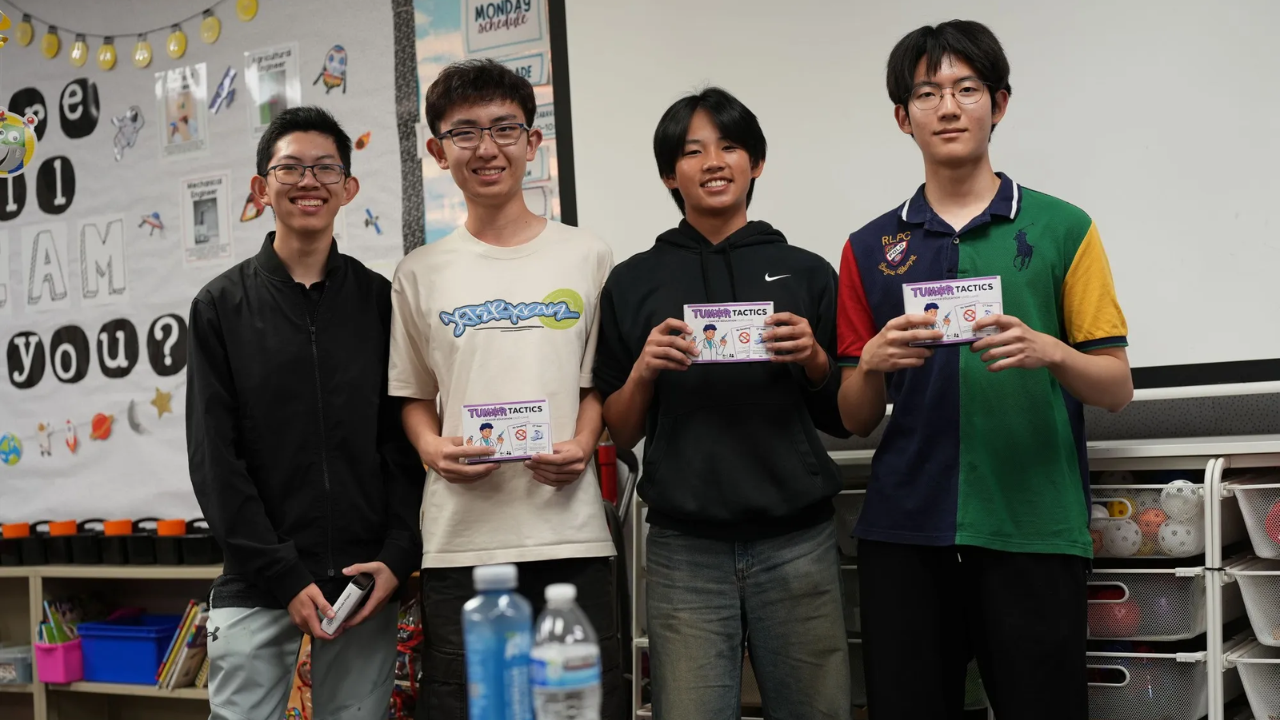
Medical science sounds like a foreign language to young minds. Zhang wanted to fix that problem. Teaming up with fellow student Zachary Tou, he built Tumor Tactics, a 72-card educational strategy game designed to teach children about cancer biology and treatment decisions.
Turning Hard Science Into A Tabletop Strategy Game
Teaching complex oncology to kids sounds nearly impossible on paper. Most textbooks rely on dry, intimidating prose that turns students off immediately. Zhang took a completely different path. If you want more about the history here, Psychology Today provides an excellent breakdown.
In Tumor Tactics, players step into the shoes of doctors. They must navigate real medical concepts, weigh treatment options, and account for harsh side effects. The goal isn't to sugarcoat the disease. It's to make the underlying science digestible without losing scientific accuracy.
The project quickly moved past a simple classroom experiment. The creators secured over $3,600 in grants, became finalists in the ECGBL International Educational Games Competition, and earned a spot at the United Nations Science Summit in New York.
Beyond The Cards With STEAMLabs International
Building a card game was just the starting point for Zhang. He co-founded and serves as National President of STEAMLabs International, a student-led nonprofit focused on running free STEM and arts programs for young learners.
Numbers tell the real story here. The organization has reached more than 1,500 K-8 students across multiple US states and international locations like Nigeria. California State Senator Catherine Blakespear officially recognized his nonprofit work in 2025, highlighting educational events that impacted over 1,500 students.
Balancing Cancer Research And Carnegie Hall
You might assume his schedule stops at education and nonprofits. It doesn't. Zhang also works as a cancer biology and bioinformatics researcher, collaborating with institutions like the UC Davis Comprehensive Cancer Center. He also earned a selection for the competitive Summer Science Program at Purdue University.
On the creative side, he is an all-state classical pianist who has performed at Carnegie Hall and various international stages. He also helps lead HANG, a community initiative that brings live musical performances to senior-care facilities in San Diego.
Connecting these different pursuits comes down to a single motivation. Whether he is playing piano for seniors or designing a card game about oncology, Zhang focuses on translating complex ideas into human experiences. What started as a confused nine-year-old watching his grandmother fight an illness has turned into a mission to ensure no other child feels completely lost in the hospital room.