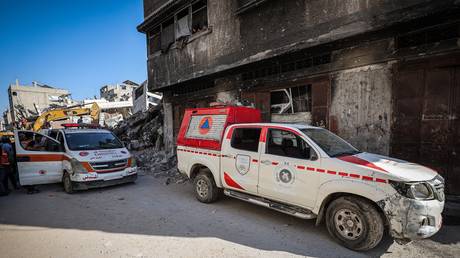
The statistics emerging from Gaza aren't just numbers on a page. They are a mirror reflecting the total collapse of basic human dignity. While global headlines fixate on fluctuating death tolls, a quieter, more insidious tragedy is unfolding inside the maternity wards and makeshift shelters of the strip. The unborn are dying at an alarming rate, and the systems designed to protect them have been reduced to rubble.
If you want to understand the true cost of this conflict, look at the reproductive health data. It tells a story of systemic failure, malnutrition, and medical abandonment that goes far beyond the immediate trauma of bombardment.
The Reality of Pregnancy Under Siege
Before October 2023, the maternal health infrastructure in Gaza was functioning—far from perfect, but operational. Women had access to prenatal care, skilled birth attendants, and hospital facilities. That reality is gone. Now, we are seeing a 41% drop in birth rates according to recent reports, a statistic that isn't just about family planning. It’s a direct consequence of biological survival mechanisms kicking in during extreme starvation and stress.
When a body is pushed to the brink by prolonged malnutrition and terror, it stops prioritizing reproduction. We are witnessing thousands of miscarriages that never make it into a news cycle.
The data from Physicians for Human Rights and the Global Human Rights Clinic highlights a chilling trend. Between January and June 2025 alone, there were over 2,600 recorded miscarriages. That is a staggering figure for a territory of this size. It’s not just "bad luck." It is a physiological response to a toxic environment. When you don't have clean water, consistent caloric intake, or a safe place to sleep, the ability to carry a pregnancy to term vanishes.
Why Birth Is Becoming a Life-Threatening Event
Giving birth used to be a managed medical event. In Gaza today, it's a frantic race against catastrophe. With most hospitals either destroyed or overwhelmed by trauma cases, women are being turned away hours after delivery.
Consider these realities:
- Cesarean sections without anesthesia: Surgeons are being forced to operate on women using whatever is available, sometimes nothing at all, because the supply chain for basic medical anesthetics is non-existent.
- The incubation crisis: Premature babies depend on stable electricity and oxygen. When the fuel runs out, the incubators stop. It’s that simple. Thousands of infants have required neonatal intensive care since the conflict began, but the capacity to provide it has been systematically dismantled.
- Infection and sanitation: After a C-section or a complicated birth, a mother needs a sterile environment. She needs clean water. In a crowded tent encampment, she gets dust, salt-tainted water, and a lack of privacy. Sepsis is rampant, and it’s entirely preventable.
The Invisible Toll of Malnutrition
We have to stop looking at food as just a caloric requirement. For a pregnant woman, nutrition is the foundation of the fetus's survival. Reports indicate that thousands of expectant mothers are on the verge of famine.
I’ve looked at the clinical observations from medical staff on the ground. They are seeing women stop menstruating entirely—not by choice, but because their bodies are shutting down. When a pregnant woman is chronically anemic and severely malnourished, she is essentially starving her unborn child.
This leads to low birth weight, developmental complications, and a drastically reduced chance of survival outside the womb. This isn't just a crisis of the present. The lack of micronutrients for these children now will have long-term effects on their cognitive development, physical growth, and immune systems for decades. We are setting a generation up for systemic health failure.
Misconceptions About the Numbers
There is a lot of noise about how death tolls are counted. Critics often try to undermine the data by pointing to revisions in UN reporting or the origin of the statistics. But here is the thing: the human reality is visible if you look past the political squabbling.
Whether you rely on the Ministry of Health data or international agency assessments, the trend remains the same: maternal and newborn outcomes have deteriorated to levels not seen in modern regional history. The collapse of the health information system means that thousands of deaths are likely under-reported. The babies lost in homes or along displacement routes never make it into a database. They are lost to history.
What Needs to Change Immediately
The situation is past the point of "humanitarian concern." It is a total reproductive health emergency. If we want to move past empty rhetoric, here is what is actually required:
- Unrestricted access to medical supplies: This means more than just food trucks. It means specialized maternity equipment, anesthetics, and neonatal kits must be prioritized as "essential" and moved without the constant threat of border closures.
- Protection of the remaining infrastructure: The few remaining partially functioning hospitals need an absolute guarantee of safety. Turning maternity wards into triage centers for war casualties is a failure of basic wartime protocols.
- Data-driven aid distribution: We need mobile, localized maternal care units that move with the displaced population. Static hospitals are becoming less relevant as the population is forced to shift constantly.
This crisis won't resolve itself. The survival of the next generation in Gaza depends on acknowledging that health is not a secondary concern—it is the baseline for any future stability. The silence on this issue is as loud as the artillery. It's time to stop looking away.