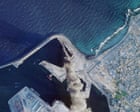
Zelenskyy says Ukraine responsible for sinking a Russian warship in Libya, and honestly, the reach of this strike tells you everything about how far this conflict has spilled. On Monday, November 23, 2026, Ukrainian President Volodymyr Zelenskyy claimed credit for a Sunday operation at the Benghazi naval base that hit the Russian corvette Merkury and the cargo vessel MV Angara.
Seven Ukrainian-made naval drones did the work. Satellite imagery from the port shows heavy smoke and a vessel listing or capsized after blasts tore through the dockside area. Zelenskyy paired the announcement with an address to the NATO Parliamentary Assembly in Berlin, drawing a direct line from burning oil refineries in western Siberia to sunken vessels off North Africa. In similar news, we also covered: What The 2028 Democratic Debate Rules Actually Mean For Candidates.
If you've been watching the war mostly through Black Sea headlines, this looks like a sudden leap across the Mediterranean. It isn't. It's the logical endpoint of two shifts that have been building for months: Russia relying on distant Mediterranean ports to keep its logistics moving, and Ukraine pushing unmanned maritime strikes way past its own coastline.
What Actually Happened at Benghazi
Let's separate what Kyiv claims from what local officials and satellite imagery show right now, because fog of war is thick on day two. Al Jazeera has provided coverage on this important topic in extensive detail.
Zelenskyy stated on X that Ukrainian forces deployed seven naval drones in an operation backed by the Security Service of Ukraine, known as the SBU. According to Zelenskyy and the SBU, the strike sank the Black Sea Fleet corvette Merkury—a ship commissioned in 2023 during the full-scale war—along with a Ka-27 multipurpose helicopter aboard it. Kyiv also said the sanctioned dry cargo vessel MV Angara, which Ukraine accuses of hauling weapons, was hit and sunk.
Eastern Libyan authorities told a slightly more guarded story. They confirmed that the corvette had docked at Benghazi for refueling and resupply under an agreement between Moscow and eastern Libya's administration, and that loud explosions and fires broke out early Sunday. Anonymous Libyan officials speaking to the Associated Press said two drones struck the Merkury after several were launched toward the base, describing the warship as heavily damaged rather than flatly confirming total sinking. Libyan coast guard sources also reported a follow-up naval drone strike hitting a Maltese-flagged commercial ship sailing off Benghazi.
Moscow hadn't issued an official response at the time of Zelenskyy's morning remarks. That silence is pretty typical when a brand-new vessel gets hit far from home waters—nobody in a defense ministry wants to admit on cue that air, sea, and land defenses around a friendly port couldn't stop unmanned boats.
Why Sinking a Russian Warship in Libya Matters Beyond Headlines
From a purely military standpoint, hitting a corvette and a logistics ship at Benghazi hurts Moscow's supply chain in the Mediterranean. The Merkury wasn't an aging Soviet relic; it entered service in 2023, meaning Russia spent scarce wartime shipbuilding capacity on it. Losing that hull, an onboard Ka-27 helicopter, and a cargo vessel tied to military transport hits both escort capacity and supply runs.
Just as important is the message. Ukraine's SBU said the operation proved Russian naval logistics have no safe sanctuary, even far outside the Black Sea. When a warship docks in North Africa expecting a quiet resupply stop and gets slammed by sea drones anyway, every other Russian vessel operating out of Mediterranean or Baltic ports has to recalculate its risk.
There's also a messy geopolitical angle here that live-blog roundups often gloss over. Reports from Libyan officials and international outlets indicate Ukrainian drone specialists have been operating out of western Libyan locations such as Misrata, Tripoli, and Zawiya under arrangements tolerated or backed by Western partners. Meanwhile, eastern Libya has worked closely with Russia. Striking Russian assets moored in eastern Libyan territory pulls a fractured North African state even closer to the center of European and Russian friction.
The Diplomatic Collision Course This Week
Timing makes everything louder. Zelenskyy didn't drop this news in a vacuum on Monday morning—he delivered it alongside blunt warnings to NATO lawmakers in Berlin, while diplomats try to organize four-way talks involving Ukraine, Russia, the United States, and Europe before Christmas.
Zelenskyy pushed hard against vague "Article Five-like" security guarantees as a substitute for full NATO membership. He asked the tough questions nobody in diplomatic lounges likes answering out loud: Which countries would actually step in if Russia attacks again? Which troops would be stationed on Ukrainian soil ahead of time? What would it cost, and would it hold?
Meanwhile, European capitals are dealing with spillover closer to home. NATO's North Atlantic Council is meeting after three Russian missiles crashed in Poland on Friday during a wider wave of attacks on Ukraine, with Warsaw expected to push allies for stronger backing. At the UN Security Council, diplomats are taking up Russian strikes that hit civilian sites in Kyiv, including consulate buildings for Austria and the Netherlands.
Put those pieces together and you see why talks "before Christmas" look so fragile. One side is talking about holiday-season negotiations, while missiles land near NATO territory and naval drones hit ships off Libya.
Common Mistakes People Make Reading Strikes Like This
When a dramatic strike happens far from the front line, people tend to jump to one of two extremes.
The first mistake is assuming a single naval strike ends Russia's ability to project power in the Mediterranean or fund its war effort. Russia still has other ships, alternative logistics routes, and deep energy revenues—which is why Zelenskyy pointed to strikes hitting oil refineries in western Siberia alongside the Benghazi hit. Attrition happens in layers, not all at once.
The second mistake is treating claims from any side as settled gospel in the first 24 hours. Kyiv has a strong incentive to declare a total sinking and maximum damage to a new corvette; local officials in eastern Libya have their own political incentives and may frame damage differently; independent satellite analysts look at hull orientation and plume patterns to see what's visible from orbit. Waiting for multi-source confirmation before locking in every detail saves you from repeating bad intel.
How to Follow This Story Without Getting Played
If you're tracking how this week plays out across Eastern Europe, the Mediterranean, and diplomatic tables, a few practical habits will keep you ahead of the noise:
- Cross-check claims against satellite and wire reporting: Compare Kyiv's operational statements with wire reports from sources like Reuters and the Associated Press, plus commercial satellite imagery, to see what is visually confirmed versus claimed.
- Watch NATO and UN readouts from today's meetings: Pay attention to what Poland requests at the North Atlantic Council and how European allies respond to strikes affecting diplomatic missions in Kyiv—those moves show whether escalation is changing ally posture.
- Separate wartime messaging from actual negotiation tracks: Listen closely to concrete signals around proposed four-way talks before Christmas, especially around air defense deliveries and security guarantees, rather than taking tough speeches at face value.
The map of this war hasn't shrunk back to a trench line or a single sea. It keeps stretching outward, testing how far unmanned systems can reach and how much spillover Europe is willing to absorb.


