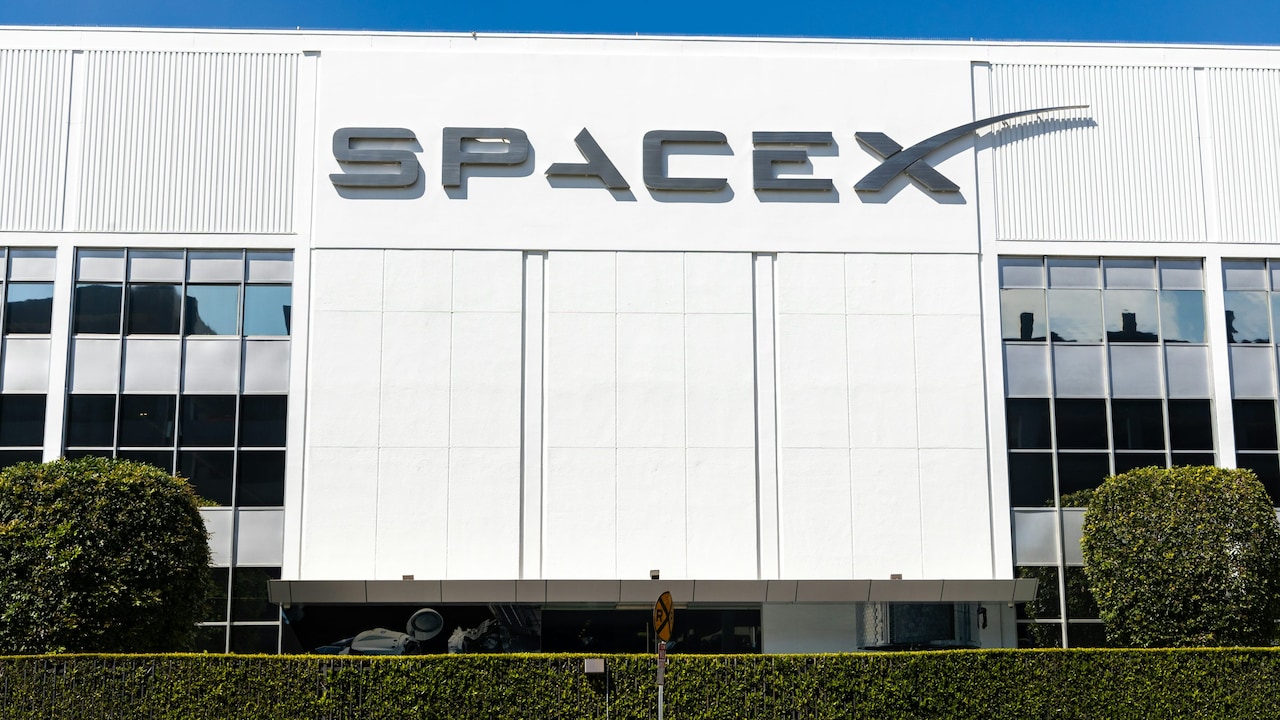
One million satellites. For data centers. In space.
On November 25, 2026, the Federal Communications Commission handed SpaceX the first authorization in U.S. history for a constellation of orbital data centers, a project the company calls Starmind. That single decision puts a regulatory ceiling of up to 1,000,000 compute satellites on the table, roughly sixty times the total number of satellites currently orbiting Earth.
Honestly, when I first read that number, my jaw hit the floor. Launching a million of anything into orbit sounds like a sci-fi fever dream, not a federal order. Yet here we are, looking at an approval meant to feed hungry artificial intelligence workloads from above while easing the brutal power and land squeeze hitting server farms on the ground.
Don't pop the champagne just yet, though. A license to try isn't a finished network, and SpaceX itself warned investors ahead of its June 2026 initial public offering that space-based AI data centers rely on unproven tech and might never turn a commercial profit.
What SpaceX Actually Got Approved to Build
Let's clear up a common mix-up right away. Starmind isn't just another Starlink internet upgrade. Starlink moves broadband data between ground stations, users, and orbit. Starmind is built to do the computing in space using onboard AI chips, then beam the processed results back down through optical laser links and Starlink infrastructure, backed by radio-frequency bands for telemetry, tracking, command, and backup links.
According to reporting on the FCC's order (DA 26-1273), the authorized constellation spans altitudes between 500 and 2,000 kilometers. The agency set strict phased milestones rather than handing over a blank check with no clock:
- At least one operational satellite in its assigned orbit by November 2033.
- 100,000 operating satellites by November 2035.
- 500,000 operating satellites by November 2038.
- The full one million by November 2040.
SpaceX has pointed to a factory in Bastrop, Texas, as a potential production hub that could start turning out hardware as early as late 2027, with earlier IPO commentary eyeing initial deployment around 2028. Even if everything goes right, jumping from 500,000 satellites in November 2038 to 1,000,000 two years later means scaling manufacturing and launch cadence at a speed nobody in aerospace has ever matched.
Why Tech Companies Are Looking Up Instead of Plugging In
If you've watched data center construction over the last two years, you know why engineers are looking at the sky. Ground-based AI clusters eat staggering amounts of electricity. The International Energy Agency has projected global data center power demand could roughly double toward nearly 1,000 terawatt-hours by the end of the decade.
On Earth, every new megawatt triggers a dogfight. Utilities struggle with grid bottlenecks and transformer backlogs. Local towns push back against noise, strain on municipal water supplies, and higher power bills. In the 2026 midterms, voters across the U.S. even passed dozens of measures aimed at curbing data center buildouts.
Space skips local zoning boards completely. In carefully chosen orbits, solar panels can catch sunlight nearly non-stop without clouds, weather, or night cycles getting in the way, delivering far higher solar energy density per square meter than panels sitting under terrestrial skies. And because modern satellites already snap massive volumes of Earth observation, communications, and sensor data, doing AI filtering and compression right in orbit avoids hauling raw petabytes down to Earth first.
The Physics Catch Nobody Can Bribe Away
Here is where hands-on engineering reality meets hype. People love saying space is cold, so cooling hot AI chips should be easy.
That's backwards.
On Earth, a server rack uses air or liquid cooling to push heat into surrounding air or water that carries it away by convection. In the vacuum of space, there is no air or water to carry heat away. A spacecraft can only shed heat through thermal radiation—glowing infrared energy out into space through radiator panels.
Large radiator surfaces add mass, cost, and micrometeoroid vulnerability. High-powered AI accelerators also have to survive energetic space radiation and sharp thermal swings without suffering bit flips, latch-ups, or premature hardware wear. Google has been testing how compute hardware handles radiation and temperature extremes in space research such as Project Suncatcher, while startups like Starcloud (which put an Nvidia H100 chip in orbit in late 2025 to run Gemini) and Axiom Space (which launched orbital data center nodes in early 2026) are testing real hardware in orbit.
Testing a handful of satellites is one thing. Keeping hundreds of thousands of high-wattage compute nodes cool, powered, radiation-hardened, and profitably maintained for years is another beast entirely.
Pushback From Rivals, Astronomers, and Environmental Groups
The FCC didn't hand down this authorization in a vacuum. Critics came swinging from multiple angles, and the agency rejected petitions from Amazon, Viasat, and the American Astronomical Society while also leaving open questions or deferrals around certain higher-altitude disposal requests above 600 kilometers.
Amazon argued putting a million satellites in orbit could take centuries. Astronomers worry about bright streaks marring optical observations—even as satellite operators work on brightness mitigations, studies on newer Starlink generations have shown progress compared with early designs while still falling short of strict astronomical targets. Meanwhile, environmental groups like Earthjustice criticized finalizing the approval without a full National Environmental Policy Act review, warning about cumulative atmospheric and orbital impacts as tens of thousands—let alone a million—satellites cycle through launch and reentry.
Blue Origin also has its own orbital data center filing for tens of thousands of satellites under review, and other startups like Orbital are chasing similar concepts. Even FCC Chairman Brendan Carr framed the move around competing with rivals and keeping U.S. computing leadership strong, while noting other proposals remain under review.
What to Watch Next If You Track AI or Space
You don't need a rocket pad in South Texas to follow whether Starmind becomes real infrastructure or stays a headline milestone. Keep an eye on a few concrete markers:
- Watch the Bastrop factory and early orbital test hardware. Look for actual satellite production numbers and real telemetry from orbital AI nodes rather than slide-deck projections.
- Track launch cadence against the FCC clock. November 2033 for the first operational Starmind satellite and November 2035 for 100,000 are the real checkpoints—not press releases.
- Follow regulatory and orbital debris rules. Pay close attention to FCC follow-on conditions, higher-altitude disposal rules above 600 kilometers, and any legal challenges over environmental review.
- Compare unit economics against ground power. Track whether lower-cost solar power in orbit ever beats terrestrial grid upgrades, fiber latency, and maintenance costs for real AI workloads.