Two Australians are now confirmed among the 69 victims of Spain's catastrophic high-speed train collision, bringing a heartbreaking reality home as international families face agonizing waits for forensic identification.
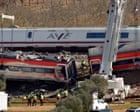
The disaster unfolded when a state-operated Renfe service slammed directly into the back of a stationary train run by private company Iryo near Urda, roughly 130 kilometers south of Madrid. It stands as one of Europe's deadliest rail accidents this century. Investigators point directly to a systemic failure. An automatic safety system halted traffic across a 63-kilometer stretch, yet a control center inexplicably cleared the Renfe train to resume movement while the other service remained motionless on the tracks.
Australia's Department of Foreign Affairs and Trade confirmed consular assistance is being provided to the grieving families. Foreign Minister Penny Wong expressed deep condolences to Spain on behalf of the nation, calling the collision devastating. But sympathy doesn't fix a broken system. This tragedy marks Spain's second major high-speed train collision this year, following a January crash in Andalusia that claimed 46 lives.
Public trust in the country's once-lauded rail infrastructure is completely shattered. Prime Minister Pedro Sánchez faces intense pressure as citizens question how a network engineered for precision can suffer such catastrophic control failures twice in a single year. The international toll underscores the widespread impact, with victims hailing from the United States, Japan, Argentina, Canada, France, Mexico, Portugal, Tunisia, and the Czech Republic, alongside 54 Spanish nationals.
Forensic teams are working through grueling identifications, sometimes relying on individual body parts due to the sheer violence of the impact. Labor MP Jason Clare noted that accidents of this magnitude leave emotional scars communities never truly recover from.
As investigations continue, the spotlight falls squarely on operational oversight and the communication gaps between automated safety cutoffs and manual control overrides. Spain's rail authorities must answer hard questions about how safety protocols failed twice in months, or risk turning a point of national pride into a symbol of systemic neglect.