Governments lie to protect diplomatic alliances, but internal police reports have a habit of leaking. A confidential document from the Spanish police forces has landed directly in the hands of judicial authorities, completely shattering Madrid's official narrative regarding the late July migration crisis at Ceuta. Prime Minister Pedro Sánchez has insisted that Rabat bears no responsibility for the massive influx of people breaching the border. The police beg to differ.
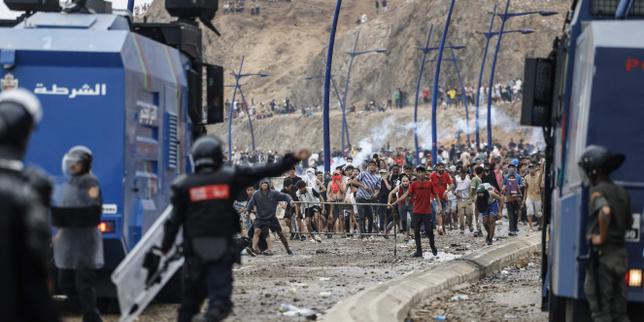
According to investigative findings leaked through outlets like El Español and El País, the security response from Moroccan forces on July 30 and 31 showed total permissiveness. Thousands of individuals moved toward the border perimeter without facing any serious attempts by local authorities to disperse or stop them. This direct contradiction opens a massive political fault line within Spain's executive branch, pitting the government's diplomatic stance against raw intelligence from its own law enforcement.
The Anatomy Of A Border Breach
Why does this report change everything? Because it moves the narrative away from a spontaneous humanitarian wave toward something calculated. The data points collected by Spanish investigators highlight strange anomalies. Roughly 90 percent of the individuals who managed to cross into Ceuta during those turbulent days turned right back around and returned to Morocco within hours.
Spontaneous migration doesn't work that way. When people risk everything to cross a heavily fortified border, they rarely walk back across voluntarily on the same day unless the initial movement served a completely different strategic purpose. Police analysts point out that the massive surge acted as a pressure valve or a deliberate saturation tactic designed to overwhelm Spanish defenses.
Adding fuel to an already volatile situation, media reports indicate that the leaked dossier mentions the entry of individuals with suspected ties to radical networks. When security issues mix with political friction between Madrid and Rabat, the stakes escalate rapidly. Yet, Spain's political leadership spent the immediate aftermath downplaying any involvement by Moroccan authorities, opting instead to preserve fragile bilateral agreements.
Institutional Fractures And Judicial Scrutiny
The document didn't just stay within police channels. It was transmitted straight to Judge María Tardón and the public prosecutor's office, bypassing standard ministerial reporting lines. That detail matters immensely. It suggests deep frustration within the ranks of law enforcement agencies who felt their warnings were being ignored or suppressed by political appointees at the top.
When operational intelligence gets locked out of political decision-making, democracies run into trouble. Interior Minister Fernando Grande-Marlaska now faces intense scrutiny not just from opposition parties, but from within the state apparatus itself. Why did a report this explosive reach a judge before landing on the desk of the interior minister? Who decided to sit on the intelligence, and what else are officials hiding to keep relations with Rabat smooth?
Rabat, for its part, has dismissed the police findings as rushed and inaccurate. Moroccan media outlets were quick to attack the report as a botched job, arguing that accusations of permissiveness rely on selective satellite snapshots rather than ground reality. High-ranking Moroccan officials previously insisted to agencies like Agence France-Presse that their security apparatus experienced zero operational failures during the incidents.
What Happens Next For Madrid
Pedro Sánchez is trying to weather the storm by making a solitary stand in defense of Morocco's posture. But holding that line becomes nearly impossible when courts start examining police files that describe official inaction on the other side of the fence. The judiciary will now decide whether to launch a full-scale formal investigation into the breach.
If the courts dig deeper, the pressure on the Spanish government will mount exponentially. Ignoring law enforcement evidence to maintain diplomatic harmony might work in the short term, but leaked police dossiers have a funny way of forcing uncomfortable truths out into the open. Watch the judicial proceedings closely because the fallout from Ceuta is only just beginning.