No cash changed hands when Speightstown and Bristol signed their three-year pact, and that's the entire point.
If you've followed the reparations debate for years, you know the usual script. One side demands massive financial payouts or trillion-dollar reckonings. The other side throws up a wall of defensiveness, claiming present-day taxpayers shouldn't pay for historical crimes. Both sides end up talking past each other while everyday people get stuck in stalemate. For a deeper dive into similar topics, we suggest: this related article.
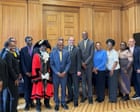
The new Speightstown and Bristol deal breaks that pattern on purpose. Signed at Bristol City Hall on Friday, November 20, 2026, by Barbados Labour Minister Colin Jordan and Bristol City Council leader Tony Dyer, the three-year memorandum of understanding runs through November 2029. It carries zero dedicated capital funding for major projects. Instead, officials frame it as a practical piece of the reparative process—one built on honest history, civic exchanges, and day-to-day connection between a Barbadian port town nicknamed "Little Bristol" and the English city that helped shape its sugar-era past.
I've watched plenty of municipal twinning agreements turn into dusty certificates locked in a cabinet. That's why looking closely at what this pact actually does—and what it deliberately skips—matters so much right now. To get more context on this topic, comprehensive coverage can be read on The Guardian.
What the Speightstown and Bristol Deal Actually Covers
Let's be clear about what this agreement is and isn't. It's a non-binding three-year framework running until November 2029, designed to guide cooperation across heritage, education, culture, tourism, sport, and the creative economy. Exact projects still need to be hammered out through follow-up discussions across municipal teams, schools, universities, and community groups.
Wait—no money attached to a reparations-linked agreement? Critics from both extremes will pounce on that immediately. Some campaigners will call a zero-pound deal toothless. Some hardline opponents will still cry foul over the word "reparative."
Honestly, both reactions miss how Jordan is approaching the problem. Speaking after the signing, Jordan—who also serves as the MP for St Peter, the parish where Speightstown sits—pointed out that the word reparations comes from repair. When people hear the word, defensiveness often kicks in before anyone even listens. A town-to-town partnership lowers the temperature by focusing on relationships between real communities rather than a courtroom-style bill.
Jordan even used a Barbadian proverb to explain the pacing: "A sheep head a day is better than a cow head a year." In plain terms, steady, consistent progress beats waiting around for a giant windfall that might never arrive.
You can see that same "building block by building block" thinking in the concrete examples Jordan raised. Value isn't just currency. Picture a child in Speightstown whose parents can't afford a basic school bag, getting help through a link with a school in Bristol. Or picture university ties, school exchanges, and links between cricket and football organizations that actually give young people on both sides of the Atlantic a reason to know one another.
Bristol is running a similar track elsewhere, pursuing a parallel three-year memorandum with Odesa in Ukraine. For Speightstown, this isn't its first overseas tie either—it already holds twinning-style agreements with Reading in the UK (signed in 2003) and Charleston, South Carolina, along the Gullah Geechee corridor.
Why "Little Bristol" and Sugar History Matter Here
Speightstown is the second-largest town in Barbados. During the 17th and 18th centuries, sugar produced by enslaved African people was shipped from its port to Bristol, earning the town its "Little Bristol" moniker. Even today, Jordan noted, a popular local spot carries the Bristol name.
For roughly two centuries, that relationship ran one way. Bristol and Britain gained wealth extracted from Barbados and Speightstown through enslaved labor and the sugar trade. As Jordan put it, simply acknowledging that starting point is probably half of the repair.
Dyer struck a similar note at the signing ceremony, stressing that while the partnership looks ahead, it has to be honest about how those links began. Both leaders warned against signing a piece of paper and putting it away out of sight. Looking ahead, Jordan already has an eye on 2030—the 400th anniversary of Speightstown's founding—as a milestone for a successor agreement.
And the timing is hard to miss. The signing happened days before Barbados marks 60 years of independence on November 30, 2026, alongside five years as a republic. You can find additional background on the signing and its broader context in The Guardian's report on the Speightstown and Bristol agreement and official council documents on Bristol City Council's democracy portal.
How This Fits Into Barbados's Broader Reparations Push
Don't mistake a local MOU for Barbados abandoning its wider push for reparatory justice. It sits right inside the island's broader strategy led by Prime Minister Mia Mottley.
Barbados High Commissioner to the UK Edmund Hinkson, who witnessed the Bristol signing, laid out the historical and economic stakes plainly. He pointed to Barbados's 1650 slave code, which defined Black people as chattel and later served as a model copied across the Caribbean and the Americas. He also noted a sharp historical irony: British taxpayers—including Caribbean ones—paid off the debt used to compensate roughly 46,000 enslavers after emancipation in 1834, continuing until 2015.
At the same time, Hinkson was realistic about politics. Economists, including the Brattle Group, have estimated trillions of pounds in historical reckoning for centuries of unpaid labor. Hinkson was blunt: Barbados isn't counting on the UK handing over trillions.
Instead, Barbados is pressing multiple fronts at once—diplomatic dialogue across the Commonwealth, self-help initiatives at home through its National Task Force on Reparations, and grounded local partnerships like Speightstown and Bristol. Hinkson also pointed to the shift in British public and civic awareness following the 2020 Black Lives Matter protests and the toppling of Edward Colston's statue in Bristol, arguing those moments pushed deeper local engagement with the city's slave-trading past.
What Most People Get Wrong About This Kind of Deal
When readers see "no money attached," a few common misconceptions pop up right away. Let's clear them up.
- Myth 1: No funding means nothing will happen. A memorandum of understanding doesn't write a blank check, sure. Yet real community work often starts through existing school networks, sports clubs, university research partnerships, and heritage grants rather than a single municipal pot. The real test isn't whether cash was announced on day one; it's whether leaders actually follow through over the next 36 months.
- Myth 2: "Psychological repair" is just fluff. Jordan suggested the partnership could offer psychological repair for Bristolians who feel uneasy about their ancestors' roles in slavery. That sounds abstract until you think about how avoidance affects civic life. When communities confront shared history openly instead of sweeping it under the rug, everyday cooperation becomes much less fraught.
- Myth 3: Local agreements replace national negotiations. A town council in Bristol isn't the UK government, and Speightstown isn't the whole of Barbados. This pact doesn't settle state-level disputes over apologies, debt, or structural inequality. It complements national efforts by building trust at street level.
Practical Next Steps for Communities, Schools, and Readers
Big diplomatic summits grab headlines, but partnerships like this live or die on ordinary follow-through. If you're following the story—or looking for ways to engage constructively—here are practical steps worth taking:
- Track the deliverables, not just the photo ops. Watch for concrete milestones between now and November 2029, such as named school links, university exchanges, cultural exhibitions, and sports partnerships, rather than treating the signing itself as the finish line.
- Read primary sources alongside news coverage. Check local council agendas and draft frameworks on Bristol City Council's democracy portal to see what specific pillars—education, heritage, sport, tourism, and trade—are prioritized.
- Support local history and youth exchanges. If you're an educator, student, or community organizer in Bristol or Barbados, look for local archives, museum programs, or school and youth initiatives connecting port histories with present-day communities.
- Keep the conversation grounded in specifics. Skip abstract slogans on either side and look at real outcomes: Are young people learning accurate history? Are communities building two-way relationships? That's how you tell whether a three-year deal actually repairs anything.