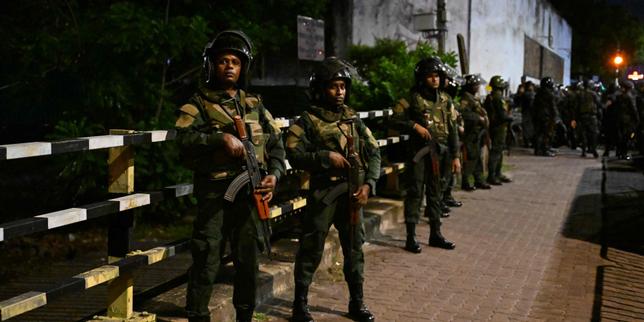
When hundreds of troops and elite commandos rushed to Mahara Prison outside Colombo, it wasn't an isolated accident. It was the predictable explosion of a system pushed four times past its breaking point.
Sri Lanka's prison crisis is back in the headlines after a violent riot left at least one inmate dead and six others wounded. Prisoners tore through infrastructure, completely destroying the facility's kitchen, hospital, rehabilitation center, and vocational training units. If this sounds familiar, that's because it is. Just a month prior, clashes at another overcrowded jail in Negombo killed dozens of people, marking a grim pattern of systemic failure that authorities keep treating as a surprise.
The Real Crisis Behind the Bars
You cannot talk about Sri Lanka's prison mutinies without addressing the sheer, staggering level of overcrowding. Mahara Prison was built to hold a fraction of its current population. Instead of housing a manageable number of offenders, it packed roughly 4,100 inmates into a space designed for a quarter of that.
Across the country, the numbers paint a bleak picture. The national prison network holds over 41,000 inmates across 22 facilities meant for a combined capacity of about 11,000. That is not just tight living conditions. It's a powder keg waiting for a spark.
Most people don't realize that a massive percentage of these inmates aren't even convicted criminals. Over three-quarters are remand prisoners stuck waiting for their day in court. They sit in squalor for months or years, trapped in legal limbo while the courts struggle to keep up. When you trap thousands of desperate people in suffocating heat with inadequate food, poor medical care, and no legal horizon, riots stop being shocking. They become inevitable.
A History of Violence
This isn't the first time Mahara has turned into a war zone. Back in December 2020, during the height of the pandemic, a riot at the same facility left 11 inmates dead and nearly 120 wounded. The government promised reforms then. They promised to decongest the jails, release low-level offenders, and convert disused state buildings into new detention centers.
Yet here we are.
When the latest violence broke out during family visiting hours, inmates climbed onto roofs, set fire to administrative buildings, and burned records. The state response relied on familiar tools: tear gas, police commandos from the Special Task Force, army trucks, and even air force drones overhead. Restoring temporary order with military force doesn't fix the root disease. It just puts a bandage on a gaping wound.
What Needs to Change Now
Senior police officials like Deputy Inspector General Sanjeewa Medawatte have pointed to increased security measures and plans to repurpose old state buildings. But moving prisoners around or building more cells treats the symptom while ignoring the sickness.
If Sri Lanka wants to stop these deadly mutinies, officials have to look at judicial reform. Clearing the massive backlog of remand prisoners would instantly drain the human floodwaters from these facilities. Decriminalizing minor drug offenses, which make up a huge portion of the detained population, would do the rest.
Until the legal system speeds up and the state addresses the unbearable population density inside its jails, security cordons and military deployments will only buy a temporary silence. The next riot isn't a question of if. It's a question of when.