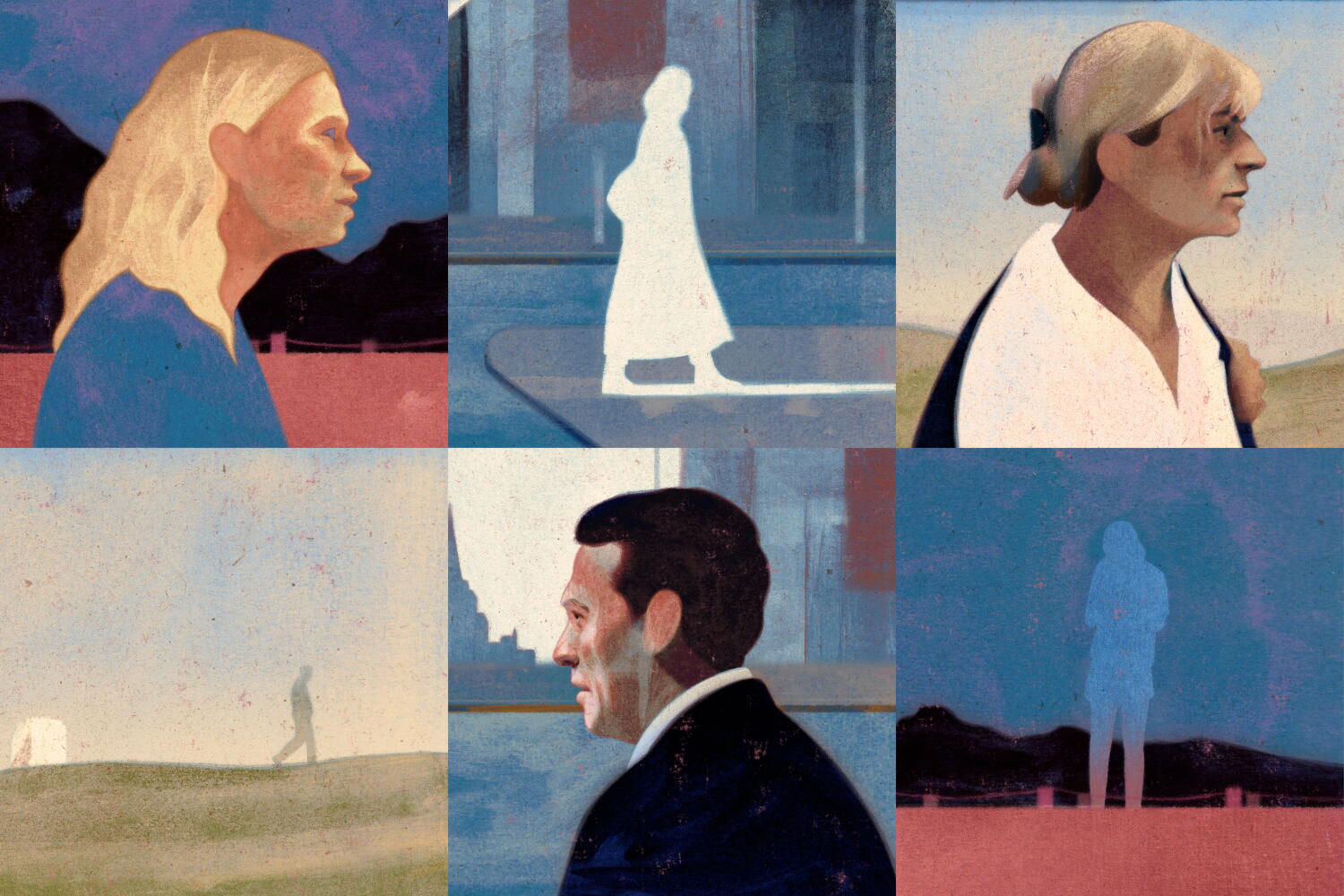
What do we do with people when efficiency-obsessed systems stop treating them as productive economic units? That question sits right at the center of All of a Sudden, the 2026 drama from Ryûsuke Hamaguchi starring Virginie Efira and Tao Okamoto, and honestly, it hits harder than most Oscar-season dramas dare to admit. When people search for All of a Sudden, they usually want to know what the movie is actually about, how Virginie Efira pulls off acting in Japanese alongside French, and why a three-hour-plus conversation piece about eldercare and terminal illness is generating serious awards buzz.
Here's the short version before we dig into the details: All of a Sudden isn't a grim tearjerker about aging and sickness. It's a fiercely curious, surprisingly hopeful look at what happens when two women—a Parisian care facility administrator named Marie-Lou (Efira) and a Japanese theater director facing cancer named Mari (Okamoto)—refuse to let cold institutional routines flatten human identity.
Why All of a Sudden Strikes Such a Nerve Right Now
Movies about eldercare and illness often fall into one of two traps. Either they treat aging like a tragedy to be pitied from a safe distance, or they turn caregiving into a saintly poster campaign. Hamaguchi sidesteps both by focusing on attention—the radical act of really listening to another person when modern schedules and budgets reward speed over presence.
Loosely inspired by When Life Suddenly Takes a Turn: Twenty Letters Between a Philosopher with Terminal Cancer and Medical Anthropologist, written by Makiko Miyano and Maho Isono, the film bridges France and Japan in a way that feels earned rather than gimmicky. Even the caregiving philosophy woven into the story—Humanitude, a care method developed in France and adopted in several Japanese facilities—anchors the film in real practice. According to the Festival de Cannes feature on the production, Hamaguchi looked for a bridge between the two countries and found it in an approach that prioritizes human dignity and connection.
Having watched plenty of prestige dramas get bogged down in self-importance, I went into All of a Sudden expecting a quiet, austere art-house exercise. Instead, its warmth kept sneaking up on me. When Marie-Lou asks Mari, "Who are you?" early on, she isn't making small talk. Identity, as Efira points out in interviews, isn't a neat badge or a static job title; it moves, shifts, and hides things behind easy labels like "blond, Belgian actress" or "cancer patient."
The Whiteboard Scene That Splits Audiences
One of the boldest choices in All of a Sudden is its long, marker-and-diagram monologue—widely nicknamed "the whiteboard scene"—where Mari lays out critiques of capitalism and how cost-driven systems squeeze out vulnerable people. Some viewers love the intellectual candor. Others wonder if a movie with diagrams on a board risks lecturing its audience.
That tension is real, and pretending otherwise would be dishonest. A long speech breaking down systemic incentives can feel risky in a narrative film. Yet the scene works when you watch how Marie-Lou listens rather than treating the board like a classroom slide. Hamaguchi has noted that Efira's facial expressions—her skepticism, absorption, and quiet processing—carry the weight of the moment. Efira herself welcomes that friction, arguing that real cinema needs risk rather than safe, pre-chewed "content."
How Virginie Efira and Tao Okamoto Built Their Chemistry
A common misconception about slow-burn, dialogue-heavy films is that actors simply memorize pages of text and rely on "chemistry" to magically appear on camera. Anyone who has spent time around theater rehearsals or film sets knows that doesn't happen by accident.
Efira had to learn Japanese for her role while Okamoto navigated French, and both had to carry long, exacting scenes where words aren't throwaway banter. Instead of forcing emotional fireworks in rehearsal, Hamaguchi leans into flat, uninflected readings early on so performers absorb the text physically before adding "intention." Efira has described his directing style as having "perfect pitch" for concentration—he can hear in the texture of a voice when an actor is forcing an effect versus truly inhabiting the moment.
Because both actresses were stretching outside their native languages and sharing the grind of dense dialogue, their real-world curiosity fed their onscreen bond. That kind of shared vulnerability is tough to fake. Winning the joint Best Actress prize at the 2026 Cannes Film Festival—and seeing the film selected as Japan's entry for Best International Feature Film at the 99th Academy Awards, with North American theatrical distribution via Neon—shows just how strongly those performances resonated beyond festival bubbles.
A Different Map of Paris and Care
If you've seen a hundred glossy postcards of Paris, forget them. Hamaguchi shot in real spaces, including an actual care facility where residents and staff moved through the background, and staged a pivotal walk-and-talk down the steps of the Bibliothèque Nationale that made even a longtime Paris resident like Efira see her own city anew.
Here is a mistake I often see critics and viewers make with Hamaguchi's work: assuming "long runtime" (around 196 minutes) equals "slow pacing." Pacing isn't about how fast a car drives or how many cuts happen per minute. It's about whether a scene earns its breath. When two people are genuinely trying to understand each other before time runs out, rushing the cut feels like a betrayal.
What This Film Gets Right—and Where Opinions Diverge
Let's be clear about what All of a Sudden is and isn't:
- It is a "solution film" in spirit, as Efira calls it, proposing presence, art, and companionship as practical pushback against cold institutional routines.
- It is not a tidy policy blueprint. A movie can dramatize care and critique economic pressures, but real-world eldercare still involves tough staffing ratios, funding rules, and family trade-offs that no single film can solve on its own.
- It rewards patient viewers. If you go in looking for plot twists or snappy one-liners, you'll probably check your watch. If you tune into subtle shifts in posture, silence, and phrasing, it lingers for days.
That split reaction isn't a flaw; it's part of why the movie feels alive. When a film takes a clear stand on human dignity while leaving room for doubt and disagreement, it invites real conversation instead of passive nodding.
Practical Next Steps If You Want to Explore Further
If All of a Sudden caught your attention—whether you're drawn to international cinema, caregiving ethics, or the real-life letters that sparked it—here are a few concrete ways to follow through:
- Check local theatrical and festival listings around its late-November 2026 U.S. release through Neon (or international showtimes) and go in without rushing your evening—give yourself room for a long runtime and space afterward to decompress.
- Read the source inspiration, When Life Suddenly Takes a Turn by Makiko Miyano and Maho Isono, if you want to see how real correspondence between a philosopher facing terminal illness and a medical anthropologist shaped the emotional core of the story.
- Look into Humanitude and community care initiatives in your own area if the film's questions about aging and dignity hit close to home—paying closer attention to how older neighbors, family members, or local care workers are treated is one of the simplest ways to put the film's themes into practice.
- Watch another Hamaguchi film, such as Drive My Car or Evil Does Not Exist, to compare how he uses listening, space, and moral ambiguity across different settings.