You step outside for a afternoon in the heat, and a few hours later, your arms or chest are covered in tiny, angry red bumps. Most people immediately blame a sunscreen reaction or panic about a severe sun allergy. But the reality is usually much simpler—and completely misunderstood.
The internet loves to mix up heat rash and sun poisoning, tossing both into the same broad bucket of "summer skin trouble." They aren't the same thing at all. One is a mechanical plumbing issue with your sweat glands. The other is a full-scale immune response or severe burn triggered by ultraviolet radiation. Treating a sweat-gland blockage with heavy, oil-based burn ointments will actually make your skin significantly worse.
Here is what is actually happening beneath your skin, how to tell these two conditions apart in seconds, and what dermatologists actually do when they handle them.
Heat Rash Is a Sweat Duct Problem, Not a Sun Problem
Heat rash—known medically as miliaria—has virtually nothing to do with direct sunlight. You can get a massive case of heat rash in complete darkness, inside a humid room, or under three layers of winter clothing if you're sweating heavily.
It happens when your sweat ducts get physically clogged. Sweat gets trapped under the surface instead of evaporating off your skin, causing localized swelling, small clear or red bumps, and a distinct prickly sensation.
Dermatologists break heat rash down into three distinct tiers depending on how deep the sweat is trapped:
- Miliaria crystallina: The mildest form. Sweat gets trapped in the outermost layer of skin (stratum corneum). It looks like tiny, clear, fluid-filled bubbles that pop easily. It rarely aches or itches.
- Miliaria rubra: The classic "prickly heat." Sweat leaks into deeper layers of the epidermis, triggering localized inflammation. This causes itchy, raised red bumps and a sharp stinging feeling.
- Miliaria profunda: The rarest form, affecting the deeper layer of skin (the dermis). It produces firm, flesh-colored bumps that look like goosebumps and usually occurs after repeated bouts of intense sweating.
Infants and toddlers get heat rash far more often than adults simply because their sweat ducts aren't fully developed yet. In adults, it usually hits skin folds, the inner thighs, under the breasts, or anywhere tight athletic gear traps moisture against the skin.
How to Fix Heat Rash (And What to Avoid)
The primary goal with heat rash is simple: lower the skin temperature and get sweat evaporating again.
- Ditch heavy creams and ointments: Do not slather thick petroleum jelly or oily body butter on a heat rash. Oily barriers seal the pores further, worsening the blockage.
- Cool the tissue fast: Take a lukewarm or cool shower. Skip heavy, fragranced body washes that irritate open pores.
- Apply calamine or mild hydrocortisone: Calamine lotion helps dry out the area and soothes the sting thanks to its zinc oxide content. Over-the-counter 1% hydrocortisone cream reduces localized itching.
- Wear loose, breathable weaves: Choose loose cotton or specialized moisture-wicking athletic fabrics over tight synthetic materials.
Sun Poisoning Is an Entirely Different Beast
While heat rash is a localized, mechanical clog, "sun poisoning" isn't actually a toxic poisoning at all. It's an informal term used for two distinct medical events: an extraordinarily severe, widespread sunburn or a systemic sun allergy known as Polymorphic Light Eruption (PLE).
Unlike heat rash, sun poisoning is directly caused by exposure to ultraviolet (UV) radiation.
[Image of polymorphic light eruption]
The Two Types of Sun Poisoning
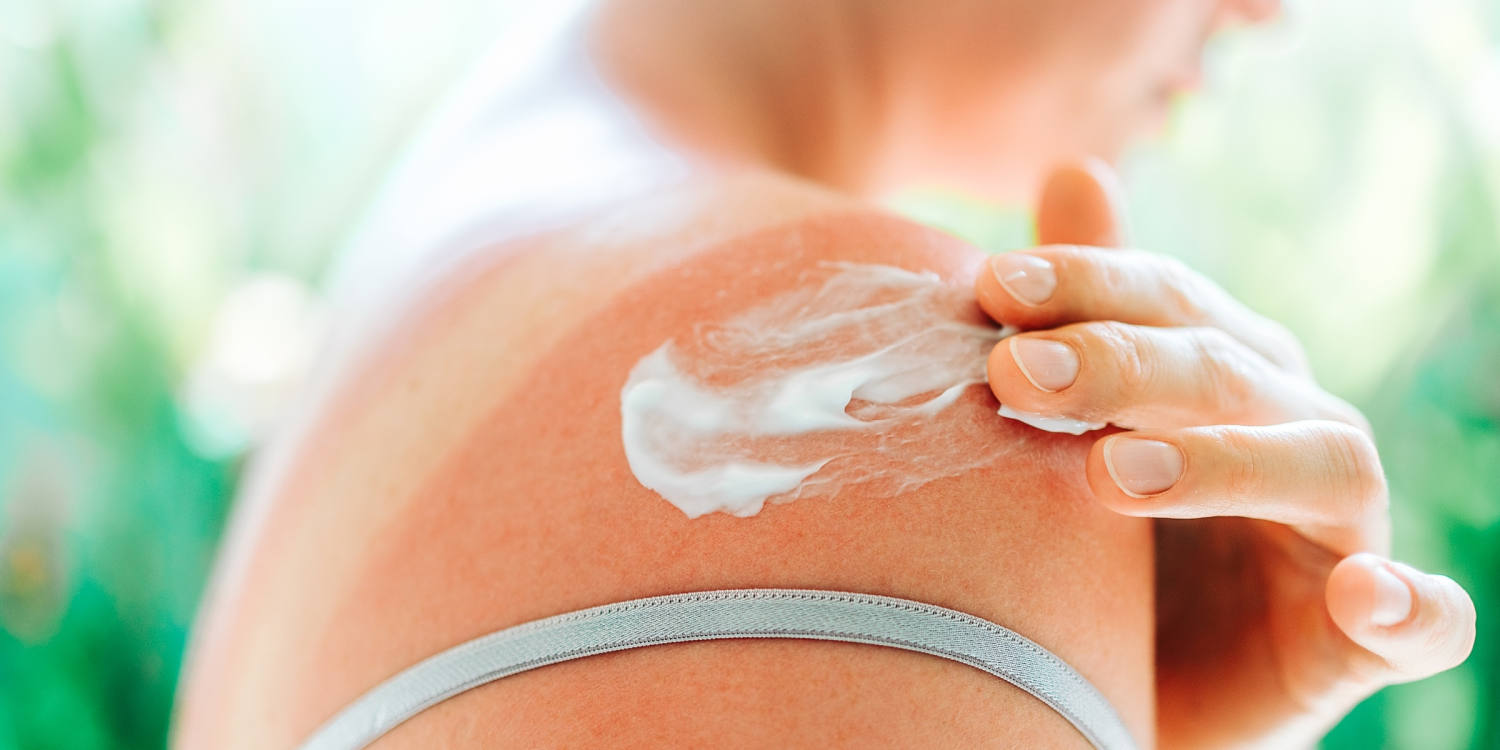
- Severe Systemic Sunburn: UV rays destroy skin cells faster than the body can repair them. This triggers a massive, systemic inflammatory response. You don't just get red skin; you get fluid-filled blisters, severe swelling, headaches, chills, fever, and nausea.
- Polymorphic Light Eruption (PLE): This is an autoimmune response where your immune system views UV-altered skin cells as foreign invaders and attacks them. It typically strikes in late spring or early summer during your first major sun exposure of the year, showing up as intensely itchy red patches, hives, or dense clusters of bumps on exposed areas like the chest and upper arms.
       SWELTERING HEAT + TRAPPED SWEAT
                      │
                      ▼
         Blocked Sweat Ducts (Miliaria)
                      │
                      ▼
            HEAT RASH (Prickly Bumps)

         INTENSE UV RADIATION EXPOSURE
                      │
                      ▼
    Severe Cell Damage OR Immune Hyper-Response
                      │
                      ▼
       SUN POISONING (Blisters + Fever/Nausea)
A common mistake people make is ignoring the systemic symptoms. If your skin rash is accompanied by dizziness, shivering, or vomiting, you aren't dealing with simple heat irritation. You're dealing with heat exhaustion or a severe photo-reaction that requires medical evaluation.
Quick Comparison: Heat Rash vs. Sun Poisoning
| Feature | Heat Rash (Miliaria) | Sun Poisoning / Severe PLE |
|---|---|---|
| Primary Cause | Blocked sweat ducts and trapped perspiration | UV radiation exposure |
| Direct Sun Required? | No | Yes |
| Common Locations | Skin folds, armpits, groin, under tight clothes | Exposed skin (chest, forearms, shoulders) |
| Visual Appearance | Tiny, uniform red bumps or clear, delicate vesicles | Broad red patches, large blisters, or dense hives |
| Primary Sensation | Prickly, stinging, or localized itching | Burning pain, severe itch, or tight throbbing |
| Systemic Symptoms | None (unless accompanied by heat stroke) | Fever, chills, nausea, dizziness, fluid loss |
The Hidden Trigger: Photosensitizing Medications
If you suddenly break out in severe sun rash despite using sunscreen, your daily medications might be the culprit. A massive range of common prescriptions and over-the-counter drugs cause phototoxicity or photoallergy—making your skin wildly sensitive to UV light.
Common culprits include:
- Antibiotics: Tetracyclines (like doxycycline) and fluoroquinolones.
- NSAIDs: Common pain relievers like naproxen.
- Blood Pressure Medications: Hydrochlorothiazide and other diuretics.
- Topical Retinoids: Tretinoin, adapalene, and retinol used for acne or anti-aging.
If you're taking any of these, brief sun exposure can cause a reaction that looks almost identical to severe sun poisoning within minutes.
Immediate Steps to Take Right Now
If you are currently staring at a fresh breakout and trying to figure out your next move, follow this protocol.
If you have small, prickly bumps in areas where you sweat or wear tight clothes:
- Get into an air-conditioned room immediately.
- Take a cool shower and pat—do not rub—the skin dry.
- Leave the area bare and uncovered to air out.
- Dab on calamine lotion or 1% hydrocortisone cream for itch relief. Avoid heavy lotions.
If you have intensely painful redness, widespread blistering, or rashes on sun-exposed skin:
- Get completely out of the sun.
- Place cold, damp compresses over the affected areas for 10–15 minutes at a time.
- Apply pure aloe vera gel or a lightweight, unscented lotion.
- Take an over-the-counter anti-inflammatory like ibuprofen to tackle internal inflammation.
- Drink plenty of fluids with electrolytes—blistering draws significant moisture away from the rest of your body.
- Do not pop blisters. Blisters act as a sterile biological bandage. Popping them drastically increases your risk of a secondary bacterial skin infection.
Head to urgent care immediately if your rash comes with a fever over 101°F, persistent vomiting, confusion, or if blisters cover a large portion of your body.
Set up an appointment with a board-certified dermatologist if you experience recurring sun-induced rashes every spring, as you may benefit from prescribed topical steroids or specialized light desensitization therapy.