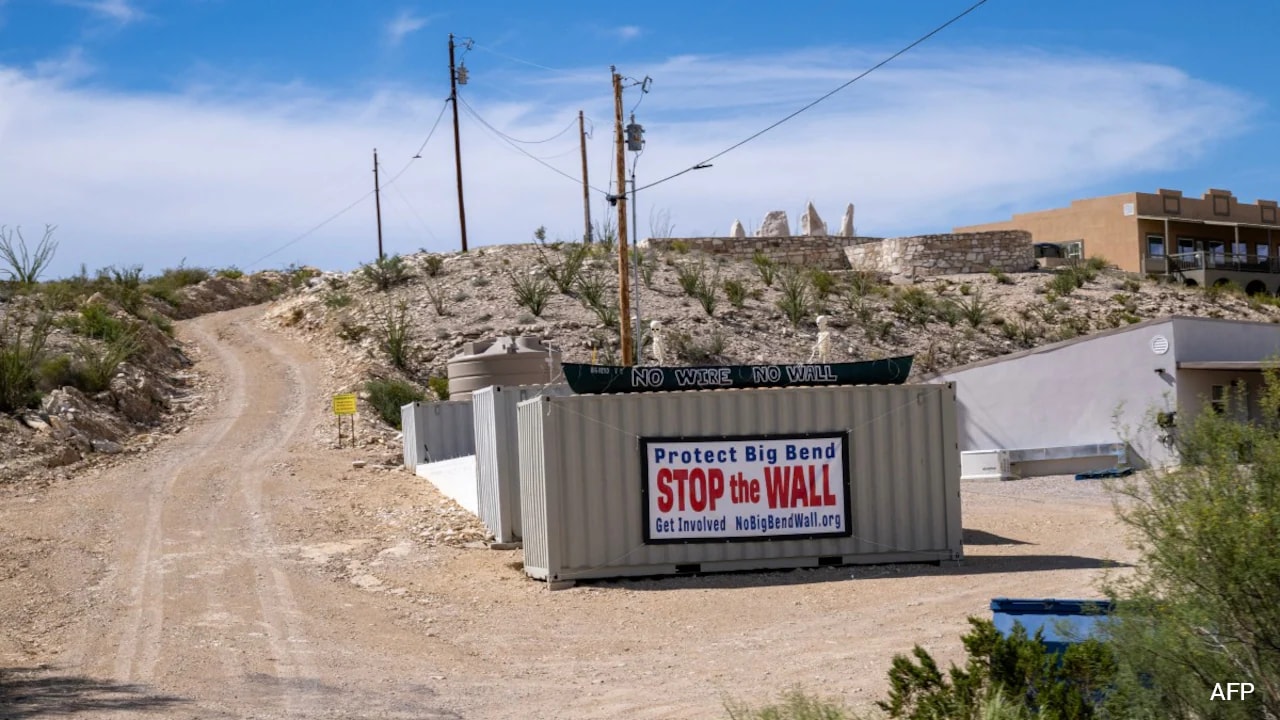
The highest court in the United States just cleared the path for the federal government to resume building border barriers through one of the most remote and ecologically sensitive landscapes in the country. If you’ve been following the legal ping-pong surrounding immigration infrastructure, this latest order involving Big Bend National Park in West Texas marks a major shift.
Lower courts had previously put the brakes on construction. Now, that temporary injunction is lifted. Heavy machinery can move back in while the underlying lawsuits crawl through the federal judiciary. But looking past the standard political headlines, this case exposes deep friction between federal enforcement powers and public land preservation.
Why Big Bend Became the Flashpoint
Big Bend isn't just another stretch of dirt on the southern border. It’s a massive expanse of rugged mountains, deep canyons, and fragile desert ecosystems that draw hundreds of thousands of tourists every year. When wall construction and new patrol roads were first planned for this region, environmental groups and local advocates immediately pushed back.
The core argument against the project centers on permanent ecological disruption. Conservation groups like the Center for Biological Diversity and the National Parks Conservation Association argued that heavy construction would carve up delicate wildlife corridors, damage natural habitats, and alter pristine public lands.
Yet, federal lawyers countered with national security priorities, maintaining that closing operational gaps in rugged border sectors is non-negotiable. The Supreme Court ultimately sided with the government's emergency posture for now, ruling that the administration's stated security interests outweigh the immediate aesthetic and environmental harm claimed by opponents.
The Numbers Behind the West Texas Corridor
Statistics tell an interesting story about why this specific sector attracts so much debate. While the Big Bend sector accounts for a substantial percentage of the geographic border between the U.S. and Mexico, historical apprehensions tell a different tale.
Court filings highlight that annual apprehensions in this specific region historically ranged between a tiny fraction of total border-wide activity—often hovering between 0.3% and 2.2%. Critics of the wall project frequently point to these metrics to argue that pouring concrete and building patrol roads in a remote national park is an inefficient use of resources compared to high-traffic urban or transit corridors.
Conversely, supporters argue that leaving any sector unfortified creates an obvious blind spot that smuggling organizations will quickly exploit. In remote terrain where response times can stretch to hours, infrastructure changes the tactical equation entirely.
What Happens Next in the Courts
Monday's order doesn't mean the legal battle is over. It is a preliminary decision. The case still has to wind its way through the lower courts, specifically focusing on whether the administration bypassed necessary environmental reviews or overstepped statutory authorities when greenlighting the project.
For now, though, the legal shield protecting Big Bend's backcountry is gone. Construction crews have the legal clearance to proceed while lawyers prepare for the next round of arguments. Watch for expedited filings from environmental coalitions as they try to find new legal mechanisms to halt the bulldozers before permanent physical changes alter the landscape for good.