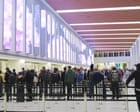
Sunday night on Thanksgiving weekend is where good intentions go to die. Millions of Americans are trying to get home at the exact same moment while rain drums on windshields and departure boards start turning amber.
The Transportation Security Administration projected screening nearly 17.6 million passengers nationwide between November 24 and November 30, 2026, with more than 3 million moving through checkpoints on Sunday, November 29 alone. Add a low pressure system pushing rain, gusty winds, possible snow, and scattered thunderstorms across the Midwest and East Coast—with heavier rain eyeing the West Coast and parts of the South by Monday—and you've got a classic holiday bottleneck.
Honestly, anyone who acts surprised by this hasn't been paying attention. Thanksgiving travel isn't just crowded. It's fragile. One weather front or tech hiccup doesn't just delay one flight; it ripples across hub-and-spoke networks for days.
Why Thanksgiving travel breaks so easily
People tend to blame a single storm or a single airline when their trip unravels. That's usually too simple.
Airlines run tight aircraft rotations during holiday peaks. When a storm slows arrivals at major hubs like New York's JFK, LaGuardia, or Newark—or triggers low ceilings and thunderstorms elsewhere—planes and crews end up in the wrong cities. Once a morning flight is late, its afternoon and evening turns lose slack.
Recent operational jitters haven't helped either. Flyers heading into the 2026 holiday stretch already had recent airline outages and prior ground stops fresh in mind. When confidence dips, passengers arrive earlier, ask more questions at the counter, and pack more bags, which stretches checkpoint lines and boarding times even before weather enters the picture.
Transportation Secretary Sean Duffy called Thanksgiving week the "Super Bowl" of US air travel and urged flyers to take it slow and stay in touch with airlines. That sounds obvious, yet so many travelers still book tight connections through storm-prone corridors and hope for a miracle.
Weather hits roads and runways differently
Flying gets the loudest complaints, mostly because a canceled flight strands you far from home. Driving has its own quiet traps.
Steady rain on Sunday afternoon turns familiar highways into spray-soaked slowdowns. Visibility drops. Braking distances stretch. A minor fender-bender on a two-lane stretch or a bridge closure—like the wind closure seen on Virginia's Chesapeake Bay Bridge-Tunnel earlier in the holiday stretch—can add hours to a trip that looked easy on a map.
Midwestern drivers face an extra wrinkle when rain mixes with gusty winds or possible snow. Even light accumulation can turn a routine highway return into a white-knuckle crawl after dark.
What flyers get wrong about delays and refunds
Here's the biggest misconception I see every November: people assume a delay automatically means a free hotel and a paid dinner. It doesn't.
Under US rules, if an airline cancels your flight or delays it significantly—typically three hours or more for domestic flights—and you choose not to travel, you're entitled to a refund for the unused ticket rather than being forced to take a voucher. That's real protection, and flyers should use it when a trip no longer makes sense.
Ancillary costs are another story. When weather or an air-traffic restriction drives a delay or cancellation, airlines aren't always legally on the hook for your hotel room, Uber, or extra meals, even though some carriers still offer vouchers if you ask nicely. Consumer advocates like Teresa Murray at the US Public Interest Research Group point out that non-airline causes like government-ordered ground stops leave very few automatic reimbursement paths for side expenses.
Booking shortcuts that backfire under pressure
Booking through a third-party travel site can look cheap on a Tuesday morning. On a stormy Sunday night, it can feel like shouting through a keyhole.
When flights go sideways, you want the airline itself able to rebook you quickly. Adding an outside agency in the middle often slows down changes or creates confusion over who owns the ticket. Book direct whenever you can, especially during peak holiday windows.
Credit card travel protections also get misunderstood. Some cards reimburse certain delay expenses after a set number of hours, while others exclude specific equipment or operational issues. Consumer travel advisor Christopher Elliott has long noted that checking your card terms—and saving receipts—matters far more after a disruption than guessing at the gate.
What the coverage misses about Sunday night returns
Most news roundups focus on peak-day headcounts and broad storm maps. Fair enough—numbers give scale. Still, they miss what actually happens inside the terminal on Sunday evening.
First, rebooking math gets brutal late in the day. By 5 p.m. on Sunday, remaining seats on popular routes are scarce. If your 6 p.m. flight cancels, the next open seat might not be until Monday afternoon or Tuesday. Waiting in a long customer-service line while everyone else refreshes the same app rarely wins.
Second, airport transit and curbside gridlock pile on. Even if you decide to drive instead of fly, leaving a major metro area during a rainstorm while thousands of others do the same turns a two-hour drive into four.
Third, travel insurance isn't a magic shield. Policies vary wildly, and "cancel for any reason" coverage doesn't automatically cover every out-of-pocket annoyance during a messy travel weekend. Reading the fine print before you buy saves a lot of frustration later.
There's also a legitimate debate among frequent flyers about how to prepare. Some swear by booking a refundable backup ticket on another carrier for high-stakes trips; others think that ties up cash and adds stress. Neither approach is foolproof, and both cost money or time.
Practical moves when your return trip is on the line
If you're heading home on a busy Thanksgiving weekend—or planning your next holiday run—focus on control where you actually have it.
- Screenshot everything in real time. Capture delay notices, cancellation alerts, and gate changes in your airline app before they disappear or get overwritten.
- Keep itemized receipts. Save records for meals, ground rides, and lodging if you get stuck overnight, and check both your airline's DOT commitments and your credit card's delay benefits.
- Move fast on rebooking. If a cancellation hits, check the airline app first, call the carrier's number while walking toward an agent, and look at nearby alternate airports if your primary hub is clogged.
- Shift your timing when possible. Flying or driving a day early—or aiming for early morning departures before weather builds and delays snowball—beats fighting the Sunday evening crush every single time.
Holiday travel will always test your patience. Plan for friction, pack snacks and chargers in your carry-on, and keep your expectations realistic when the skies turn gray.


