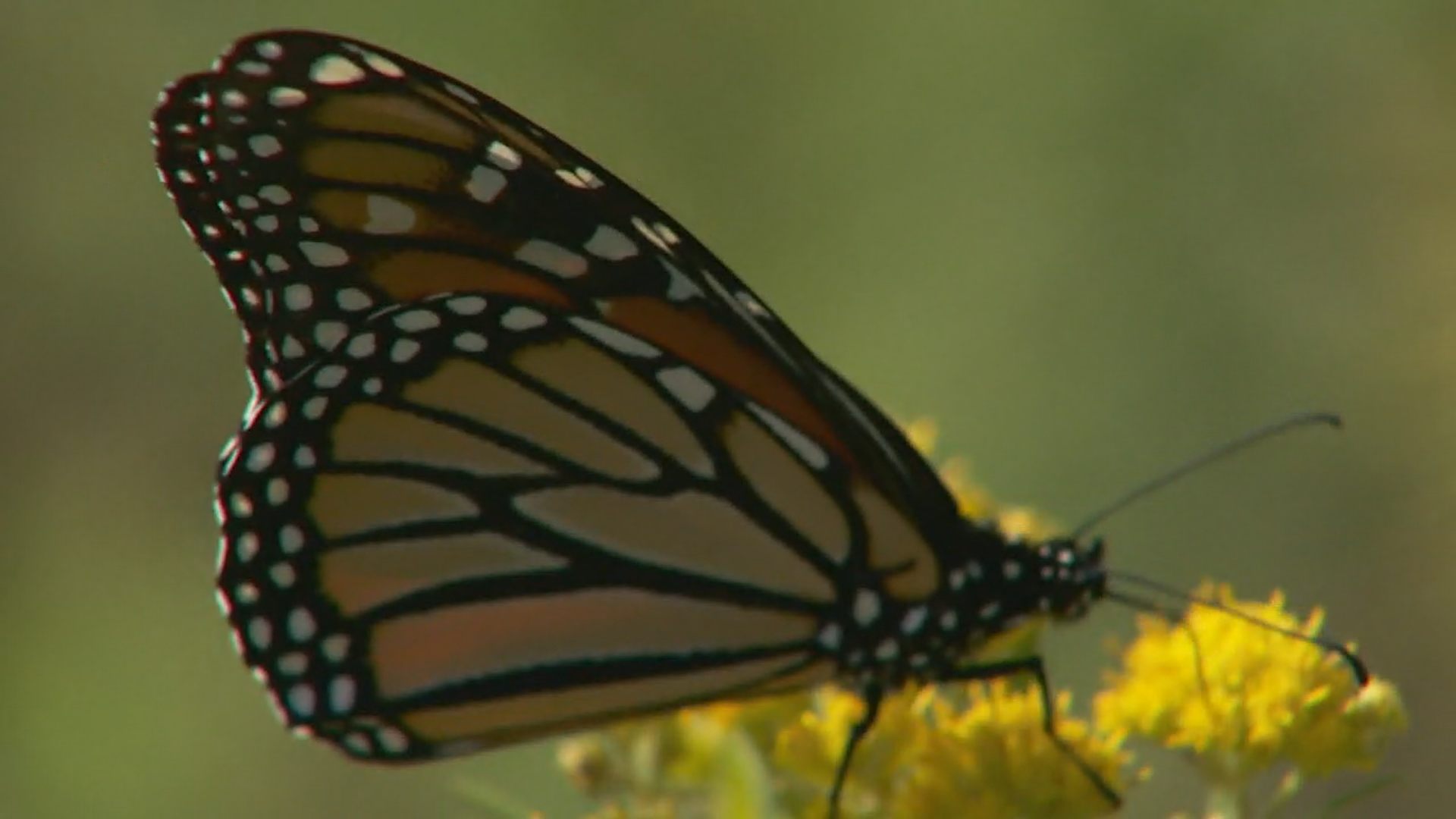
A tiny insect weighing less than a single paperclip just flew 2,300 kilometres from the Canadian prairies down to Mexico. Think about that distance for a second. It is roughly equivalent to driving from Winnipeg to Houston, Texas, except this traveler did it entirely on wing power over forty days.
Scientists are losing their minds over it, and honestly, for good reason. For years, tracking monarch butterflies meant relying on paper stickers that you hoped someone would randomly stumble across in a remote Mexican forest months later. Most tags vanished into thin air. You tagged a thousand, and you prayed three would turn up.
That outdated method is officially dead.
Conservation experts at the Assiniboine Park Zoo teamed up with Environment and Climate Change Canada this season to change the game entirely. Instead of static stickers, they outfitted twenty-nine monarch butterflies with miniscule, solar-powered tracking devices. Each tiny unit weighs a mere 0.06 grams. They carry two microscopic solar panels that keep them juiced up using everyday sunlight, pinging telemetry towers, cell phones, and cell towers along the way.
The High-Stakes Journey South
When Laura Burns, conservation programs manager at the zoo, watched those tagged monarchs take flight in August, nobody knew what to expect. Would the weight throw off their flight mechanics? Would the electronics fry under intense weather?
Turns out, the bugs handled it just fine.
One of those Winnipeg-tagged travelers crossed the Mexican border after a grueling forty-day sprint. It is one of only three detected in the country so far this season, and it still has about 800 kilometres left before hitting its final winter sanctuary. Others are currently bottlenecked in places like Kansas, Missouri, Oklahoma, and Texas, waiting for favorable wind currents to push them across the finish line.
Let's be clear about what these insects face out there. The route is an absolute obstacle course. We are talking about high-speed highway traffic, towering urban structures, massive agricultural pesticide zones, hungry predators, and sudden violent storms. Every single mile is a gamble.
Why This Tech Breakthrough Matters Right Now
Conservationists have argued for decades about where monarchs actually travel. Sure, we knew the general north-south highway concept, but the exact flight paths remained a black box. Traditional tagging told us where they started and where they ended up, but it told us nothing about the terrifying middle miles.
High-tech solar telemetry changes that completely.
With real-time tracking data rolling in, researchers can finally pinpoint the exact geographic pinch points where butterflies drop out of the sky. If a specific agricultural valley or urban corridor is wiping out twenty percent of the migrating population every single year, we can see it happening. That means conservation funding and habitat restoration work can finally stop being a guessing game. We can target specific regions, work with local landowners, and build safe migratory corridors where they are needed most.
The monarch migration is hanging by a thread across North America. Habitat loss and climate shifts have hammered populations over the last two decades. But watching a 0.06-gram tag beam a signal from Mexico after starting its life in Winnipeg proves that nature still knows how to surprise us.
Keep your eyes open the next time you see a butterfly passing through your backyard. It might just be running the marathon of a lifetime.