Look at India, and you'll see why Donald Trump is furious with the Federal Reserve right now.
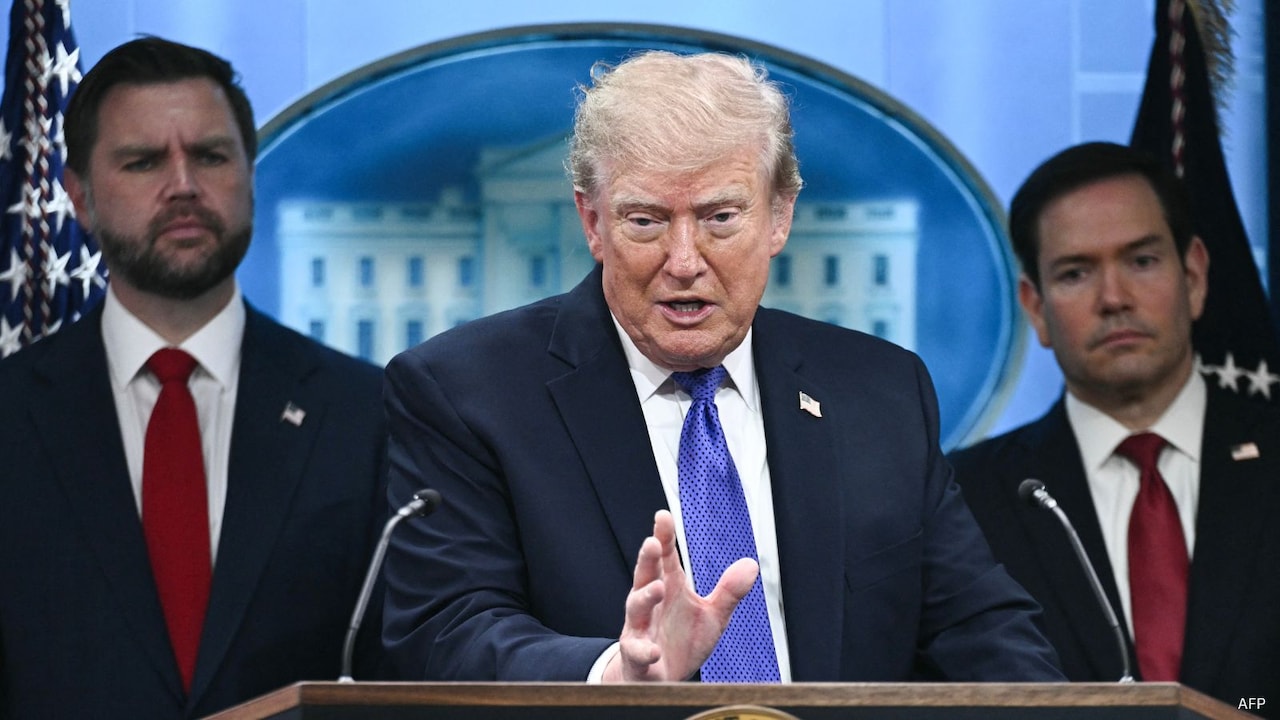
At a White House press conference on Friday, November 20, 2026, Trump pointed to India's roughly 7% GDP growth alongside relatively low borrowing costs as proof that the U.S. central bank has its priorities backward. He accused the Fed of acting politically and raising interest rates whenever strong economic data comes out, arguing that the U.S. could hit 14%, 15%, or even 20% GDP growth if rates were lowered and pay down national debt much faster.
Honestly, the comparison makes for great theater. It also leaves out a lot of real-world mechanics.
What Trump Actually Said About the Fed and India
Trump's argument wasn't subtle. Standing alongside Vice President JD Vance and Secretary of State Marco Rubio, he argued that stronger economic numbers should translate into lower borrowing costs because healthier credit profiles justify cheaper money. In his framing, raising interest rates when growth picks up punishes success and drags down the economy.
He also brought up former Fed Chair Alan Greenspan, praising Greenspan's willingness to cut rates when numbers looked good and claiming that every percentage point of interest represents $650 billion. At the same time, he pointed to tariffs as a driver of new factory construction in the U.S., insisting the economy is pushing forward despite what he views as an obstructive central bank.
The core tension is pretty simple. Presidents want cheap credit to fuel expansion and ease debt service costs. Central bankers worry that juicing demand when inflation pressures are already simmering will push prices even higher.
Why Comparing India and the U.S. Isn't Apples to Apples
Using India as a blueprint for American monetary policy sounds neat in a speech, yet the two economies operate under very different pressures.
First, India's growth trajectory is coming off a lower income base and relies heavily on domestic demand, public and private investment, and services. The Reserve Bank of India upgraded its FY2026–27 real GDP growth forecast to 7.1% after a 7.8% expansion in the June quarter. Even so, India isn't sitting on a free lunch with zero rate pressure. In October 2026, the RBI's Monetary Policy Committee under Governor Sanjay Malhotra unanimously raised the policy repo rate by 25 basis points to 5.50% and shifted to a "calibrated tightening" stance as retail inflation pushed above its 4% medium-term target amid food, monsoon, and energy risks.
Second, the U.S. faces its own inflation and market constraints. Energy shocks tied to conflict involving Iran pushed oil prices up earlier in 2026, complicating the inflation outlook and keeping hawkish pressure alive inside the Fed. Treasury yields have stayed elevated—with the 10-year yield hovering near 5.1% and the 30-year above 5.4% in mid-November 2026—which means market borrowing costs don't automatically drop just because a politician asks for lower rates.
The Irony of Trump's Own Fed Pick
Here's the detail a lot of quick headlines gloss over. Trump already got his preferred pick at the helm of the central bank.
The U.S. Senate confirmed Kevin Warsh as Federal Reserve chair in May 2026 after Trump nominated him earlier in the year. Markets initially expected rate cuts once Warsh arrived, yet higher oil prices and sticky inflation risks shifted expectations toward a much tighter reality.
That exposes a real trap for anyone blaming central bankers for high rates. You can change the person sitting in the chair. You still can't wish away oil prices, supply bottlenecks, or bond market bond vigilantes.
Can Lower Rates Really Produce 15% to 20% U.S. GDP Growth?
Let's be real. No.
A mature, $29-plus trillion economy like the United States doesn't suddenly surge to 15% or 20% real GDP growth just because short-term interest rates fall. Growth rates like that in advanced economies typically happen only during extreme post-war rebounds or massive statistical distortions, not steady peacetime expansion.
If the Fed slashes rates aggressively while inflation risks are active, the likely result isn't a painless 20% boom. It's higher consumer prices, steeper long-term bond yields as investors demand compensation for inflation, and a squeeze on households and businesses through higher mortgage, auto, and credit card rates.
Common Misconceptions About Interest Rates and Growth
People hear "high interest rates" and assume the Fed is just trying to slow down their paycheck or home purchase. In reality, rate decisions are a balancing act between employment, price stability, and financial conditions.
- Misconception 1: The president sets interest rates. The president nominates Fed governors and the chair, subject to Senate confirmation, while the Federal Open Market Committee sets policy based on economic mandates.
- Misconception 2: Lower policy rates always mean lower loan rates. Long-term rates like mortgages and corporate bonds track Treasury yields and inflation expectations closely, not just overnight Fed moves.
- Misconception 3: India has no inflation or rate worries. Strong GDP growth hasn't stopped the RBI from hiking its repo rate to 5.50% to keep price pressures from getting out of hand.
What You Should Watch Next
If you're making business, investing, or borrowing decisions around this debate, ignore the loudest soundbites and watch the data that actually moves policy.
- Track inflation prints and oil prices. Watch whether energy costs and consumer prices cool down or keep climbing, since sticky inflation gives central bankers little room to ease.
- Follow FOMC minutes and Treasury yields. Pay attention to Fed communication and movements in the 2-year and 10-year Treasury yields to see what financial markets really expect.
- Stress-test your own debt. If you carry variable-rate debt or plan to refinance or expand a business, don't bet on rapid rate cuts until inflation clearly trends back toward target.