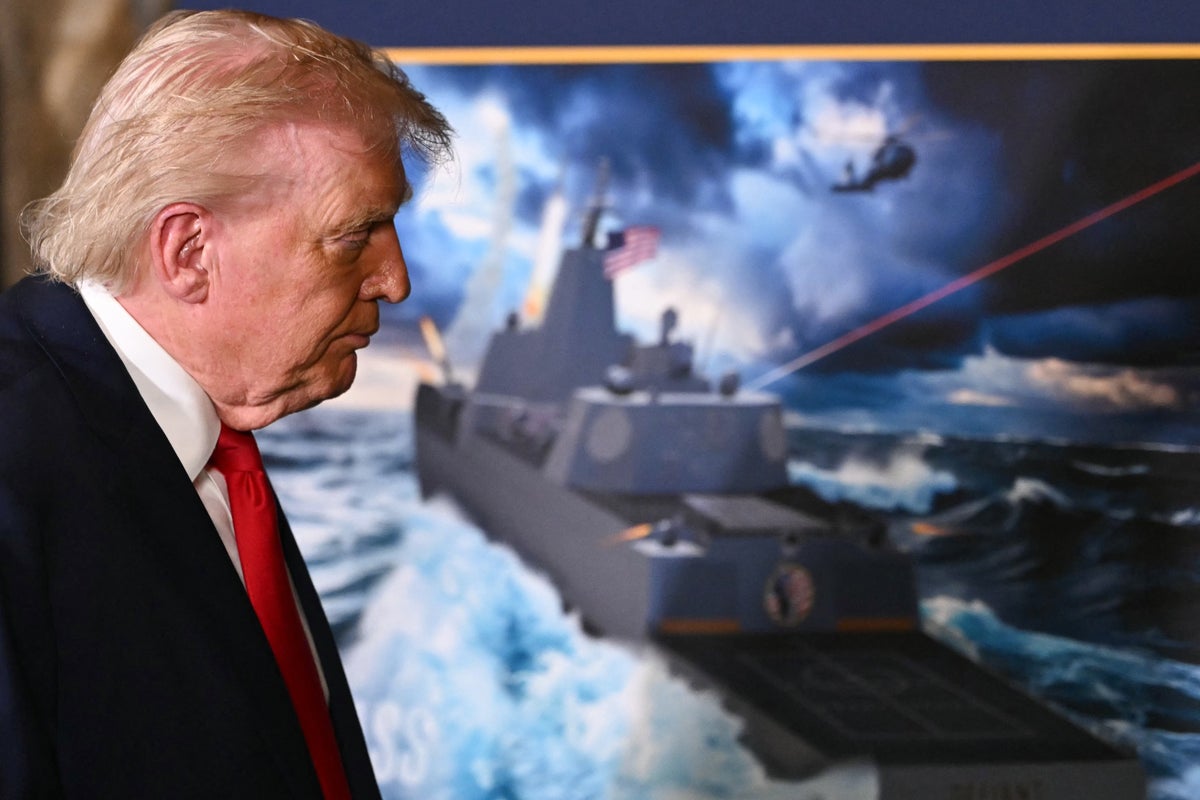
For a quarter of a century, the United States Navy bet its future on a high-tech magnetic sled designed to fling thirty-ton fighter jets off the deck of a supercarrier. It cost billions to develop, took years to debug, and replaced the mid-century steam pistons that had launched naval aircraft since the 1950s. Now, that multi-decade engineering shift has hit a wall. President Donald Trump has signed a national security directive forcing the Navy to ditch the Electromagnetic Aircraft Launch System (EMALS) and revert to legacy steam catapults on future Ford-class supercarriers.
If you think this is just another political quirk, look closer at the operational realities of the fleet. The directive specifically targets the fourth ship in the class, the future USS Doris Miller, while leaving the existing USS Gerald R. Ford, the USS John F. Kennedy, and the USS Enterprise untouched.
Changing course mid-stream on a warship isn't like updating software. It is a massive mechanical wrench thrown into naval logistics.
The Core Conflict Between Magnets and Steam
Why does this debate refuse to die? The friction comes down to a fundamental disagreement over complexity versus reliability.
EMALS uses a linear induction motor buried beneath the flight deck. Instead of brute-force steam pressure, it draws massive bursts of electrical energy from the ship's nuclear reactors to create a magnetic field that accelerates the launch shuttle. On paper, the advantages are obvious. The system allows for finer weight adjustments, reduces wear and tear on aircraft airframes, takes up less internal ship space, and cuts the crew required to man the catapult stations from a dozen sailors down to just two.
Critics of the magnetic system, led consistently by Trump since his first term, view those benefits through a different lens. To them, "advanced" translates directly to "fragile." During public remarks and policy rollouts over the years, Trump has repeatedly complained that the electrical architecture is overly complex, arguing that salt water, intense marine environments, and high-stakes combat situations demand simpler, mechanical brute force.
The developer behind the technology, General Atomics, has pushed back hard. According to company statements, work on the catapults and advanced arresting gear for the USS Doris Miller is already halfway complete. Tearing out the infrastructure now introduces severe schedule slips, integration hurdles, and heavy financial waste.
The Hidden Pressures on Modern Shipbuilding
You have to look at the broader context of the Navy to understand why this order lands with such weight right now. The service is currently wrestling with thousands of unfilled billets across the fleet. Operating modern warships requires immense manpower, and retention remains a constant headache for commanders.
Steam catapults require significantly more personnel to maintain and operate safely on the flight deck compared to their automated magnetic counterparts. Reverting to steam while the fleet faces persistent staffing shortages creates an interesting operational paradox.
At the same time, geopolitical competitors aren't standing still. China's newest aircraft carriers rely on electromagnetic launch technology, and France has committed to using EMALS-style systems for its future flagship carriers. By forcing a return to mid-century steam on upcoming hulls, the U.S. risks diverging from the global trajectory of modern naval aviation development.
What Happens Next for the Fleet
The Pentagon and the Navy have two months to present a formal roadmap detailing how they will strip the magnetic systems from the blueprint of the USS Doris Miller and substitute legacy steam plants.
The decision guarantees fierce debate in Congress as lawmakers balance the White House's defense priorities, supplemental war funding packages, and shipyard constraints. Whether this intervention turns out to be a pragmatic course correction or an expensive detour into the past will depend entirely on how cleanly the Navy can execute a massive architectural reversal without breaking its shipbuilding timeline.