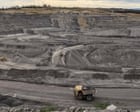
For decades, major fossil fuel corporations have hidden behind a simple, frustratingly effective defense. When asked about their massive contribution to the climate crisis, they shrug and call their individual share a mere drop in the ocean. They argue that a single coal mine or oil extraction project cannot possibly be pinned down for a specific heatwave, a dead coral reef, or a failed harvest.
That defense just died.
Scientists and legal researchers have rolled out a new online tool called the Carbon Impacts Tracer. Developed by teams at the Australian National University, the Australian Research Council Centre of Excellence for the Weather of the 21st Century, and the Lethal Humidity Global Council with funding from the Minderoo Foundation, this project changes the rules of engagement. Instead of letting companies talk abstractly about gigatonnes of carbon dioxide, the tracer translates those numbers into concrete human and ecological costs.
Moving Beyond Abstract Numbers
If you tell someone a proposed coal mine will pump 809 million tonnes of carbon dioxide into the atmosphere, eyes glaze over. It sounds like numbers on a spreadsheet. Even when scientists calculate that this volume will cause an extra 0.00036 degrees Celsius of global heating, the average person struggles to care. It feels too distant, too small to matter.
The Carbon Impacts Tracer bypasses that math problem entirely. It takes established climate science metrics—specifically the Transient Climate Response to CO2 Emissions, which dictates that every billion tonnes of carbon dioxide causes roughly 0.45 degrees Celsius of global heating—and maps those numbers against peer-reviewed studies.
Plug in the emissions for a massive project, and the tool outputs stark realities. It estimates how many millions of coral colonies will bleach on the Great Barrier Reef, how many lost labor hours workers will face due to extreme heat, or how much crop production will vanish. For that same 809 million tonne project in New South Wales, the tool reveals it will reduce annual crop production by an amount equivalent to the minimum dietary requirements of over 276,000 people.
Punching Holes in Corporate Legal Defenses
Climate litigation has historically stalled on causation. Lawyers representing affected communities or small island nations spent years trying to prove a direct line between a specific corporate polluter and a specific climate disaster. Corporations exploited this ambiguity. They claimed their fraction of global emissions was too infinitesimal to measure in terms of local harm.
Maria Nawaz, who leads the Australian Climate Accountability Project at the University of New South Wales, points out that this new capability obliterates that argument. You can now take the emissions of any state or corporation, tie them to a global warming figure, and cascade that directly down into tangible ecological and human suffering.
Fossil fuel executives are scrambling because they know what this means for courtrooms. Juries and judges don't understand parts per million of atmospheric carbon, but they understand dead crops, uninhabitable work environments, and destroyed ecosystems. When you translate abstract emissions into immediate human costs, public opinion shifts violently against the polluters.
The Science Holding It Together
Skeptics will claim these numbers are plucked out of thin air to push an environmental agenda. Prof Sarah Perkins-Kirkpatrick, a climate scientist involved in building the tracer, shuts that down quickly. The team isn't guessing. Every output relies strictly on established, peer-reviewed literature.
The tool measures impacts across eight distinct metrics:
- Lost food production and agricultural yields
- Extreme heat exposure affecting human populations
- Loss of labor hours due to intolerable working conditions
- Glacier retreat and melt rates
- Coral reef mortality and bleaching events
Each result comes packaged with its likely range of uncertainty and direct citations back to the underlying scientific studies. It’s transparent, rigorous, and built to withstand aggressive cross-examination.
What Happens Next
Tools like the Carbon Impacts Tracer mark a turning point for accountability. Companies can no longer hide behind the complexity of the global atmosphere. When regulators weigh the approval of new fossil fuel infrastructure, they now have a method to look past corporate greenwashing and see the exact body count and economic toll attached to every permit.
The era of anonymous, unaccountable pollution is ending. If a corporation wants to dig, drill, and burn, they are going to have to own every single calorie of food lost and every single degree of heat stress left in their wake.


