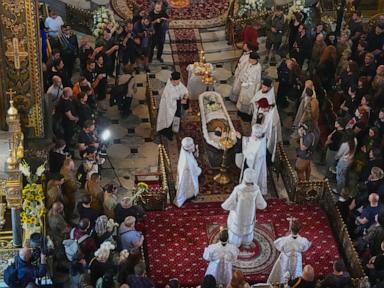
Oleksiy Yukov spent more than twenty years walking through minefields so that nameless corpses wouldn't stay that way. On August 5, 2026, the man universally known in Ukraine as the "collector of souls" stepped on a landmine during a body recovery mission in the eastern Donetsk region. He didn't survive. Thousands gathered at Kyiv's Cathedral of Saint Volodymyr to say goodbye to a 40-year-old martial arts instructor from Sloviansk who believed that every single person, friend or enemy, deserved a proper grave.
War is messy. It's brutal. It leaves behind a shattered landscape of unexploded ordnance, collapsing trenches, and forgotten bodies. Most people run away from that danger. Yukov ran toward it.
The Origins of a Grim Mission
Long before the full-scale invasion of 2022, Yukov was a teenager in the Donbas region stumbling upon the forgotten skeletal remains of Soviet and German soldiers from World War II. That early exposure shaped his worldview. He realized that history repeats its worst horrors, leaving fields littered with the dead.
When conflict sparked again in eastern Ukraine in 2014, he founded an organization named Platsdarm, meaning "bridgehead". The goal was simple, stark, and terrifyingly dangerous: scour active frontlines, ruined villages, and dense forest belts to locate, identify, and exhume the war dead.
Working with Platsdarm wasn't a casual weekend hobby. It was high-stakes archaeology under fire. Yukov and his tight-knit team started every morning with drones, metal detectors, and long probes, mapping out minefields grid by grid before daring to pick up a shovel.
Why He Recovered the Enemy, Too
The most striking part of Yukov's legacy isn't just that he brought fallen Ukrainian soldiers home. It's that he refused to leave Russian soldiers behind either.
When critics online or on the streets argued that enemy combatants should be left to rot in the mud, Yukov pushed back hard. He argued that abandoning the dead strips away human dignity and degrades the living.
"When they say: 'Let them rot,' I do not agree," Yukov wrote in a social media post shortly before his death. "This is how we fight for every soul."
He viewed his gruesome task through a deeply spiritual lens. In interviews, including an appearance in a documentary chronicling his unit's frontline sacrifices, Yukov explained his belief that a body and soul remain tethered until a proper mourning process takes place. Unburied bodies mean wandering souls, he believed, and as long as souls wander, the war doesn't truly end.
The Cost of Closure
The danger of this work is absolute. Mines don't care about your noble intentions. In 2022, a mine blast severely injured Yukov's leg and cost him an eye.
Any rational person would have stepped down. They would have taken the disability pension, sat back, and let someone else pull the graveyard shift of history. Yukov didn't. He returned to the field before he was even fully healed, driven by an urgent sense of moral obligation.
Last month, he summarized his daily reality on social media with brutal honesty: "Remote mines, shelling, drones—everything is against you. But you go and do everything to ensure that every soul returns home."
That stubborn dedication caught up with him on August 5. Stepping on a landmine while exhuming a fallen soldier ended his journey, triggering an outpouring of national grief.
What Happens Next
At his funeral in Kyiv, amid the choking scent of incense and the quiet weeping of mourners, Yukov's widow, Evhenyia Kaluhyna, stood over his open casket wearing a traditional embroidered white dress. She made a promise to her fallen husband.
The work was difficult and terrifying, she acknowledged to the crowd, but Platsdarm would not stop. The dead still need to be brought home. The mines are still in the soil, the drones are still overhead, and the frontlines are still active. But the mission survives because Yukov built an infrastructure of empathy in a place designed to destroy it.
He spent two decades proving that humanity doesn't have to die just because a war is raging. His team is still out there today, probing the dirt, looking for names, and bringing souls back to where they belong.