American soldiers are finally waking up to the reality of modern combat. In the rolling Bavarian foothills of Germany, troops aren't just practicing old-school infantry movements anymore. They're spending weeks wrestling with controllers, launching custom-built reconnaissance craft, and absorbing hard-earned battlefield lessons from the experts.
Ukrainian military personnel have embedded directly with the U.S. Army's 173rd Airborne Brigade during major training exercises like Saber Junction. It's a stark acknowledgment from Washington: when it comes to drone warfare, the United States is playing catch-up.
The Reality on the Ground in Germany
Walk through the Hohenfels training center during these exercises and you'll see a massive shift in how engagements unfold. Roughly half of all initial enemy contacts for the 173rd Airborne Brigade during these drills started with a drone in the air.
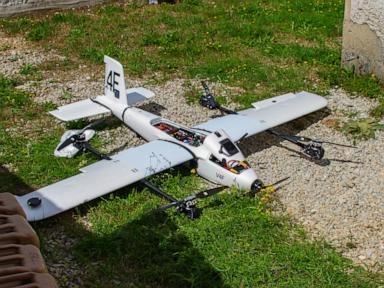
Brig. Gen. Terry Tillis noted that the training unit has roughly 1,900 drones on hand. These aren't just toys or high-end gadgets kept in a supply locker. They represent active, live-action adaptations pulled straight from the ongoing conflict against Russian forces.
About a dozen Ukrainian service members traveled to Germany specifically to advise, assist, and help American troops employ these systems correctly. They bring raw, unvarnished insight into electronic warfare and frontline aerial tactics.
Why the US Military is Struggling to Adapt
Getting drones into the hands of soldiers is easy. Figuring out how to completely restructure a massive ground force around them is a whole different ballgame.
Army leadership faces a massive institutional hurdle. You can't just hand an infantry battalion a few quadcopters and call it a day. Anthony Miller, the Army's chief technology officer, points out that the real challenge lies in scaling tactical learning across the entire force rather than isolating it into a single niche unit.
The U.S. military has historically favored large, centralized formations for specific jobs. But Ukraine's reality is different. Over there, unmanned systems are everywhere, integrated right down to the company level and operating in tandem with traditional artillery.
Structural Headaches at the Top
While these joint drills in Germany highlight growing operational cooperation, the U.S. Army's leadership pipeline has faced serious turbulence. High-profile departures and rapid leadership shakeups at the top have disrupted several initiatives championed by officers who wanted to rush drone integration.
Despite the administrative churn, the pressure remains high. Troops are integrating one-way attack drones deeper into ground formations, driven by the urgent need to counter modern threats, including the proliferation of cheap loitering munitions seen in various global conflicts.
What Real Integration Looks Like
If you talk to military technologists who watch these exercises closely, the consensus is brutal. Traditional ground units are dangerously vulnerable if they treat drones as mere accessories.
Ukraine's armed forces created a separate Unmanned Systems Forces branch out of absolute necessity, but they also baked drones into virtually every conventional unit. Reconnaissance, spotter duties, and strike packages all move together as a single organism.
For the U.S. Army, adopting this mindset means rewriting doctrine that has stood for decades. Exercises in Germany prove that American troops can learn fast when forced into high-pressure scenarios, but transforming a legacy military service into a modern drone-first fighting force takes much more than a few weeks in the field.
Stop treating unmanned systems as an upgrade. They are the baseline.
Ukraine Just Gave the US Army a Brutal Lesson in Drone Warfare
This short video provides a look at how Ukrainian drone operators and modern tactics are challenging conventional U.S. military formations during training exercises.
http://googleusercontent.com/youtube_content/1