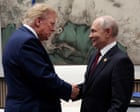
Calling a wartime leader who invades neighboring countries your "friend" isn't just casual political banter. It sends a massive signal to every intelligence agency, military planner, and front-line soldier watching from Europe. When Ukrainian President Volodymyr Zelenskyy told the BBC that Donald Trump calling Vladimir Putin "my friend" was like calling Adolf Hitler a good friend during World War II, he wasn't reaching for cheap shock value. He was exposing a fundamental clash over how diplomacy works when an active war is raging across Europe.
You've probably seen the clips from the November 19 summit in Shenzhen, China. Trump greeted Putin with a hug, called him "my friend," and later posted a photo of the two of them on Truth Social with that exact caption. Days later, speaking from his office in Kyiv, Zelenskyy pushed back hard. "He's an aggressor, and a killer," Zelenskyy said in English. "He can't be a friend. Just cannot be."
Most news coverage treats this as another viral quote in a long-running diplomatic spat. That misses the real story. Beneath the sharp rhetoric lies a high-stakes disagreement over American neutrality, stalled peace talks in Abu Dhabi, delayed air defense shipments, and whether personal rapport with an autocrat actually stops missiles from hitting power grids.
What Actually Happened Between Trump, Putin, and Zelenskyy
To understand why Zelenskyy used such severe historical language, you need to look at the timeline of events leading up to November 27, 2026. This wasn't an isolated slip of the tongue.
During the summit in Shenzhen, China, on November 19, 2026, Trump warmly embraced Putin in front of cameras and remarked, "Who is that? He's my friend." He doubled down on social media afterward, posting their picture together under the caption "my friend." Within a day, Zelenskyy reacted in an interview with CNN's Jim Sciutto, stating bluntly that for Ukrainians, Putin is a killer.
By late November, Zelenskyy expanded on his frustration during a wide-ranging interview with the BBC in Kyiv. He described Trump's rhetoric as "strange" and drew the World War II parallel directly: "It's the same that somebody'd say about Hitler during the second world war that he's a good friend. No, he's not a friend."
Trump, speaking to journalists at Mar-a-Lago over the Thanksgiving holiday, offered his own defense. He didn't deny calling Putin a friend. Instead, he framed it as a deliberate negotiating tactic designed to stop mass casualties.
- Trump's core argument: He claimed roughly 25,000 people are dying every month in the war and argued that walking into a room and telling Putin "I don't like you" would recreate the exact deadlock that already exists between Kyiv and Moscow.
- The personal dynamic: Trump stated that the biggest obstacle to a settlement is that Zelenskyy and Putin "really hate each other" and don't know how to exit the conflict, whereas Trump believes his long-standing personal rapport with Putin keeps the door open for a deal.
- Zelenskyy's counterargument: Neutrality between an invader and a victim isn't fairness. As Zelenskyy put it to the BBC, "When you try to be very neutral with the aggressor... it means you support victims and you support also aggressor. It's not right."
Both leaders are operating from completely different playbooks. Trump treats international diplomacy like high-stakes commercial real estate—where flattery and personal warmth soften a counterparty before hard bargaining begins. Zelenskyy lives in a capital targeted by ballistic missiles and drones, where legitimizing the Kremlin's leader on the world stage carries immediate existential risk.
Why the Hitler Comparison Matters More Than Just Shock Value
Political commentators love to argue about whether World War II analogies go too far. Honestly, when you look at how international law and European security architectures were built after 1945, Zelenskyy's reference makes complete strategic sense.
Modern European borders exist on one foundational rule established after Hitler's defeat. Sovereign nations don't get to erase their neighbors by force, and leaders who launch wars of aggression don't get welcomed back into polite company while their troops still occupy foreign land.
When the President of the United States—the primary guarantor of Western security—publicly calls Putin a friend, it hands Moscow a massive propaganda victory. Russian state media doesn't need to spin anything. They simply broadcast the American president hugging Putin and calling him a friend, using it as proof to their domestic audience and the Global South that Western isolation of the Kremlin has collapsed.
Zelenskyy highlighted this exact problem when he told the BBC, "We need American position to be American. We don't need signals – I mean from the US – which we can get from Russia."
Think about what that sentence means in practice. Kyiv expects Moscow to blur moral lines and claim both sides share equal blame for the war. When Washington starts echoing the language of equal-footing neutrality—treating the invasion as a mere dispute between "two guys that hate each other"—it erodes the moral and legal basis for sanctions, frozen asset seizures, and military aid.
What Most Coverage Misses About the Peace Talks and Air Defenses
If you only read the headlines about Trump calling Putin a friend, you miss the concrete material pressures driving Zelenskyy's urgency right now. His sharp words weren't born out of wounded pride. They came out of frustration over tangible military and diplomatic bottlenecks.
Stalled Negotiations in Abu Dhabi
Earlier in November 2026, U.S.-mediated peace discussions took place in Abu Dhabi. According to Zelenskyy, those talks produced no apparent breakthrough, with another round tentatively expected in December. Even more concerning for Kyiv is the lack of clarity around who gets a seat at the table. Zelenskyy noted that it remains unclear whether European negotiators will participate in upcoming sessions, despite earlier assurances from American envoys.
Excluding European allies from talks about European security creates a massive blind spot. European nations have shouldered billions in financial and military support, and their own borders are directly threatened—something underscored overnight when NATO fighter jets and an interceptor drone had to scramble after a drone briefly entered Latvian airspace from Russia.
Delays in Air Defense Missiles
Words matter in diplomacy, but interceptors save lives on the ground. During his Kyiv interview, Zelenskyy pointed directly to delays in receiving promised air defense missiles. He warned that those delays are actively costing Ukrainian lives just as winter sets in and Russian strikes repeatedly batter Ukraine's energy infrastructure.
When a country is facing winter blackouts because power plants are under daily bombardment, watching your strongest ally exchange warm embraces with the man ordering the strikes feels deeply jarring. Zelenskyy's critique connects the rhetoric directly to the hardware: warmth toward Moscow hasn't translated into faster protection for Ukrainian cities.
How Diplomatic Flattery Backfires With Autocratic Leaders
I've watched countless diplomatic cycles over the years, and there's a recurring mistake Western leaders make when dealing with Kremlin leadership. They assume personal chemistry overrides strategic ideology.
It doesn't. Not in Moscow.
In transactional business deals, if two CEOs like each other, they might split the difference on a contract to get it signed before the quarter ends. Geopolitical conflict over territory and national survival doesn't work like a merger. Putin views the war in Ukraine through a lens of historical dominance and regime survival, not quarterly profit margins.
Here is why personal warmth often produces the exact opposite of what negotiators intend:
- It signals reduced resolve. Autocratic leaders interpret public friendliness from a rival superpower not as a generous olive branch, but as a sign of fatigue and reluctance to enforce red lines.
- It raises the asking price. If Moscow believes Washington is desperate to wrap up the war quickly to claim a diplomatic win, the Kremlin has zero incentive to compromise on occupied territory or security guarantees. Why concede anything when waiting might yield better terms?
- It fractures allied unity. European leaders like German Chancellor Friedrich Merz have already warned that Russia's ambitions extend beyond Ukraine, while the EU just rolled out fresh sanctions packages to squeeze Moscow's war funding. Mixed signals from Washington make it harder to hold that coalition together.
Even Trump himself had to acknowledge the contradiction within days of the Shenzhen summit, telling reporters he urged Putin during their meetings to pull back all military aggression in Europe. Asking an aggressor to stop invading neighbors while simultaneously calling him your friend sends two incompatible messages at once.
What Both Sides Are Getting Right and Wrong
To look at this objectively, you have to acknowledge the real dilemma sitting on the Resolute Desk in Washington. Nobody wants a grinding war of attrition to drag on indefinitely.
Trump is right about one brutal reality: the human cost is staggering, and ending the conflict will eventually require talking to Moscow. Total diplomatic silence doesn't end wars unless one side achieves unconditional surrender, and neither army is currently on the verge of marching into the other's capital. Keeping a functional channel open with the Kremlin has historical precedent—even during the deepest freezes of the Cold War, American presidents communicated directly with Soviet premiers to prevent catastrophe.
Where Trump's approach breaks down is confusing communication with endorsement. You can keep a direct line open to an adversary without calling them a friend on social media. Ronald Reagan negotiated major arms reductions with Mikhail Gorbachev while openly calling the Soviet system an "evil empire" until real, verifiable concessions materialized.
On the flip side, Zelenskyy faces a delicate balancing act of his own. Calling out the U.S. president's language carries political risk when Ukraine still depends heavily on American intelligence, weapons, and diplomatic leverage. Yet staying silent carries a worse risk: allowing a narrative to take hold in Washington that Ukraine and Russia are morally equivalent actors stubbornly refusing to shake hands. By framing the issue through World War II history, Zelenskyy forced Western audiences to confront the core moral reality of the invasion.
How to Read Diplomatic Signals Moving Forward
If you're trying to track where the Russia-Ukraine conflict is actually heading over the next few months, don't get distracted by press conference pleasantries or Truth Social captions. Watch the concrete indicators that reveal true policy shifts:
- Watch the December talks attendance. Pay attention to whether European representatives are formally included in the next round of U.S.-mediated talks. If Europe stays locked out, Washington is pursuing a bilateral grand bargain with Moscow that Kyiv and Brussels will likely resist.
- Track air defense delivery timelines. Rhetoric means very little compared to whether Patriot and NASAMS interceptor shipments arrive in Ukraine before peak winter freezes hit the power grid.
- Monitor sanctions enforcement. Look at whether the U.S. matches the European Union's latest sanctions push against Russia's war economy or quietly eases enforcement to sweeten negotiations.
- Separate negotiating posture from treaty terms. Trump's "friend" remarks are classic opening-bid theater meant to flatter Putin to the table. The real test is whether Washington demands verifiable Russian troop withdrawals or pressures Kyiv to cede sovereign territory permanently.
Follow the weapons shipments, the sanctions lists, and the seats at the negotiating table—because those actions will tell you far more about the future of Europe than any handshake in front of the cameras ever will.


