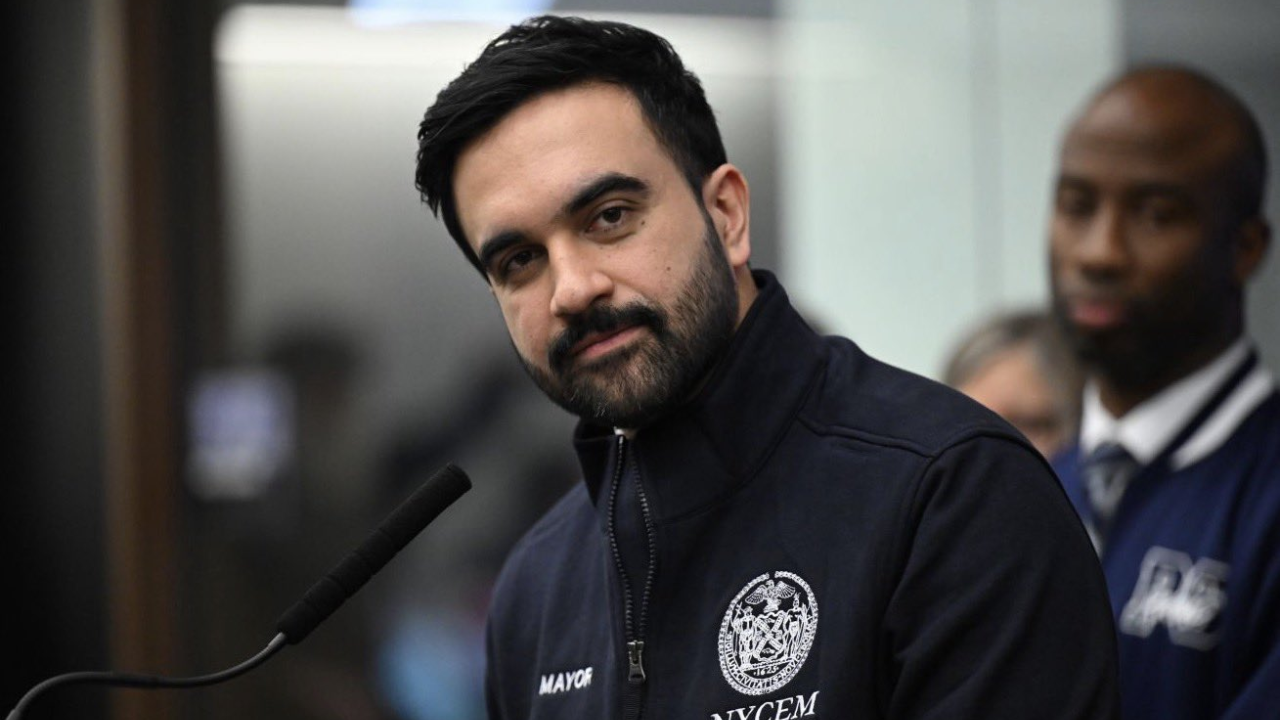
When New York City Mayor Zohran Mamdani stepped up to deliver his America 250 address on July 4, 2026, he didn't offer the standard boilerplate politicians usually churn out. Instead, he took direct aim at the modern political rhetoric surrounding migration, exclusion, and national identity.
At the heart of his address was a sharp observation about how political elites view newcomers. "For generation after generation, we have been told that when the world has sent its people to our shores, it has not sent its best," Mamdani stated, tearing into the narrative that frames immigration as a threat rather than the engine of the country.
Let's break down what this speech actually means for the ongoing debate over who belongs in America, and why this specific argument is changing political discourse.
The Myth of the Unworthy Immigrant
We've heard the script before. Whenever economic anxieties spike or political polarization intensifies, populist figures love to point fingers at the latest wave of arrivals. They claim these newcomers are different from the ones who came before. They claim the standard has dropped.
Mamdani's point is that this complaint is as old as the country itself.
Think about who actually founded and built the United States. They weren't an elite class of pristine aristocrats handpicked for their pedigree. They were religious outcasts, debtors, peasants, and refugees.
- Puritans, Sikhs, Quakers, Muslims, and Jewish populations fleeing persecution.
- Serfs and farmers escaping poverty in European shtetls and slums.
- People who possessed very little property and even less institutional power.
History shows that the people who built America were often rejected by the old world. Calling them "not our best" ignores the reality that flight requires desperation, and reinvention requires grit.
Weaving Personal History Into Public Policy
Mamdani used his own biography to ground his critique. Unlike the mythical figures of early colonial lore, his family didn't arrive on a wooden ship or pass through the historic brick halls of Ellis Island. They arrived by plane when he was seven years old, catching a glimpse of the Statue of Liberty from an airplane window.
By placing his own arrival alongside historical movements—such as the Great Migration of Black Americans moving north or Puerto Rican families settling in New York City after the Second World War—he tied contemporary migration directly to the broader fabric of American history.
This framing shifts the perspective entirely. Immigration isn't a modern policy glitch. It's the mechanism that keeps the nation moving.
Pushing Back Against Exclusionary Politics
Mamdani's address served as a deliberate rebuke to exclusionary ideologies that treat the country as a gated community. He pointed out that certain political figures view America as an arena of supremacy where only a select group deserves safety and freedom.
"America, if you ask them, becomes less the more people it welcomes," Mamdani noted.
Against that vision, he positioned an alternative view of American exceptionalism. True exceptionalism, in his view, doesn't stem from claiming perfection or hoarding wealth. It stems from the fact that the nation's boundaries and character are constantly being reshaped by the people who live in it.
Why This Message Resonates Right Now
Political rhetoric often relies on fear because fear works. When housing costs rise and cities face structural budget crunches, blaming outsiders is an easy trap for leadership to fall into.
Yet Mamdani's stance forces a different conversation. It appeals to a tradition of civic patriotism that values struggle over status. When you look at the history of New York City—from the retreat of George Washington’s defeated Continental Army across the East River in 1776 to the modern neighborhoods built by successive waves of refugees—survival has always depended on collective resilience.
The debate over who represents "the best" of humanity will likely dominate elections for years. But by reframing history, Mamdani has shifted the terms of engagement. The real question isn't whether the world sends its best people. It's whether current leaders are big enough to recognize what those people bring when they arrive.