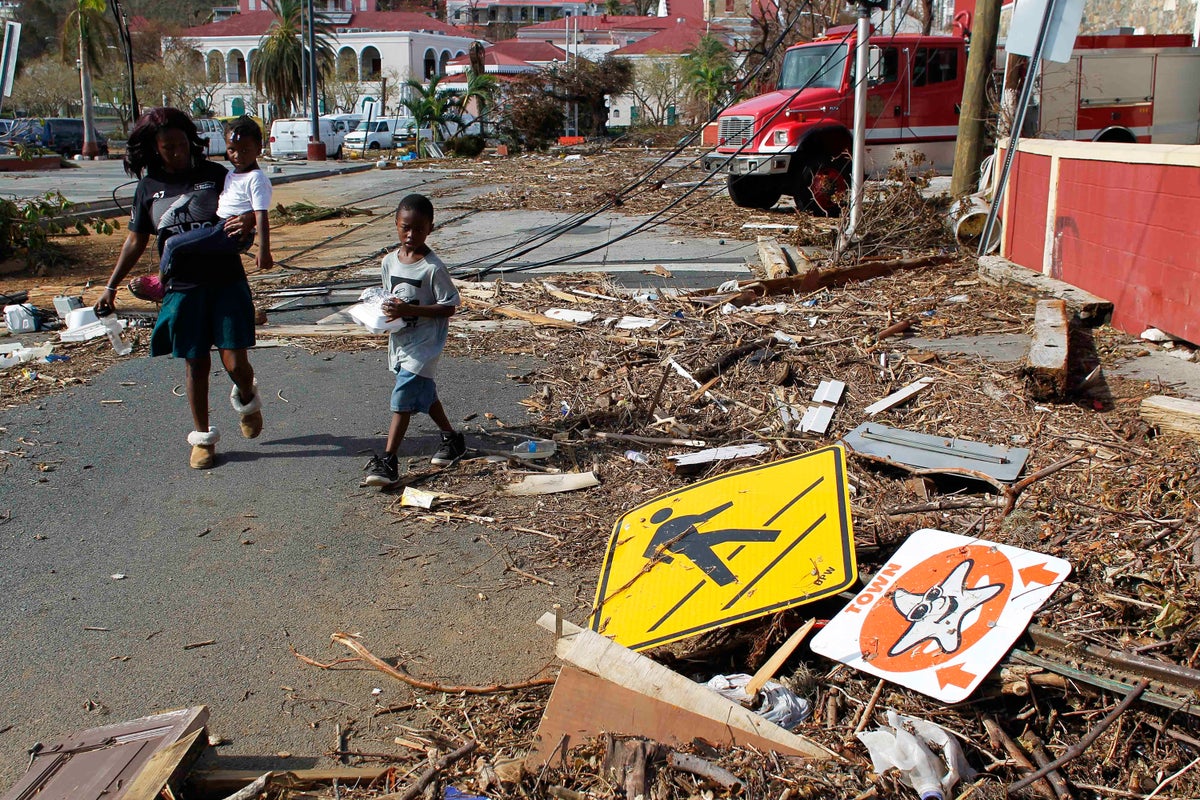
Nearly nine years after Hurricanes Irma and Maria battered the U.S. Virgin Islands, a massive chunk of federal disaster relief remains untouched by the people who need it. The Department of Housing and Urban Development stepped in on July 20, 2026, freezing the territory’s housing agency out of federal programs. The decision came after an investigation revealed that roughly $1.3 billion in hurricane aid never reached Virgin Islanders.
It is a staggering figure. Congress set aside more than $1.9 billion to help rebuild homes, overhaul the failing power grid, and repair damaged infrastructure across the islands. Yet, local bureaucrats managed to spend less than a third of that cash on actual recovery projects. Meanwhile, administrative budgets were drained at more than double that rate.
This wasn't just a matter of red tape or slow paperwork. The federal freeze exposes a pattern of internal corruption, missing financial safeguards, and fraudulent contracts that left thousands of residents living under tarps and dealing with fragile power grids nearly a decade after two Category 5 storms rolled through.
Where the Money Actually Went
When federal funds flow into a disaster zone, strict guidelines govern how much can go toward overhead versus direct aid. The Virgin Islands Housing Finance Authority, the primary agency tasking with managing these grants, flipped those expectations upside down.
Out of $1.91 billion appropriated by Washington, local officials spent just $571 million—about 29 percent—on actual housing and infrastructure recovery. During the exact same period, the agency burned through 55 percent of its allowed administrative budget, spending over $52 million on internal costs.
Federal auditors called that stark imbalance a yawning gap.
The numbers inside specific community grant programs look even worse:
- Community Innovation Projects: Out of a $19 million budget, officials spent just $320,000, leaving 98 percent untouched.
- Solarized Power Hubs: Out of $2.7 million set aside to build emergency solar resilience, the agency spent zero dollars.
- Recovery Planning: Out of $6.7 million allocated for long-term disaster planning, only $177,000 was disbursed.
While residents waited years for grid upgrades and home repairs, the local authority repeatedly assured federal regulators that everything was running smoothly. HUD's recent 13-page suspension notice makes it clear those assurances were false.
Kickbacks and Rotting Lumber in the Sun
Financial incompetence is bad enough, but federal investigators also uncovered outright criminal acts inside the agency's executive offices.
A central driver behind HUD's suspension was the federal conviction of Darin Richardson, the former chief operating officer of the housing authority. Richardson steered a multi-million-dollar emergency contract to store and maintain lumber intended for rebuilding storm-damaged houses.
He manipulated the bidding process to benefit a specific vendor, inflated the contract's price tag from $3 million to $4.5 million, and pocketed a $107,000 kickback.
While Richardson took his cut, the lumber sat untouched in the tropical heat, rotting in the sun while island families waited for building supplies. He is now serving time in federal prison.
Investigators also found that the housing authority attempted to claim duplicate benefits. In one instance, the local agency tried to pull $6.2 million from HUD for disaster-related expenses that FEMA had already paid out in full.
How Bad Oversight Traps Disaster Victims
The fallout from this administrative freeze hits everyday citizens hard.
When federal agencies cut off local authorities, the money stops moving completely. It leaves a territory stuck in a double-edged trap: local leaders mismanage the cash, Washington freezes the pipeline, and the disaster survivors get nothing from either side.
For nine years, Virgin Islanders have lived with power outages, incomplete public housing rebuilds, and damaged roads. HUD Secretary Scott Turner pointed out that federal funds worked out to roughly $20,000 for every single person living in the territory. Yet, walking through St. Thomas or St. Croix, you wouldn't know it.
This isn't an isolated problem confined to the Caribbean, either. Similar oversight failures regularly surface in post-disaster recovery zones across Texas, Florida, and Puerto Rico. Grant structures often distribute funds to local agencies that lack the technical staff, accounting tools, or anti-fraud controls required to manage billions of dollars.
When those local agencies operate in silos, fraud thrives, money sits idle, and taxpayers across the country end up funding administrative bloat instead of actual relief.
What Needs to Change Right Now
Fixing broken disaster relief requires sweeping systemic changes rather than simple temporary freezes.
- Direct Federal Receiver Control: When a local agency shows a track record of false certifications and criminal kickbacks, federal departments should bypass local political appointees and place the funds directly under third-party receivership.
- Real-Time Public Dashboards: Grant expenditures must be published line-by-line in real time. Taxpayers and local residents shouldn't have to wait nine years for an audit to discover that solar energy projects haven't spent a single dollar.
- Strict Clawback Mechanisms: Federal authorities must aggressively recoup money spent on bloated administrative fees when primary recovery targets are missed.
- Mandatory Anti-Fraud Division Oversight: Agencies handling over $100 million in federal relief need independent fraud risk managers operating outside local command chains.
The immediate priority for Washington must be establishing a secure, clean pathway to disburse that remaining $1.3 billion directly into home repairs and grid upgrades without letting corrupt local bureaucracy touch a single dime.



:max_bytes(150000):strip_icc():focal(999x0:1001x2)/rishi-sunak-akshata-murthy-10-78981f8236984c69b70bc15bcb3d49e9.jpg)