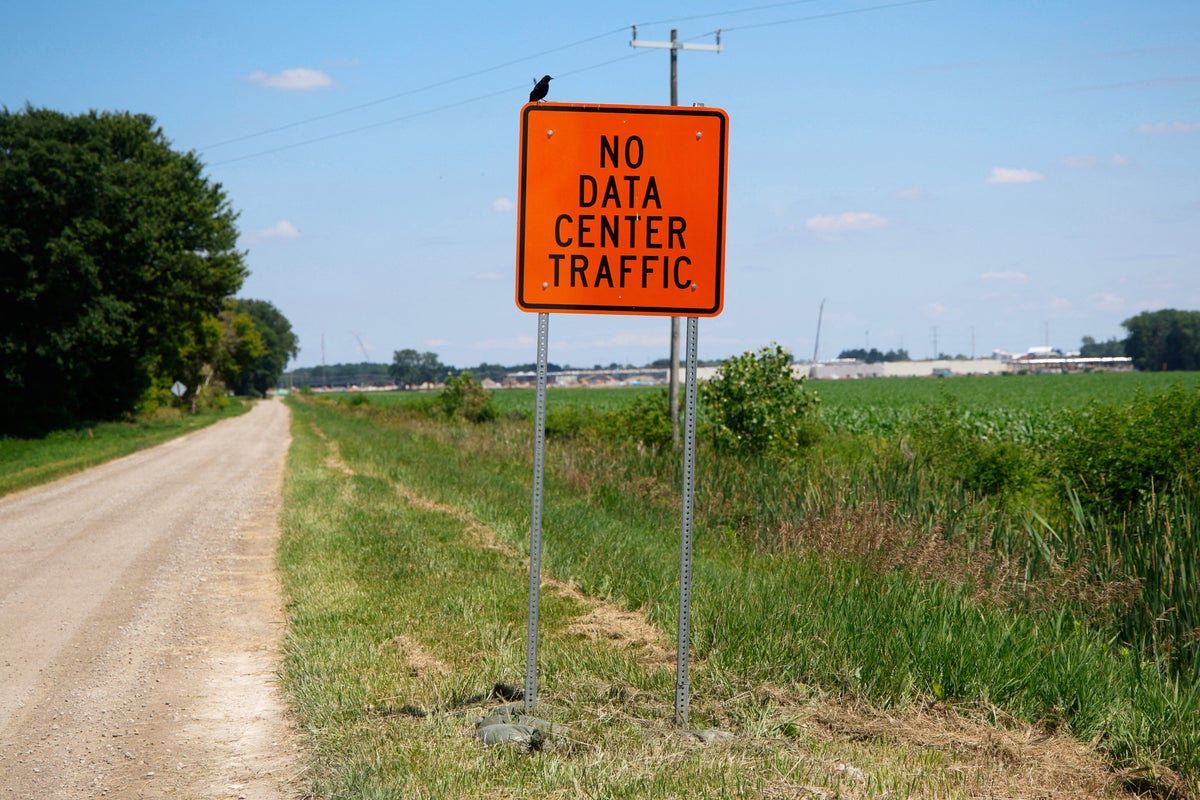
When the township board of Saline Township, Michigan, voted 4-1 to reject a massive $16 billion AI data center project, the local residents thought they had won. They packed the township hall, put up yard signs, and celebrated preserving their quiet farming community southwest of Ann Arbor.
Their victory lasted exactly forty-eight hours.
Two days after the vote, developer Related Digital and partnering landowners filed a federal lawsuit against the township. They cited Michigan’s prohibition on exclusionary zoning, effectively threatening to bankrupt the tiny municipality of roughly 2,300 people through endless legal expenses. Cornered and running out of money to fight back, local officials signed a consent judgment in a closed-door session a few weeks later.
By the time heavy machinery broke ground, the message was clear across rural America. Local zoning laws don't stand a chance against the compute demands of Artificial Intelligence.
How a Rural Farming Town Voted No and Built It Anyway
The controversy in Washtenaw County isn't an isolated zoning dispute. It's a preview of how AI expansion works on the ground. The proposed project—part of the multi-billion-dollar "Stargate" infrastructure push backed by tech giants like OpenAI and Oracle—spans hundreds of acres of former corn and soybean fields.
When developers initially pitched the site, residents raised predictable concerns. They asked about traffic, noise, and light pollution. But as details emerged, deeper fears surfaced regarding water usage, electrical grid reliability, and clean air.
Saline Township's planning commission voted against rezoning the 575-acre parcel. The full board followed suit shortly after. Under standard Michigan land-use practices, that should have killed the proposal.
Instead, the developer's legal team invoked state statutes that prevent local governments from totally banning economically viable industrial uses if there's a demonstrated market need. Small towns rarely have the multi-million-dollar legal defense funds required to battle national real estate firms and institutional backers like Blackstone.
The board surrendered. In exchange for dropping the lawsuit, the township accepted a settlement that included roughly $10 million in community benefits, noise restrictions, and commitments to preserve surrounding open space. Construction started shortly after.
The Massive Strain on Water and Power
Why are local residents so angry about a facility that promises temporary construction jobs and local tax revenue? Look at the numbers.
At full capacity, the Saline facility is designed to draw nearly 1.4 gigawatts of continuous power. That is more than 10 percent of utility provider DTE Energy's peak system output. It is enough electricity to power roughly one million homes.
Generating that much power doesn't happen in a vacuum. To feed the grid, utilities must keep aging power plants running longer or build new natural gas facilities. While tech companies pledge to source clean energy, grid operators face immediate physical limits. When a single building demands the output of an entire power plant, everyone else on the grid feels the strain.
Then there's the water.
Traditional hyperscale data centers swallow millions of gallons of water every day to keep servers from overheating. In rural areas dependent on private wells and local aquifers, drawn-down water tables can dry up residential supply quickly.
Related Digital insists the Saline facility will use a closed-loop, air-cooled design to minimize permanent water consumption. Yet site preparation alone requires extensive dewatering—pumping out underground water to install deep foundations and utility corridors. Permits allow developers to draw up to 681 gallons per minute during construction phases, discharging runoff into the local Saline River watershed.
Residents living next door worry that heavy pumping will contaminate or deplete their well water. Even with closed-loop systems, backup diesel generators pose another hazard. State environmental regulators granted permits for 15 industrial backup generators, which will emit dozens of tons of nitrogen oxides and fine particulates into the surrounding air during testing and emergency blackouts.
Who Really Pays for Big Tech's Infinite Compute
Advocates for the project point to economic growth. Michigan officials highlight the thousands of union trade jobs needed to construct the multi-building campus. They talk about long-term property taxes and position the state as a major hub for high-tech manufacturing.
Those benefits look different when you examine the fine print.
Data centers generate massive construction booms that last two to three years. Once operational, however, these vast complexes require surprisingly few permanent workers. A 2-million-square-foot facility might employ only a few hundred technicians, security staff, and facilities managers long-term.
Meanwhile, local taxpayers often foot the bill for infrastructure upgrades. High-voltage transmission lines, reinforced roads, and specialized emergency response services are built to serve the data center, not the public.
To make matters worse, consumer electricity bills often rise in regions hosting hyperscale clusters. When utilities invest billions to upgrade grid infrastructure for high-demand commercial clients, state utility commissions usually let those companies pass those costs along to residential rate-payers.
You end up with a system where local homeowners pay higher monthly electric bills to subsidize the power infrastructure required to train next-generation large language models.
What Happens When Capital Wins Every Single Time
The political fallout in Michigan is spreading fast.
Tammie Bruneau, a local resident turned community organizer, never planned on getting involved in local government. Now, she and other grass-roots activists spend their evenings organizing rallies, attending county meetings, and filing legal interventions. Resident Kathryn Haushalter filed a lawsuit challenging the township board's closed-session settlement vote, arguing that officials violated open-meeting laws to push the project through without public oversight.
The anger isn't just about losing open space. It's about a complete breakdown of local self-determination.
When small-town elected officials vote unanimously against a project, their decision ought to mean something. When private developers use legal threats to overturn those votes, residents lose trust in local governance.
Michigan is currently considering more than a dozen new data center proposals across various counties. Towns like Augusta and Washington Township have seen fierce public opposition, with some municipalities attempting to enact temporary building moratoriums. But as Saline Township proved, moratoriums and zoning rejections are easily challenged in court when state economic development agencies line up behind tech investment.
If tech companies treat rural communities as disposable locations for heavy power and water infrastructure, backlash will only intensify.
What Other Communities Need to Do Right Now
If your town is facing a proposed hyperscale data center, waiting for the formal rezoning vote is a mistake. Once developers file official site plans, standard legal levers favor industrial development over local preference.
Here is how local groups and municipal leaders can protect their communities before shovels hit the ground.
- Update master plans early. Don't wait for a developer to target agricultural land. Update municipal master plans now to explicitly define data centers, cloud storage, and high-density compute facilities as distinct industrial categories with clear zoning boundaries.
- Demand closed-loop cooling requirements upfront. If a data center comes to your area, mandate zero-water or closed-loop air systems in local ordinances before applications are submitted. Don't rely on voluntary commitments made during settlement negotiations.
- Require direct utility ratepayer protections. Work with state consumer advocates and utility commissions to ensure grid upgrade costs are billed directly to the developer, not spread across residential rate tiers.
- Establish independent water monitoring. Require developers to pay into an escrow fund that finances independent, third-party hydrogeological testing on surrounding private wells before, during, and after construction.
- Audit open meeting compliance. Ensure every board discussion, work session, and legal consult adheres strictly to state public transparency laws. Procedural shortcuts in executive sessions create immediate legal vulnerabilities that delay or derail community defense efforts.