The International Olympic Committee just blew up its own playbook. By locking in mid-2029 as the definitive election date for the 2036 Summer Olympics host, the organization isn't just setting a deadline. It's radically shifting who can actually win the right to host the world's biggest sporting event.
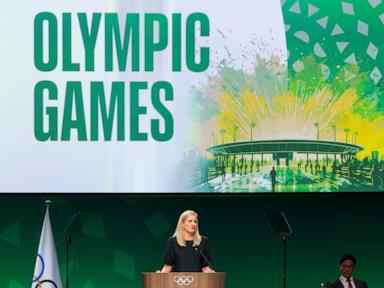
If you thought the race for 2036 would be another closed-door backroom deal handed out a decade in advance, think again. IOC President Kirsty Coventry and Future Host Commission Chair Kolinda Grabar-Kitarović just introduced a revamped multi-stage process at the 146th IOC Session in Lausanne.
This isn't just bureaucratic scheduling. It fundamentally alters the runway for preparation, dropping it to a tight seven years. For heavy hitters like India and Qatar, this timeline changes the entire math of their Olympic ambitions.
The New Timeline That Squeezes Bidders
For the past few cycles, the IOC favored an ultra-long runway. Brisbane secured the 2032 Games in 2021, an unprecedented eleven years ahead of time. It gave the city an enormous cushion to build, fund, and organize.
The 2036 timeline completely reverses that trend. A mid-2029 vote leaves the winner with exactly seven years to get everything ready. That's a massive headache if you need to build stadiums, athlete villages, and transit systems from scratch.
The IOC explicitly mapped out how this race will unfold from here.
- March 2027: The current casual "Continuous Dialogue" phase ends. The IOC will shortlist serious candidates and move them into a brand-new "Strategic Dialogue" phase.
- Late 2028: The Executive Board cuts the field again, moving preferred choices into "Targeted Dialogue" where full, binding legal and financial guarantees are mandatory.
- Mid-2029: The general IOC membership votes and crowns the winner.
This structure is a direct response to a major internal rebellion. Under the old 2019 rules, the Future Host Commission basically handpicked a single candidate—like Brisbane—and presented it to the full membership as a done deal. Rank-and-file IOC members hated being treated as rubber stamps. They wanted their voting power back, and Coventry’s "Fit for the Future" agenda gave it to them. There's even a strong chance the 2029 vote will feature multiple final candidates on the ballot instead of just one pre-selected favorite.
Who Wins and Who Loses Under the Shorter Window
A seven-year window sounds like a lot of time, but in the world of mega-infrastructure projects, it’s a blink of an eye. This timeline aggressively favors bids that already have the physical goods.
Take Qatar. They hosted the 2022 FIFA World Cup and have a massive, state-of-the-art sports infrastructure sitting ready in Doha. They don't need a decade to pour concrete; they just need to turn the lights back on.
India faces a much trickier path. The country formally threw its hat in the ring with a letter of intent in 2024, eyeing Ahmedabad as the main hub. Indian officials initially hoped to use a successful bid for the 2030 Commonwealth Games as a massive live-fire demonstration of their hosting capabilities. But with the 2036 vote landing in mid-2029, India won't get to show off that shop window in time. They'll have to convince the IOC they can deliver massive infrastructure on a condensed timeline without a recent multi-sport mega-event on their resume.
Then you have Turkey and Saudi Arabia, both of whom have the cash and the motivation to push hard. Turkey can point to Istanbul's hosting history with major European events, including the upcoming 2027 European Games. If Istanbul crushes that tournament, it becomes a massive chip in their favor just as the IOC shifts into its deeper evaluation phases. Even Germany is lingering in the background, with Berlin recently approving a 2036 project to mark the centenary of the infamous 1936 Nazi-led Games, though that bid faces internal political friction.
Capping the Costs of the Olympic Circus
The timeline shift isn't the only roadblock the IOC is throwing up to keep the Games from spiraling out of financial control. They're also moving to cap the expansion of the Olympic sports program itself.
We saw a record-breaking 36 sports get greenlit for Los Angeles 2028 after organizers piled on local favorites. To stop future editions from ballooning into unmanageable, budget-busting monsters, the IOC is looking to limit additional host-proposed disciplines to just four for Summer Games and two for Winter Games, potentially starting as early as Brisbane 2032.
If you want the 2036 Games, the message from Lausanne is unmistakable: stop dreaming about massive, futuristic blueprints. Show us the money, show us the existing stadiums, and prove you can survive a highly structured, highly scrutinized three-year gauntlet.
What Bidders Must Do Right Now
The clock is officially running. If a nation wants to host the 2036 Games, the comfortable era of vague promises is over. Bidders have less than a year to clean up their proposals before the IOC starts swinging the axe in March 2027.
To survive the first cut, organizing committees need to lock down hard financial backing from their local and national governments immediately. They must pivot their marketing away from flashy conceptual renderings and focus heavily on existing venue capacity, transit logistics, and absolute cost control. If a city cannot prove its legal and financial security by the time the Strategic Dialogue opens, it won't even make it to the 2029 ballot. The race has officially turned into a sprint.