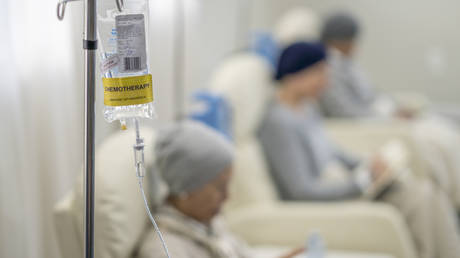
The World Health Organization dropped a massive reality check. By 2050, annual global cancer cases will skyrocket to nearly 35 million. That is a massive jump from the 20 million cases handled today.
On paper, it looks like a distant, macro-level issue for hospital administrators. Dr. Peter Stotland, a prominent surgical oncologist, recently called this incoming surge a "cancer tsunami." He isn't wrong.
But if you look closely at the data, the real story isn't just about aging populations or collapsing healthcare budgets. It's about a striking shift in who gets sick and where the system fails.
You don't need to wait for 2050 to feel the impact. The shift is happening right now, in real-time, and most people are looking at the wrong risks.
The Dual Spike Nobody Expected
For decades, cancer was largely viewed as a disease of old age. As our bodies wear down, genetic glitches accumulate. It makes sense that an aging global population drives higher numbers of lung, prostate, and colorectal cancers.
But the current reality has a strange, troubling twist. Oncolo-gists are watching a second, distinct spike emerge.
Young people are getting hit harder than ever. Early-onset colorectal cancer, for example, is rising at an alarming pace in adults under 50. I see people assume that youth equals immunity. It doesn't anymore.
This dual spike—surging cases in the elderly combined with an aggressive rise in younger demographics—creates a massive bottleneck for hospitals. It isn't just that more people need beds. It's that the type of care required is splitting into two entirely different directions.
Younger patients need aggressive, long-term survivorship strategies. Older patients often require complex management of multiple chronic illnesses alongside oncology treatments. The system wasn't built for both at once.
What the Headlines Get Wrong About Your True Risks
News reports love to blame big, abstract things like global pollution or generic genetic bad luck. Let's look at the hard data from the WHO's International Agency for Research on Cancer (IARC).
Nearly four in ten cancer cases are entirely preventable.
It's easy to tune out the standard health advice. But when you look at the exact breakdown of what's driving these new projections, the numbers are stark.
- Tobacco use still leads the pack, accounting for roughly 15% of all new cancer cases globally.
- Infections like HPV, Hepatitis B, and Hepatitis C account for another 10%.
- High body-mass index (BMI) and obesity drive roughly 2% of the global burden, and that number is scaling upward rapidly.
- Alcohol consumption sits right behind, tracking closely with rising gastrointestinal malignancies.
The scary part isn't a mysterious airborne toxin. It's the slow, cumulative impact of everyday habits and missed preventive care.
Richer countries are expected to see the largest absolute increase in pure case numbers. This is primarily because people are living longer and Western lifestyles heavily feature high BMI, ultra-processed diets, and physical inactivity.
The Brutal Inequality of a 2050 Diagnosis
If you get sick, your odds of survival shouldn't depend on your bank account. Sadly, the data shows they absolutely do.
Consider the current numbers for breast cancer survival. In high-income nations, the five-year survival rate sits at roughly 87%. If you are diagnosed in a low-income nation, that number plummets to 42%.
Why? Because early detection programs and basic treatments are completely gatekept by geography.
Breast Cancer 5-Year Survival Rates:
High-Income Countries: [====================] 87%
Low-Income Countries:  [==========          ] 42%
Fewer than one in three countries currently include comprehensive oncology care within their universal health coverage packages. When the WHO surveyed 4,000 people across 116 countries who have been personally impacted by the disease, the financial toll was staggering. At least 45% of patients reported severe financial hardship. More than half faced major mental health crises.
Even if you live in a wealthy country with public healthcare, like Canada or parts of Europe, you aren't safe from the fallout. The sheer volume of patients means longer wait times for scans, delayed surgeries, and burnt-out staff. A resource crisis functions the exact same way as a financial crisis. It delays your care.
Actionable Steps to Protect Yourself Right Now
You can't fix global infrastructure overnight, but you can dramatically lower your placement on that 2050 projection curve. Stop looking at cancer prevention as a vague lifestyle goal. Treat it like a strict risk-mitigation strategy.
1. Demand Your Screenings Early
Do not wait for your doctor to remember your calendar. If you have a family history of colorectal, breast, or prostate issues, push for screenings early. Colonoscopies are catching precancerous polyps in thirty-somethings today. If you're eligible for home screening kits or routine mammograms, do them the week you get the notice.
2. Lock Down Your Immunizations
Infection-related cancers are entirely avoidable. Ensure you and your kids are vaccinated against HPV and Hepatitis B. These aren't just random shots; they are literal cancer-prevention tools that block viruses known to mutate cervical, throat, and liver cells.
3. Audit Your Metabolic Health
The rising rates of obesity and physical inactivity are fueling the new cancer profile. Focus on reducing visceral fat through a diet centered on whole foods while drastically cutting down on alcohol. Alcohol is a known carcinogen, yet it rarely gets treated with the same caution as cigarettes.
4. Build a Health Proxy Network
Because the medical system is getting more crowded, you need a designated advocate. Talk to a family member or close friend. Make sure someone knows your medical history, your insurance details, and your treatment preferences. When the system gets overwhelmed, patients with active, loud advocates get better care.
The projected 77% surge in global cases by 2050 means cancer will touch nearly every family on earth. The choices you make regarding lifestyle changes, vaccine updates, and aggressive screening schedules determine whether you become a statistic in that surge or someone who successfully avoided the wave.