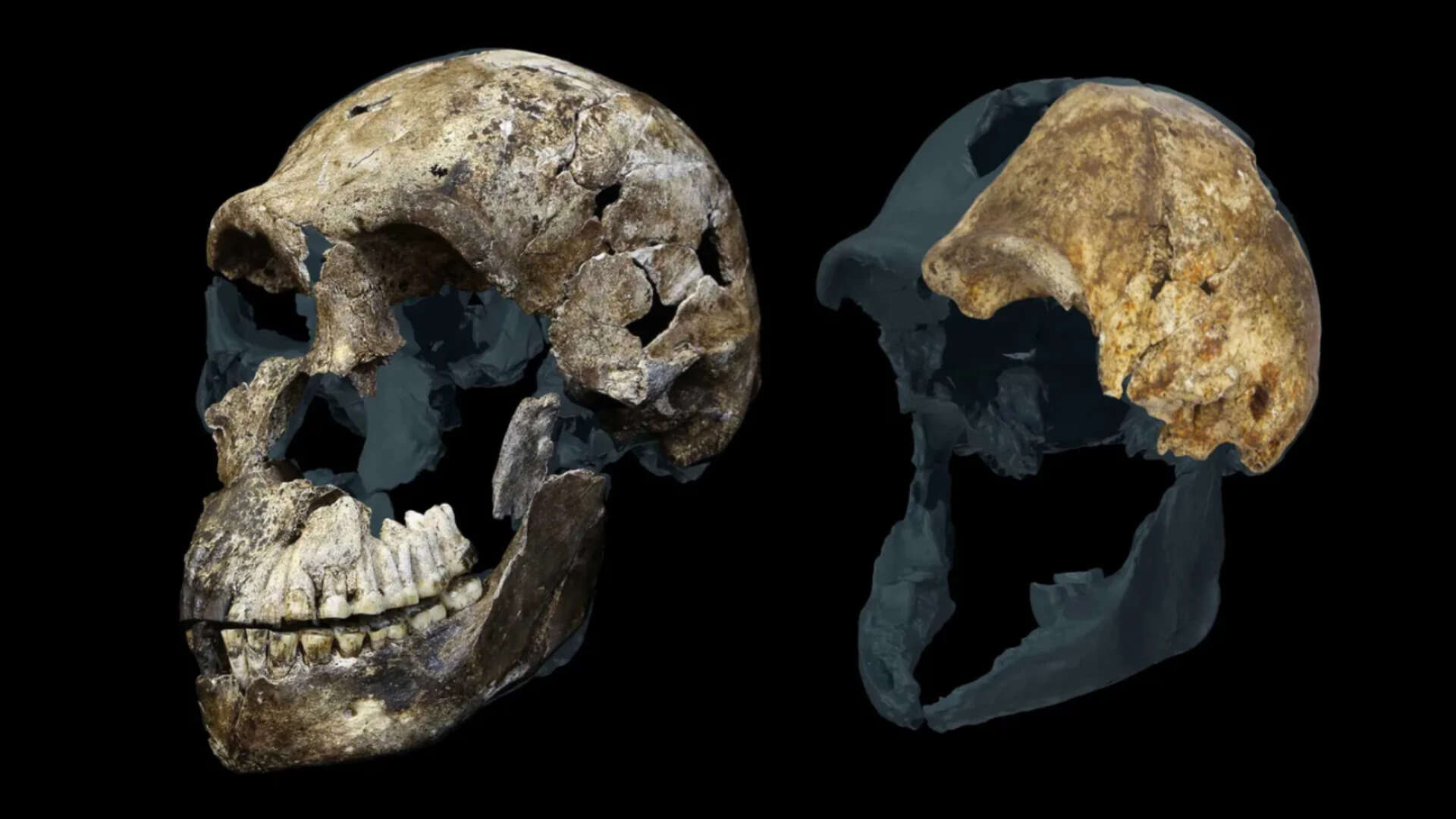
Imagine crawling through a pitch-black South African cave system, squeezing your body through a crack only seven inches wide, and finding a chamber packed with ancient bones. Now imagine finding out that every single one of those bodies belonged to a female.
That is the mind-bending reality scientists are facing. A study published in the journal Cell has turned the anthropology world upside down. Researchers analyzed the teeth of the famous 300,000-year-old Homo naledi fossils from the Rising Star cave system. They did not find a single male. Not one.
This leaves us with two wild possibilities. Either these small-brained ancient relatives intentionally separated their dead by sex, or they suffered from a bizarre genetic mutation that makes them look entirely female under modern testing. Both options challenge what it means to be human.
The Shocking Discovery in the Dark
For more than a decade, the Dinaledi and Lesedi chambers of the Rising Star cave have kept secrets. When explorer Lee Berger and his team first pulled more than 1,500 fossil pieces out of the ground in 2013, they knew they had something strange. Homo naledi was an odd mix. They had shoulders and hips like apes. But their hands, feet, and skull shapes looked shockingly like our own.
The biggest shock was how they all got down there. The chambers are incredibly difficult to reach. They require a vertical drop and extreme crawling. Berger argued from the start that these creatures were intentionally burying their dead. Most scientists scoffed. They pointed out that Homo naledi had a brain barely larger than a chimpanzee. How could a creature with an orange-sized brain handle the complex social structures required for rituals?
The new data makes that debate look simple. An international team of experts tested 23 teeth representing at least 20 different individuals. They wanted to settle basic questions about the population. Instead, they discovered that the collection is entirely female.
Anthropologists had previously guessed that some of the larger skeletons were male. They named one of the largest and most complete skulls Neo. They figured Neo was the alpha male of the group. They were wrong. Neo is female. DH1, another massive skeleton used to define the entire species, is also female. The juveniles are female. Even the infants are female.
The odds of randomly picking 20 individuals from a normal population and getting all females are roughly one in a million. It does not happen by accident.
How Scientists Read Sex in Ancient Teeth
You cannot just look at an ancient, shattered pelvis and always know the sex. Bones change shape based on diet, health, and individual growth. In warm climates like South Africa, DNA breaks down quickly. The oldest recovered human DNA comes from cold environments. In the heat of the Cradle of Humankind, genetic material turns to dust after a few thousand years.
Scientists had to find a different way to look backward. They used a technique called proteomic analysis. Instead of searching for fragile DNA, they looked for ancient proteins locked inside the dental enamel. Teeth are the hardest part of the body. Enamel acts like a time capsule, protecting organic material for hundreds of thousands of years.
Lead study author Palesa Madupe and the research team used a delicate acid etching method. They touched a tiny drop of acid to each tooth for just a few seconds. This released protein fragments hidden in the enamel. Then they searched for specific genes called amelogenin, which control tooth enamel development.
Human chromosomes dictate this process. Females have two X chromosomes. Males have an X and a Y chromosome. The amelogenin gene on the X chromosome creates a protein called AMELX. The gene on the Y chromosome creates AMELY.
The test results were uniform. Every single tooth showed plenty of AMELX. Not a single tooth showed a trace of AMELY. If you have no AMELY across 20 different individuals, you are looking at an all-female lineup.
The Two Theories Splitting the Scientific Community
This finding leaves researchers with two paths. Neither path fits neatly into traditional textbooks.
The first theory involves cultural selection. If these fossils represent an accurate cross-section of who was placed in the cave, Homo naledi practiced sex-segregated burial rituals. This type of behavior is rare even in ancient modern humans. We know of a Neolithic cave in Portugal where females outnumber males, but an entirely female graveyard from 300,000 years ago is completely unprecedented.
Think about what this means. It means Homo naledi possessed a deep understanding of identity. They understood life, death, and social roles. They chose a specific, terrifyingly deep cave chamber to honor their dead women and girls. They left the males somewhere else.
Where are those males? We do not know. Scientists have not found them yet.
The second theory is purely biological. It suggests that the teeth are lying to us because of a massive genetic bottleneck.
The protein sequences from the Rising Star cave are incredibly similar. The individuals look like clones. George Washington University paleoanthropologist Bernard Wood noted that the hand bones look like they were made in a stamping machine. There is almost no variation.
This extreme uniformity suggests that this specific population of Homo naledi was highly isolated. They might have grown from a tiny group of founders. Inbreeding and isolation cause genetic mutations to spread like wildfire.
Sometimes, living human men experience a rare genetic deletion where the AMELY gene is wiped out or altered. They are still biologically male, but their teeth would lack the AMELY protein. A similar deletion was found in one ancient Neanderthal fossil. If the founding father of this Homo naledi population had that mutation, every single male descendant would carry it. They would look biologically female in a protein test while actually being male.
Why This Upsets the Human Evolution Narrative
Both explanations force scientists to rethink their assumptions.
If the cultural theory is right, brain size does not dictate cultural complexity. We have long believed that abstract thought, symbolic behavior, and ritual burial required a large, ballooning human brain. Homo naledi forces us to question that link. They had tiny brains, yet they might have maintained complex gender divisions in death.
If the biological theory is right, we are looking at an evolutionary dead end that was pushed to the absolute brink of genetic isolation. It shows how fragile these ancient hominin populations really were, huddled together in pockets of Southern Africa while our own ancestors were beginning to emerge elsewhere on the continent.
Enrico Cappellini, a paleoproteomics professor at the University of Copenhagen, sums it up well. He noted that either scenario is fascinating. The absence of males or a systematic gene deletion gives us deep insights into a species we barely understand.
What Happens Next in the Cave
The exploration is far from over. The Rising Star project relies on a specialized team of scientists who can actually fit into the deep chambers. The discovery of an all-female assemblage means the search criteria must change.
If you want to understand the full picture, you can track how this research develops by focusing on the following areas.
- Searching for the Male Quarters: Teams will likely target unexplored chambers and nearby cave networks in the Cradle of Humankind to locate the missing male fossils.
- Refining Protein Testing: Scientists are working to extract deeper peptide chains from the bones to see if other sex-linked traits can confirm or deny the AMELY deletion theory.
- Re-evaluating Existing Collections: Other hominin fossils found across Africa that were classified as male or female based purely on size will need a second look using proteomic testing.
The old ideas about human superiority and the slow, linear march of intelligence are cracking. Homo naledi continues to show that the ancient world was crowded, complicated, and deeply weird. We are not the only species that looked at the dark and tried to make sense of who we are.