Keir Starmer has a massive problem, and his name is Andy Burnham.
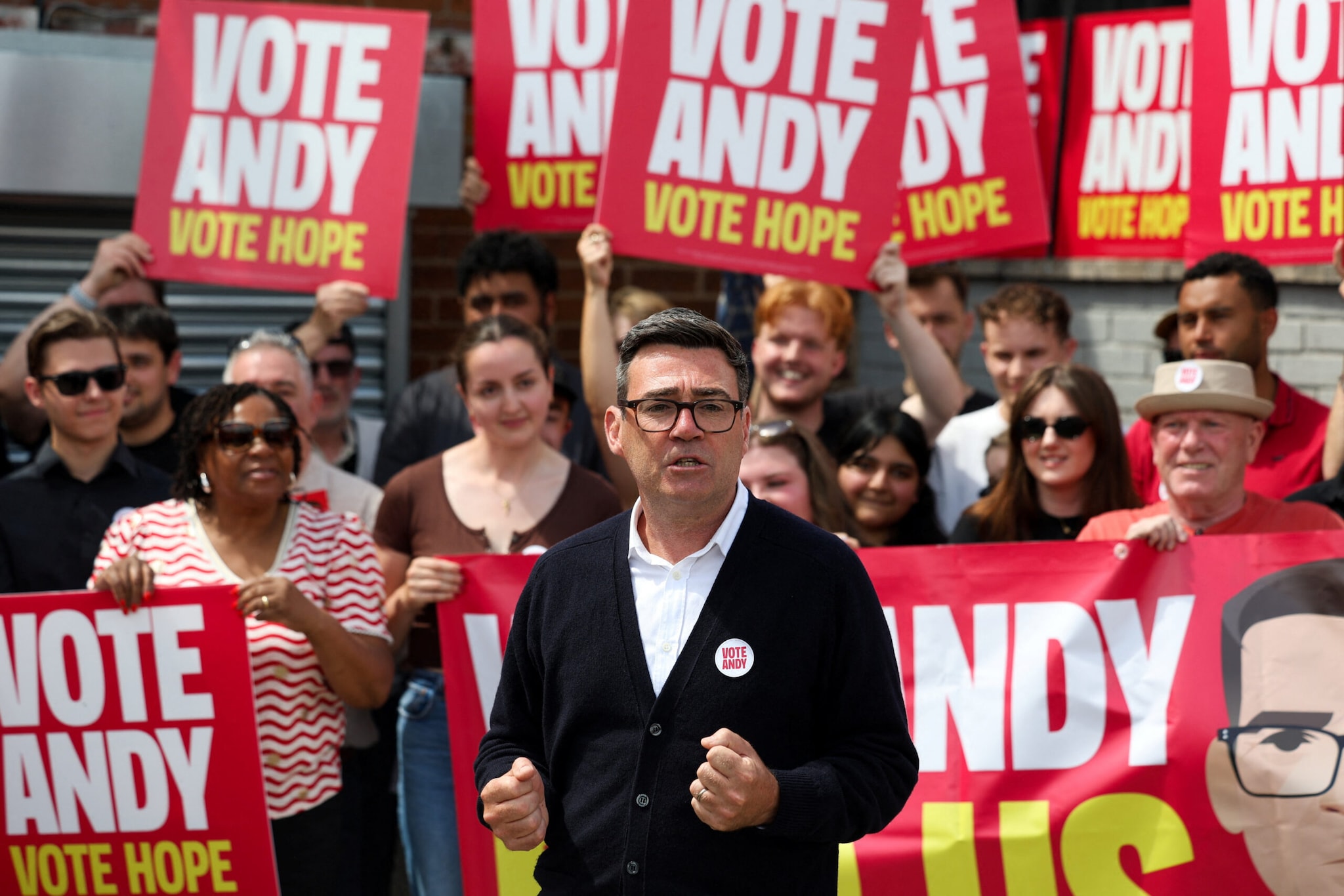
The results from the Makerfield by-election are in, and they are brutal for the current resident of 10 Downing Street. Early on Friday, June 19, 2026, the election officials in Wigan declared what everyone already suspected but Whitehall dreaded. Andy Burnham, widely known as the King of the North, didn't just win. He completely destroyed the competition. He secured 24,927 votes, crushing Robert Kenyon of the anti-immigration Reform UK party by a whopping 9,231 votes.
This isn't just another standard local vote. It is a political earthquake. By returning to the House of Commons, Burnham has officially cleared the final hurdle to launch a direct challenge for the leadership of the Labour Party, and by extension, the premiership of the United Kingdom.
The math here is incredibly simple. Under the current rules of British politics, a governing party can replace its leader without triggering a nationwide general election. If eighty-one Labour lawmakers decide they have had enough of Starmer's struggling leadership, a formal challenge begins. Given the sheer scale of Burnham's victory in a seat that Reform UK had heavily targeted, those signatures are going to start piling up very quickly.
The cold reality of the Makerfield numbers
Let's look closely at what actually happened on the ground in Makerfield because the data tells a fascinating story. Turnout hit 58.75 percent. That is a massive jump from the 52.4 percent turnout recorded during the 2024 general election. People usually skip by-elections. They are notorious for low engagement. Not this one. Voters knew exactly what was at stake, and they showed up in droves.
Burnham took roughly 55 percent of the total vote share. Think about that for a second. Reform UK threw everything they had at this constituency. Robert Kenyon finished a distant second with around 35 percent. The hardline Restore Britain party limped into third place with a measly 7 percent. Meanwhile, the traditional establishment parties practically vanished. The Conservatives, Liberal Democrats, and Greens scraped together a combined total of just 3 percent of the vote. In 2024, those same three parties commanded 22 percent.
What we saw in Makerfield was a highly calculated consolidation of the progressive and moderate vote. Voters who previously backed the Tories or the Liberal Democrats deliberately backed Burnham. Why? Because they wanted to stop Reform UK, but also because they saw an opportunity to register a massive vote of no confidence against Keir Starmer.
How a sacrifice in Wigan cleared the path to London
This entire scenario was meticulously engineered. It didn't happen by accident. Just last month, Josh Simons, the sitting Labour MP for Makerfield, did something almost unheard of in modern political history. He resigned his safe seat in the House of Commons. He explicitly stated that he was stepping down for the sole purpose of giving Andy Burnham a direct path back into Westminster.
Critics immediately screamed foul. Opposing parties accused Burnham of using Makerfield as a cynical stepping stone to achieve his personal ambitions for No 10. Burnham fired back during the campaign, pointing out that calling a return to a region right next to his old Leigh constituency a "stepping stone" was a bit ridiculous. He spent fifteen years representing the neighboring area before becoming mayor.
Regardless of the campaign rhetoric, the plan worked perfectly. Burnham's win means he must immediately step down as the Mayor of Greater Manchester, a role he has held with immense popularity since 2017. His departure triggers a massive mayoral by-election for an authority of two million voters, set to take place around late July. Labour will have to fight hard to retain that post, but for Burnham, the focus shifts entirely to the halls of Parliament.
Why the public is buying Manchesterism over Westminsterism
Voters are deeply unhappy with the status quo. Starmer has spent his time in office struggling to ignite economic growth or repair public services. High costs of living continue to squeeze family budgets. He has stumbled through unforced political errors, such as appointing controversial figures to prominent diplomatic roles, which alienated his core base.
Enter Andy Burnham. For nearly a decade, Burnham has built a unique political brand based in Greater Manchester. He successfully introduced the Bee Network, taking control of the region's bus network and bringing it back into public ownership for the first time since the 1980s. He capped single adult fares at two pounds. He took on major transport operators and won in the High Court. He explicitly rejected the traditional economic models of Westminster, calling trickle-down economics a failure that never trickled down to the north.
During his victory speech inside the Life convention centre in Wigan, Burnham made it clear that his regional approach is exactly what he intends to bring to national politics. He promised that Makerfield would not be a stepping stone, but his touchstone. He argued that a Makerfield test at the very heart of government would ensure that the regions Westminster completely forgot would finally get financial fairness.
The coming showdown for the soul of Labour
Starmer tried to put a positive spin on the disaster. He posted on social media to congratulate Burnham, claiming that the voters had chosen hope and optimism over division and hate. It was a weak attempt to claim the victory as a win for his national platform. Nobody is buying it. Political analysts across the country agree that this victory belonged entirely to Burnham's personal appeal, not Starmer's flagging brand.
The internal battle lines are already being drawn. While some cabinet heavyweights are privately plotting to prevent what they call a Burnham coronation, the momentum is entirely on the side of the newly elected MP. An Ipsos poll released right before the vote revealed that 25 percent of British adults prefer Burnham as prime minister, compared to a dismal 12 percent who support Starmer.
Burnham represents a rare political commodity. He is a soft-left socialist who somehow manages to appeal to both traditional working-class communities and urban, cosmopolitan voters. He can win back the people who migrated to Reform UK while keeping the progressive left happy. Right now, Starmer simply cannot do that.
What happens next on the ground
The political clock is ticking rapidly. Burnham is expected to travel to London to be sworn in as a member of Parliament as early as Monday. Once he takes his seat, the pressure on Starmer will become intense.
If you are tracking how this plays out over the coming days, watch these specific developments.
- Look for the public declarations of support from backbench Labour MPs over the weekend to see how fast the rebellion grows.
- Watch the early polling numbers for the upcoming Greater Manchester mayoral by-election to see if Reform UK can capitalize on Burnham's departure from local government.
- Monitor Starmer's upcoming public appearances for any signs of policy shifts aimed at appeasing the northern factions of his party.
The King of the North has officially returned to Westminster, and the battle for the future of British politics has truly begun.