We've officially entered the second space age, and it doesn't look anything like the first one.
Three months after rewriting the human spaceflight record books, the four astronauts of NASA’s historic Artemis II mission stepped back onto the concrete of Kennedy Space Center. The goal? A quiet, emotional reunion with their spacecraft—the Orion capsule, christened Integrity—which carried them farther into the cosmic dark than any human beings before them.
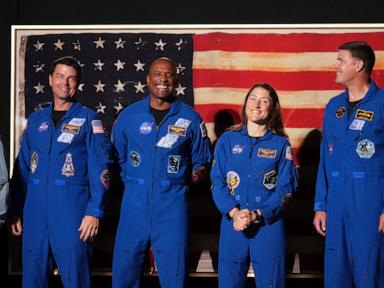
When commander Reid Wiseman, pilot Victor Glover, and mission specialists Christina Koch and Jeremy Hansen looked out at Launch Pad 39B on July 8, 2026, the view was jarring. The towering Space Launch System (SLS) rocket that blasted them toward the moon back on April 1 was gone.
"It’s a lonely place without that rocket on it," Wiseman remarked.
But don't mistake this for a simple victory lap or a nostalgic PR stunt. This reunion marks a critical operational pivot point for NASA. The data packed inside that scorched titanium shell holds the keys to whether humanity actually stays on the moon this time—or gets stuck in orbit.
Breaking Records and Chasing Gravity
The sheer scale of what this crew accomplished in April 2026 hasn't fully sunk in for the general public. During their 10-day lunar flyby, the crew utilized a precise free-return trajectory, letting lunar gravity sling them around the far side of the moon and back toward Earth.
They didn't just match the Apollo missions; they blew past them.
- Maximum Distance: 252,756 miles (406,771 kilometers) from Earth.
- The Previous Record: 248,655 miles, set by the crew of Apollo 13 in 1970 under far more desperate circumstances.
- The Human Milestones: Christina Koch became the first woman to travel to the moon; Victor Glover became the first person of color; Jeremy Hansen became the first non-U.S. citizen; and Reid Wiseman became the oldest person to leave low Earth orbit.
While the world watched incredible high-res smartphone videos of "Earthset" captured through Orion's windows, the crew was executing high-stakes lunar observations during a tense 40-minute communications blackout behind the moon.
Public fervor is still remarkably high. Wiseman recounted boarding a flight in France recently when a fellow passenger handed him a boarding pass with a handwritten note: "Thank you for reminding us about joy and hope in the universe again."
The Reality Behind the Next Crew Hand-Off
Now that the Artemis II crew has returned Integrity to the technicians at Cape Canaveral, all eyes are aggressively shifting to Artemis III, slated for launch next year.
NASA shook up the industry last month by announcing the next four-person lineup: three NASA astronauts and one Italian astronaut. But the roster immediately triggered internet debates because the entire Artemis III crew is male. Given that Koch broke a major glass ceiling on Artemis II, some critics expected a female astronaut to be part of the crew that bridges the gap to the actual landing missions.
Koch isn't losing any sleep over it. In fact, she took a direct stance when speaking to reporters at Kennedy Space Center.
"What would be worse was someone overruling NASA’s crew selection for Artemis III just to make it look a certain way," Koch said. "I am so glad and so proud that that’s not the situation we have."
Koch’s perspective highlights a brutal truth about deep-space exploration: mission architecture and specialized technical training dictate who flies, not cosmetic optics.
Why Artemis III is a Massive Technical Gamble
While Artemis II proved that the SLS rocket and the Orion capsule can keep humans alive in deep space, Artemis III is a completely different beast. It won't be landing on the lunar surface. Instead, it’s designed to remain in Earth orbit to test the complex docking maneuvers required for future surface missions.
This is where the engineering gets messy. Artemis III relies entirely on private-sector hardware currently in fierce development cycles:
- SpaceX’s Starship Human Landing System (HLS): A massive vehicle that requires multiple orbital refueling launches before it can even head to lunar space.
- Blue Origin’s Sustained Lunar Lander: Amazon-founder Jeff Bezos’s competing system, which is also on a blistering development timeline.
If either of these commercial partners misses their technical milestones, the timeline for Artemis IV—which intends to land two yet-unnamed astronauts on the lunar surface as early as 2028—will crumble.
Changing Guards at the Canadian Space Agency
The reunion also brought a bittersweet note for international space relations. Jeremy Hansen, who represented Canada on the historic flight, announced he is leaving the Canadian Space Agency (CSA) this September.
He isn't hanging up his flight suit entirely, though. Hansen will transition to a reservist role in the Royal Canadian Air Force while continuing to consult for the broader Artemis program. His departure means Canada will need to fast-track its next generation of deep-space astronauts if it wants to maintain its hard-earned seat at the table.
What Happens Next
The celebration is over, and the real grunt work has resumed inside the high bays at Kennedy Space Center. If you want to track the actual progress of humanity’s return to the moon, ignore the speeches and focus on these next three operational steps:
- Deconstruct the Data: Engineers are currently stripping the data logs from the Integrity capsule to see how the environmental control and life support systems handled the intense radiation of the Van Allen belts.
- Monitor the Orbital Refueling Tests: Keep a close eye on SpaceX's upcoming uncrewed Starship test flights. The success of Artemis III hinges entirely on whether Starship can successfully transfer cryogenic fuel in orbit.
- Watch the Crew Integration: The newly announced Artemis III crew is already beginning simulations inside the Orion mockups at Johnson Space Center. Their ability to master the docking interfaces with commercial landers will dictate the launch schedule for 2027.