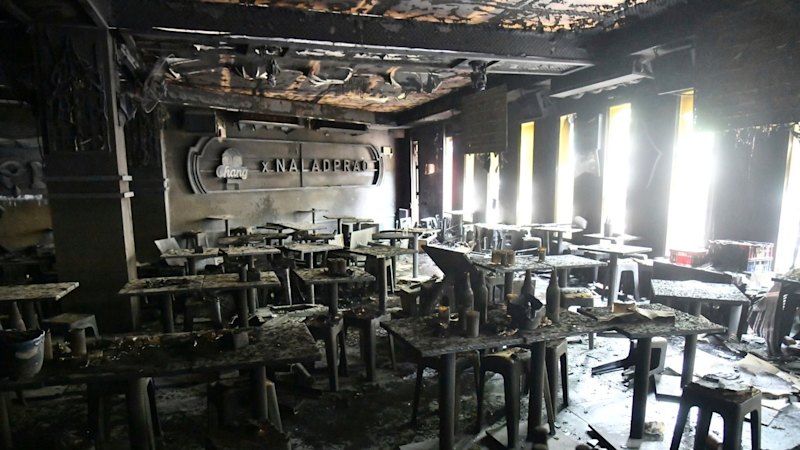
You walk into a local music venue, grab a cold drink, and settle in to watch the band. The ceiling is decorated with lush green artificial plants, creating a cozy, natural vibe. The sound is tight, thanks to thick foam panels lining the walls. It feels like a great night out.
But behind those trendy design choices lies a terrifying truth. In a matter of seconds, those exact materials can turn a lively room into a highly toxic, inescapable furnace. For another view, read: this related article.
That is exactly what happened at the Rong Beer Na Lat Phrao pub in northern Bangkok just before midnight on July 12, 2026. The devastating fire claimed 30 lives and left 75 people injured, with dozens fighting for their lives in critical condition.
It is a tragedy that feels horrifyingly familiar. It is also a disaster that was entirely preventable. To understand why this keeps happening, we have to look past the tragic headlines and look at the deadly combination of cheap, toxic building materials and the regulatory loopholes that allow them to exist. Further coverage on the subject has been shared by Al Jazeera.
The Illusion of Safety at Rong Beer Na Lat Phrao
The venue, located in Bangkok's bustling Chatuchak district, was a popular spot for live music. On any normal weekend, it was packed with patrons looking for cheap beer and good covers. But underneath the lively atmosphere, the pub was a ticking time bomb.
It started with a flicker.
According to witnesses and musicians performing that night, the lights inside the venue began to flicker. Some noticed a burning smell, while others spotted wisps of smoke coming from a ceiling-mounted air conditioning unit near the stage. Within moments, a circuit breaker sparked.
Then, the power cut out completely.
In total darkness, a loud explosion echoed through the room. What happened next was not a slow build, but an instantaneous flash. A massive jet of fire erupted from the ceiling, feeding on the venue’s interior decor.
Panicked patrons rushed for the exits, but the darkness and rapidly spreading black smoke turned the room into a maze. Many ran toward what they thought was safety, only to find themselves trapped in the rear bathrooms and kitchen area.
Silent Killers in the Ceiling
When we think of fire deaths, we often think of burns. The reality is much more insidious. Most of the victims of the Bangkok pub fire did not die from the flames. They suffocated.
"People died from inhaling toxic smoke before being burned by the fire," noted Amorn Pimanmas, president of the Thailand Structural Engineers Association. "Several bodies showed no signs of burning."
The culprit was the very material used to make the venue feel cozy and sound great. To improve acoustics and block out external city noise, the pub’s owners had covered the ceiling with cheap, non-fire-retardant black acoustic foam panels. To make the space visually appealing, they installed a dense canopy of artificial grass, plastic leaves, and fake flowers across the ceiling.
These are not just decorations. They are solid fuel.
Busakorn Saensookh, chair of the Fire Protection Engineering Committee at the Engineering Institute of Thailand, inspected the charred remains of the pub. She explained that the sheer volume of dense plastic overhead created an incredibly high "fuel load."
Once the air conditioner short-circuited and ignited, the plastic ceiling melted and dripped fire onto the people and furniture below. When dense plastics and acoustic foam burn, they do not just produce smoke. They release a lethal cocktail of carbon monoxide and hydrogen cyanide.
Just a few breaths of hydrogen cyanide gas can knock a person unconscious in seconds. In the pitch black, disoriented by the sudden power failure, victims choked to death before they could even find the doors.
The Loophole That Kills
You might wonder how a business is allowed to pack a building with highly flammable, toxic plastics without any fire-suppression systems in place. The answer lies in a massive regulatory loophole that hospitality owners exploit to save money.
Rong Beer Na Lat Phrao was not officially registered as an "entertainment venue." Instead, it held a license as a "restaurant with live music."
This simple distinction on a piece of paper changes everything.
In Thailand, official entertainment venues, like nightclubs and discotheques, are subject to strict building codes. They are legally required to use fire-retardant materials, install active sprinkler systems, maintain multiple clearly marked fire exits, and undergo rigorous safety inspections.
Restaurants, however, face much lighter regulations. By operating under a restaurant license, the owners bypassed the strict structural safety audits required for clubs, even though they were running what was, for all practical purposes, a crowded nightclub.
This is not an isolated trick. It is a standard industry practice across Thailand. Business owners intentionally register their venues as restaurants or cafes to dodge expensive fire-safety upgrades, and local authorities often look the other way.
The venue had actually been inspected in April, just months before the fire. Because it was classified as a restaurant, the basic presence of a couple of fire extinguishers and two exit doors was enough to pass. But when a real emergency struck, those minimal measures were completely useless.
Trapped in the Dark
Even with the rapid spread of toxic smoke, more people could have survived if they had been able to get out.
The building had two emergency exits, which on paper seemed sufficient. In practice, they were useless barriers.
As panic set in, patrons naturally fled away from the stage where the fire began, pushing toward the back of the building. But the exit path near the kitchen was heavily obstructed by stacked beer crates and heavy dining tables. Another exit door, which was supposed to serve as a vital escape route, was bolted shut.
First responders who arrived on the scene described a horrific sight. The front entrance was a literal blowtorch of horizontal flames shooting out into the street. Inside, firefighters found groups of victims lying near the rear toilets. They had run to the bathrooms to escape the heat and smoke, only to find themselves trapped in a dead end.
[Stage / AC Unit] ---> (Origin of Fire & Smoke)
       |
       v
[Main Seating Area] ---> (Rapidly filled with toxic plastic smoke)
       |
       +---> [Front Exit]  (Blocked by heavy horizontal flames)
       |
       +---> [Rear Kitchen Exit] (Obstructed by beer crates & tables)
       |
       +---> [Bolted Back Door] (Impassable)
       |
       v
[Back Bathrooms] ---> (Dead end where multiple victims suffocated)
It took firefighters only thirty minutes to bring the physical flames under control. But by then, the damage was done. The combination of locked doors, blocked paths, and lack of emergency lighting meant that a thirty-minute fire was more than enough time to kill dozens.
Why History Keeps Repeating in Thailand
If this story sounds familiar, it is because we have seen it play out before, almost beat for beat.
In 2009, the Santika Club fire in Bangkok killed 66 people on New Year's Eve. The cause? Flammable indoor fireworks that ignited the acoustic foam on the ceiling. The exits were blocked, the venue was overcrowded, and the building lacked proper safety permits.
In 2022, the Mountain B pub fire in Chonburi province killed 26 people. The cause? An electrical short circuit that ignited cheap, highly flammable acoustic foam lining the walls and ceiling. The venue had blocked exits, and it was operating under an illegal modification.
Now, in 2026, we have Rong Beer Na Lat Phrao.
The structural issues are identical. The material causes are identical. The regulatory failures are identical.
After each disaster, politicians stand in front of the cameras, express deep condolences, and promise a nationwide crackdown on venue safety. Yet, as the news cycle moves on, the pressure fades, and the status quo returns. Business owners continue to use cheap, flammable materials, and inspectors continue to sign off on death traps.
How to Protect Yourself Next Time You Go Out
We cannot rely solely on city inspectors or venue owners to keep us safe. If you are going out to a live music venue, pub, or club, you need to take your safety into your own hands.
Here is what you can do the moment you walk through the door of any venue.
- Locate at least two exits immediately. Do not just look at the main entrance you walked through. Scan the room for alternative exits. If you only see one way out, or if the secondary exits are blocked by clutter, leave.
- Look at the ceiling and walls. Be highly suspicious of venues covered in exposed foam panels, heavy fabric drapes, or extensive artificial plants. If a fire starts, these materials will create blinding, toxic smoke within seconds.
- Pay attention to crowding. If a venue is so packed that you can barely move, any sudden evacuation will result in a dangerous crowd crush.
- Trust your nose. If you smell something burning or notice lights flickering repeatedly, do not wait to see what happens. Tell a staff member and make your way toward the exit immediately.
If a fire does break out, remember that smoke rises. Get as low to the ground as possible, cover your mouth and nose with your shirt, and move quickly toward your designated exit. Every single second counts.


