Britain’s rail network is supposed to be protected by some of the most sophisticated automated failsafes in the world. Yet on Friday evening, two passenger trains ended up on the exact same stretch of track, moving in the exact same direction, resulting in a devastating rear-end collision.
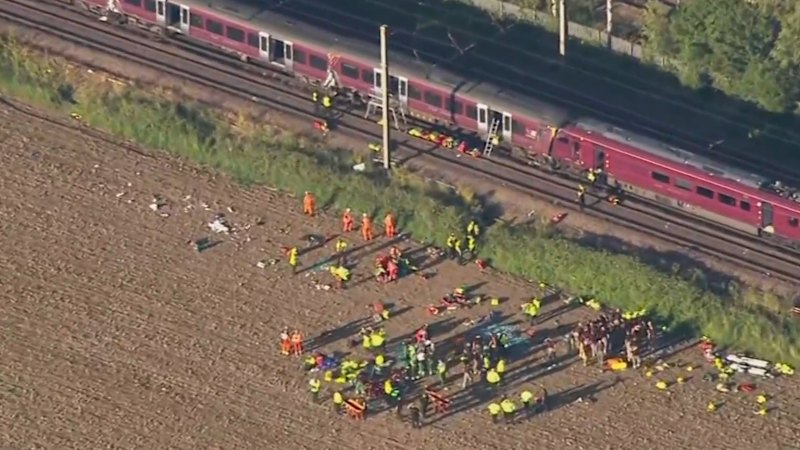
The bare facts are harrowing enough. At 5:12 PM on June 19, 2026, a Class 360 electric multiple unit slammed into the back of a stationary Class 810 bi-mode train near Elstow, just south of Bedford. The impact killed the driver of the oncoming Class 360 train. It left 89 passengers injured, 33 of them seriously.
But if you want to understand why this disaster happened, you have to look past the initial headlines. The real story centers on a fundamental breakdown of the safety systems that keep millions of UK commuters safe every single day.
What Went Wrong on the Midland Main Line
The first train involved was East Midlands Railway service 1B67, the 3:50 PM departure from Nottingham to London St Pancras. According to initial reports from investigators and local emergency teams, this train developed a sudden mechanical fault and came to a dead stop on the "Up Fast" line near the Tarmac Elstow siding.
Minutes later, East Midlands Railway service 1H46, the 4:40 PM train from Corby to St Pancras, came down the very same track. It was a Class 360 commuter train packed with people heading into London for the weekend.
It struck the stalled Nottingham train from behind.
The force of the collision was catastrophic. Passenger Peter Knapp described feeling like he had been caught in a bomb explosion. Carriages buckled. Passengers were flung from their seats into the structures ahead of them. Eye-witnesses reported smoke filling the carriages, bloodied faces, and multiple people suffering from broken legs and severe impact trauma.
The Safety Failures Experts Are Pointing To
When a train breaks down on a high-speed line in the UK, multiple layers of technology are supposed to prevent another train from getting anywhere near it. The Rail Accident Investigation Branch (RAIB) and the Office of Rail and Road (ORR) are already on site, and their investigation will focus heavily on three major areas.
1. Track Circuit and Signalling Failure
The Midland Main Line uses track circuits to detect the presence of a train. When a train sits on a piece of track, its metal wheels and axles complete an electrical circuit between the rails. This automatically turns the signal behind the train red, warning any following drivers to stop.
If the Nottingham train was stationary, the signal behind it should have been a solid red. Investigators must determine if the track circuit failed to detect the stalled train, or if a signalling error gave the trailing Corby train a false green light.
2. AWS and TPWS Overrides
UK trains are equipped with the Automatic Warning System (AWS) and the Train Protection & Warning System (TPWS). If a driver passes a yellow or red signal, these systems sound loud alarms in the cab. If the driver fails to acknowledge them or brakes too late, TPWS automatically forces an emergency brake application.
Because the Corby train struck the stalled train at significant speed, investigators need to know whether these automated emergency brakes were triggered at all, or if a system failure prevented them from stopping the train in time.
3. GSM-R Radio Communication Delays
When a driver stops due to a fault, they are required to immediately contact the signaller via the GSM-R (Global System for Mobile Communications — Railway) radio network. If a hazard is present, they can broadcast a "Railway Emergency Call" that instantly alerts all trains in the area to stop. We don't yet know if the driver of the stalled Nottingham train had enough time to send this alert before the impact occurred.
The Immediate Casualty and Transport Toll
Emergency services declared a major incident within minutes of the crash. The response was massive, involving 20 road ambulances, hazardous area response teams, and six air ambulances landing in the fields adjacent to the tracks to airlift the most critical patients.
The British Transport Police confirmed that the driver of the trailing Class 360 Corby train died at the scene. The National Union of Rail, Maritime and Transport Workers (RMT) identified him as a respected professional and former union representative.
The East of England Ambulance Service provided a breakdown of the 89 injured passengers:
- 11 passengers suffered very serious, life-threatening trauma.
- 22 passengers sustained serious injuries requiring immediate hospitalization.
- 56 passengers were treated for minor injuries, many at a temporary triage center set up nearby.
The crash completely paralyzed rail transit north of London. East Midlands Railway suspended all services to and from London St Pancras, while Thameslink halted all trains between Bedford and Luton. Network Rail has warned that severe disruption will continue for days as forensic teams examine the site and engineers work to clear the heavy, buckled carriages from the mainline tracks.
Your Practical Next Steps if You Are Affected
If you or your family members rely on this corridor, don't wait around at the station expecting normal service to resume quickly.
- Check Alternate Routes Immediately: If you need to travel between London and the East Midlands, bypass the Midland Main Line entirely. Use the East Coast Main Line via Peterborough or the West Coast Main Line via Milton Keynes.
- Claim Your Delay Repay Compensation: Anyone caught in the disruption is entitled to a full refund or compensation under the rail industry's Delay Repay scheme. Keep your physical tickets or digital booking references to submit your claim online through the East Midlands Railway or Thameslink websites.
- Monitor Official Investigation Updates: Avoid speculation on social media regarding the cause of the crash. The definitive answers will come via official interim statements published directly on the Rail Accident Investigation Branch website.