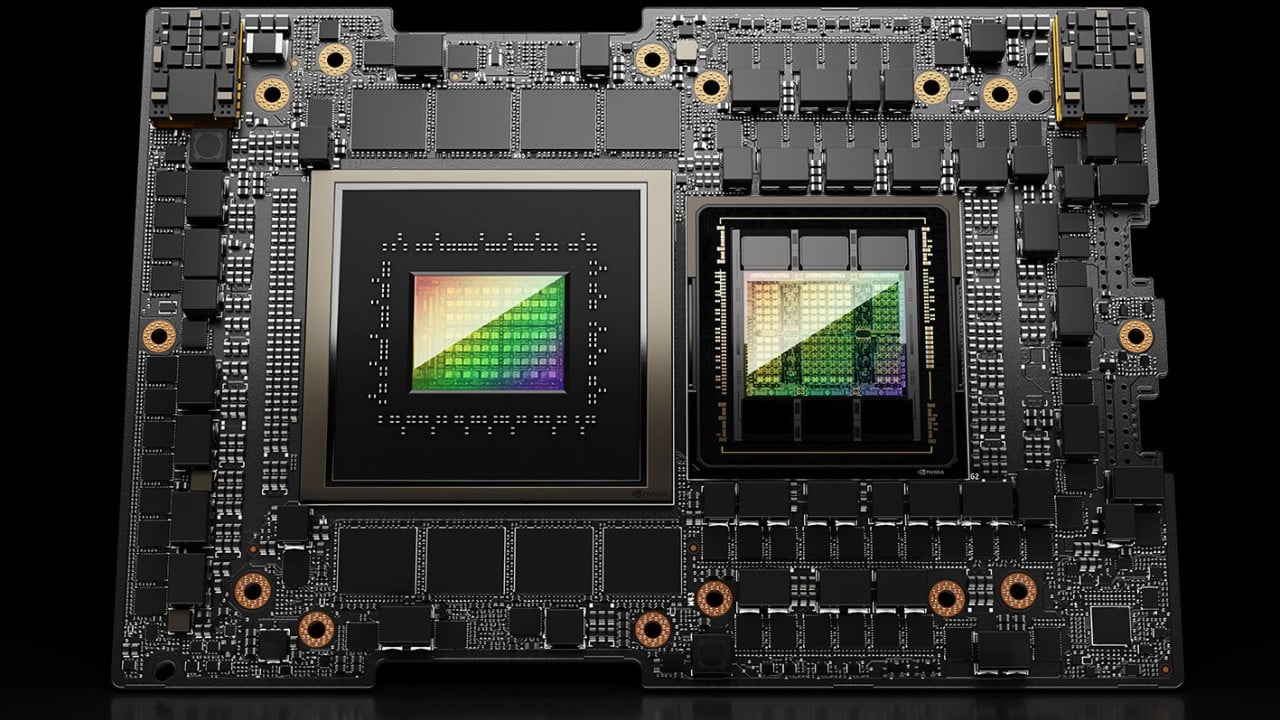
Beijing just blinked. After months of quietly forcing its biggest tech champions to buy domestic silicon, Chinese regulators are changing their tune. Reports from The Information reveal that officials are paving the way for Alibaba, ByteDance, and DeepSeek to finally buy Nvidia H200 chips.
If you've been following the semiconductor cold war, this looks like a massive U-turn. Washington cleared these chips for export months ago under complex compliance rules, but Beijing froze them at the border. They wanted to force local companies to support homegrown alternatives like Huawei Ascend processors.
It didn't work out as planned. China's top artificial intelligence labs are hitting a brutal computing wall, and the domestic supply chain can't scale fast enough to rescue them.
The Math Behind the Compute Crunch
Building frontier models takes raw power. While local options like Huawei hold roughly half of China's $50 billion domestic AI chip market, a massive performance gap remains when it comes to training heavy foundational models.
The H200 offers massive memory bandwidth advantages that domestic fabricators can't replicate right now due to strict equipment sanctions. Chinese tech giants want to keep pace with global models, but running giant training clusters on less efficient hardware means higher failure rates, more power consumption, and longer development timelines.
Beijing wanted absolute self-reliance. But forcing companies to rely purely on local hardware was turning into an artificial bottleneck for the country's entire AI sector.
A Very Controlled Capitulation
Don't mistake this for a total market reopening. This is a highly calculated tactical retreat.
- The Cap: Total allocations will likely be capped under 200,000 units. That's less than half of what Chinese firms originally requested.
- The Purpose: Regulators are explicitly earmarking these imports for model training, where raw performance is non-negotiable.
- The Guardrail: For day-to-day inference work—running the models once they're built—companies still face heavy pressure to use domestic processors.
This splits the workload. Beijing lets its tech giants buy the foreign horsepower they absolutely need to build competitive models, but keeps the high-volume inference business locked down for local chipmakers.
Why Relying on Washington is Still a Risk
Chinese tech executives aren't celebrating just yet. They know that relying on American silicon is a dangerous game because the regulatory goalposts move constantly.
Look at what happened with previous export variants. Nvidia created compliant chips, only to see the US Commerce Department tighten rules later and leave Chinese buyers stranded. Nobody wants to build a multi-billion-dollar architecture on hardware that might get cut off by a fresh pen stroke in Washington.
That's why companies are hedging their bets wildly. DeepSeek is reportedly developing its own in-house inference chip alongside its work with Huawei hardware. They don't trust either side of the geopolitical fence to guarantee their long-term supply.
What Happens Next
If you're managing infrastructure or investing in tech firms exposed to these policy shifts, watching the headline numbers isn't enough. The real trend is diversification.
Expect Chinese cloud providers to build hybrid data centers. They'll use these newly permitted H200 arrays for heavy lifting at the top, while aggressively scaling up domestic clusters for everything else.
The immediate next step for cross-border enterprise players is audit readiness. Companies applying to secure a share of this 200,000-chip allocation must submit hyper-specific usage justifications to Chinese regulators. If you're involved in procuring these components, clear documentation showing an exclusive focus on training workloads is the only way to get through customs clearance.