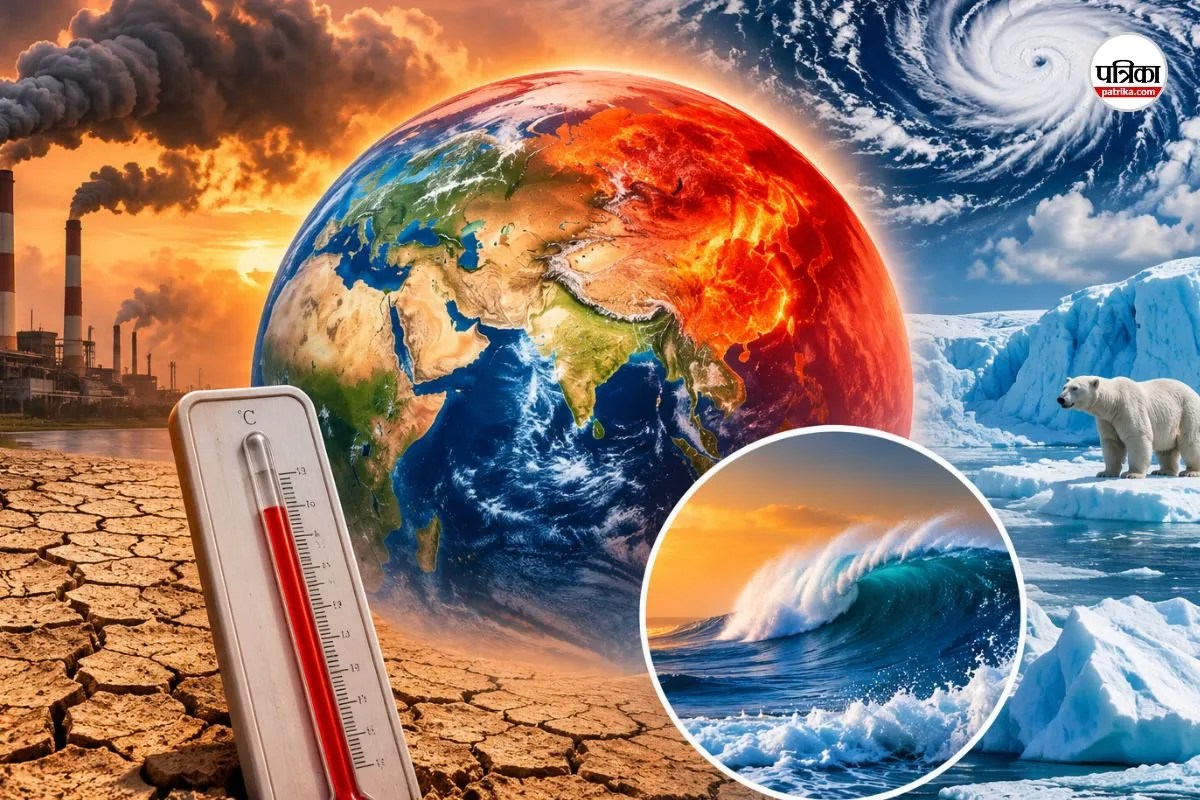
We crossed a terrifying line. For six straight days, Earth's average global temperature stayed more than two degrees Celsius above pre-industrial levels. Let that sink in. It wasn't a computer projection or a worst-case scenario model. It happened. On November twenty-third, the temperature anomaly spiked to a staggering 2.24 degrees, shattering the previous record of 2.05 degrees set back in 2023.
Most people hear these numbers and shrug. They think it is just a warm week. It isn't. It's a flashing red light on humanity's dashboard.
If you are wondering why this particular spike is shaking climate scientists to their core, you have to look beyond the daily weather report. This isn't just about sweating through another summer afternoon. This is about the systemic collapse of the planetary buffers that have kept human civilization stable for ten thousand years. Let's break down what is actually happening, why the recent climate talks failed to stop it, and what this means for your future.
The Real Meaning Behind Six Days of Record Breaking Heat
Numbers matter. When scientists talk about pre-industrial baselines, they mean the average global temperature between eighteen fifty and nineteen hundred, before we started burning coal, oil, and gas with reckless abandon. For decades, a two-degree increase was painted as the ultimate danger zone—a threshold beyond which climate impacts become catastrophic and irreversible.
Hitting 2.24 degrees above that baseline for nearly a week straight proves that the atmosphere is retaining heat faster than our worst models predicted. Think of your body running a persistent fever. A degree higher makes you sluggish. Two degrees higher puts you in the hospital. The Earth is currently experiencing that hospital-level fever.
You might hear skeptics claim that weather fluctuates naturally. They aren't entirely wrong. Natural cycles have always existed. But what we are seeing today isn't a natural wiggle in the climate graph. It is a massive, human-driven surge stacked on top of natural variability. When you overload the atmosphere with carbon dioxide and methane, you load the dice against yourself. Every roll comes up extreme heat.
Why Fossil Fuels and El Nino Are Colliding Right Now
Two primary culprits drove this historic November spike. First, we have our old, unrepentant enemy: relentless greenhouse gas emissions. Global carbon emissions didn't plateau; they hit new highs. Every time a coal plant fires up or a fleet of cargo ships crosses the ocean, more heat gets trapped in the lower atmosphere like an invisible glass ceiling.
Second, nature threw a massive wrench into the machine. The Pacific Ocean is waking up with a potent El Niño phase. El Niño is a climate pattern characterized by warmer-than-average sea surface temperatures in the central and eastern Pacific Ocean. When the ocean warms up, it releases enormous amounts of heat into the atmosphere.
Meteorologists are warning that this El Niño cycle is set to intensify even further between January and March. That means the heat we are feeling now is merely a preview. If ocean temperatures continue to climb alongside unabated industrial emissions, the upcoming months will test infrastructure, agriculture, and water supplies in ways we haven't witnessed before.
Decoding the COP31 Failure on Emission Cuts
Timing is everything. This temperature spike didn't happen in a vacuum. It unfolded right as the United Nations COP31 climate conference wrapped up in bitter disappointment.
Thousands of diplomats, scientists, and activists gathered to negotiate our survival. What did they achieve? Practically nothing of consequence. The summit ended without any binding agreement to phase out fossil fuels. Countries bickered over carbon credits, argued about who should pay for climate damages in developing nations, and kicked the hard decisions down the road.
It is maddening. While negotiators sip bottled water in air-conditioned conference halls debating economic semantics, glaciers in the Himalayas and the Andes are vanishing at record speed. Oil and gas lobbyists walked away from COP31 with their business models intact, while communities from California to Bangladesh face intensifying floods, droughts, and killer heatwaves.
When international governance fails, the burden shifts entirely to local action and individual awareness. Waiting for global leaders to save us is no longer a viable strategy.
What the Paris Agreement Actually Measures Versus Daily Spikes
Let's clear up a major point of confusion. When headlines flash news about temperatures crossing the two-degree mark, social media immediately panics, assuming the landmark Paris Climate Agreement is dead.
It isn't dead, but it is on life support.
The Paris Agreement aims to hold global warming well below two degrees Celsius above pre-industrial levels, with an ambition to limit the increase to one point five degrees. However, climate scientists measure compliance through multi-decadal averages, not individual daily weather anomalies. A six-day spike above two degrees doesn't legally mean the Paris target has been permanently breached.
Yet, treating this distinction as a technicality that lets us off the hook is dangerous. These daily spikes are the early warning tremors before the earthquake. When multi-year averages finally cross that two-degree line—which scientists predict will happen in the 2030s at our current trajectory—we won't need a treaty to tell us. The physical consequences will be blindingly obvious. Sea level rise will swallow coastal cities, staple crop yields will plummet, and freshwater shortages will spark geopolitical conflicts.
Practical Steps to Build Local Resilience Against Extreme Weather
Feeling helpless won't cool the planet. If global institutions are moving too slowly, you have to protect your immediate environment and adapt to the reality of a warming world.
First, audit your energy consumption. Buildings consume a massive share of global electricity, mostly powered by fossil fuels. Transitioning to renewable energy sources like rooftop solar isn't just about saving money on your utility bill; it directly reduces local grid demand during peak heatwaves when power plants burn dirtier backup fuels to keep air conditioners running.
Second, rethink your water usage. As temperature spikes dry out soil and deplete reservoirs, municipal water restrictions will become standard. Installing rain barrels, planting drought-resistant native landscaping, and fixing leaky plumbing proactively protects your household from sudden shortages.
Third, prepare for extreme weather events before they hit your doorstep. Heatwaves kill more people annually than hurricanes, floods, and tornadoes combined. Know where your nearest cooling centers are, keep emergency backup power ready for grid failures, and check on elderly neighbors when temperatures soar.
The climate crisis is no longer a distant threat slated for the year twenty-one hundred. It is unfolding right now, outside your window. Ignoring the warning signs won't make them go away. Acknowledging the reality of our warming planet is the absolute first step toward demanding better choices from policymakers and taking control of your own resilience.