Brenda Fricker never gave a damn about being a Hollywood star. When news broke that Brenda Fricker, Oscar winner for My Left Foot, dies aged 81, the global film community immediately rushed to print standard, sanitized obituaries. They called her a national treasure. They praised her quiet warmth. They listed her credits like a dry resume. But if you actually paid attention to her six-decade career, you know that calling her sweet or conventional completely misses the point. She was a force of nature who survived a life packed with unimaginable trauma and came out the other side with zero tolerance for industry nonsense.
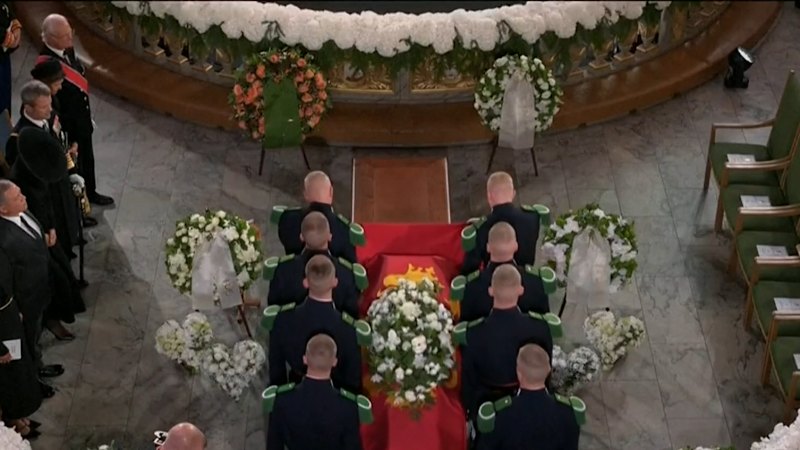
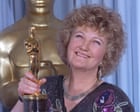
She passed away peacefully in Dublin following a period of failing health, leaving behind a legacy that modern, PR-trained actors cannot even touch. Fricker was the first Irish woman to take home an acting Academy Award, winning Best Supporting Actress in 1990. Yet, she famously kept that golden statuette at the bottom of a suitcase for years because she did not want it running her life. That tells you everything you need to know about the woman. She cared about the work, the truth, and absolutely nothing else.
The Night Brenda Fricker Changed Irish Cinema Forever
To understand why her loss hurts so much, you have to go back to the 1990 Academy Awards. Standing on that stage in a simple dark dress, she accepted her award for playing Mrs. Brown in My Left Foot. She did not deliver a breathless, tear-soaked speech thanking an army of agents. She dedicated it to anyone who had the courage to live their life from a wheelchair, and to her home country of Ireland.
Her performance as Bridget Fagan Brown was an absolute masterclass in restraint. In the hands of a lesser actor, the role of a mother fighting for her son with cerebral palsy could have devolved into cheap sentimentality. Fricker did not play for tears. She gave the character a fierce, steel-spined dignity. She shared the screen with Daniel Day-Lewis, an actor known for completely consuming every scene he enters. Fricker did not just hold her ground; she anchored the entire film. Every bit of the emotional weight in that movie rests on her shoulders.
That historic win broke a massive barrier. She proved that an Irish character actress working on a modest budget could beat out massive Hollywood heavyweights like Julia Roberts and Anjelica Huston. It was a massive moment for Irish culture, showing the world that local stories had universal power.
Behind the Screen a Lifetime of Unfiltered Truth
If you only know her from her major film roles, you are missing the most fascinating part of who she was. In late 2025, Fricker published a staggering, unflinching autobiography titled She Died Young: A Life in Fragments. It became an instant bestseller in Ireland, not because it spilled Hollywood gossip, but because it exposed her own brutal reality.
She did not hide behind a polished image. She wrote openly about being physically abused by her own mother, being groomed as a child, and surviving a horrific cycling accident at age fourteen that put her in a hospital for two years. She dealt with tuberculosis, battled severe depression, spent stints in psychiatric care, and survived sexual violence. Most celebrities use their books to smooth over their flaws. Fricker laid her scars bare.
This deep well of personal pain explains why her acting felt so shockingly authentic. When she looked into a camera, there was no artifice. You were looking at a human being who had looked into the abyss and survived. She brought that lived experience to every single character she touched.
From Casualty to Central Park
Long before Hollywood came calling, British and Irish audiences knew her face intimately. In 1986, she walked onto the set of the BBC medical drama Casualty as nurse Megan Roach. She was part of the very first episode. For years, she was the moral compass of that show, embodying the exhausted, deeply empathetic reality of frontline healthcare workers. She stayed for years, anchoring the series during its formative era and returning for major guest spots all the way up to 2010.
Then came the role that cemented her place in global pop culture. In 1992, Chris Columbus cast her as the Pigeon Lady in Home Alone 2: Lost in New York.
On paper, it sounds ridiculous. A homeless woman covered in birds in the middle of Central Park befriending a lost kid. Yet, her performance is the reason that movie has aged so beautifully. Amid all the cartoonish slapstick and flying bricks, her scenes with Macaulay Culkin provide a genuine emotional core. When she looks at Kevin McCallister and talks about how her heart was broken, it does not feel like a silly kids' movie anymore. It feels like a genuine piece of dramatic acting. Generations of children grew up learning empathy through that character.
The Anti Star Who Walked Away
Hollywood tried to turn her into a standard, reliable character actor for major studio films. She did the studio rounds, appearing in massive projects like A Time to Kill, So I Married an Ax Murderer, and Moll Flanders. She worked alongside Cate Blanchett in Veronica Guerin. But the glitz of Los Angeles never suited her. She hated the red carpets. She loathed the fake smiles and the relentless corporate machinery that drives modern entertainment.
So, she simply stepped away from it. She moved back to Dublin, chose her projects with extreme care, and lived a quiet, fiercely independent life surrounded by her beloved dogs. She did not care about missing out on massive paydays.
In her later years, she proved she could still out-act anyone in the business with small, independent Irish projects. Take her performance in the 2025 short film The Swallow. She barely spoke a word, yet her presence completely filled the frame. She also brought a sharp, brilliant comedic timing to Graham Norton’s series Holding in 2022. She could do more with a slight twitch of her eyebrow than most actors can do with a three-page monologue.
Earlier in 2026, the city of Dublin awarded her the Freedom of the City, its highest honor. It was a fitting tribute to a woman who remained entirely true to her roots, never trading her accent, her honesty, or her integrity for a bigger trailer on a movie set.
Study Her Work to Understand the Craft
If you want to honor her memory, stop reading generic social media tributes and actually watch her work. Do not just stream Home Alone 2 for the nostalgia.
Find a copy of My Left Foot. Watch the scenes where she interacts with Daniel Day-Lewis without saying a single word. Notice how she uses her physicality to show a lifetime of hard labor, poverty, and fierce maternal love. Look at her early television work in David Hare’s Licking Hitler from 1978. Track down her final performances where her voice carried the weight of a long, beautifully complicated life.
Brenda Fricker showed us that acting isn't about looking perfect under studio lights. It's about having the guts to show the messy, painful, beautiful truth of being alive. She spent eighty-one years doing exactly that. We won't see someone like her again.